›
›
›
›
Sales forecasting for small B2B teams 2026
Sales forecasting for small B2B teams 2026
Sales forecasting for small B2B teams 2026
Sales forecasting for small B2B teams 2026
Sales forecasting for small B2B teams 2026
Sales forecasting for small B2B teams 2026

Author
Aljaz Peklaj

Weighted pipeline is a large-numbers technique, and a small B2B team does not have large numbers.
Take a $100,000 deal sitting in a stage your CRM has marked 50% likely. The forecast says $50,000. The actual outcome is $100,000 or nothing. It is never $50,000. That is fine across five hundred deals, where the overs and unders cancel out. Across the twenty deals a small team closes in a quarter, they do not cancel. They just move the number around.
This is how to forecast when your deal count is too small for the standard method to work.
TL;DR
Probability-weighted forecasting multiplies each deal's value by a likelihood percentage, which is exactly how Pipedrive computes weighted value: total value times probability divided by 100. Deal probability overrides stage probability where both are set. That works when you have enough deals for the errors to average out, and it produces a number no individual deal can actually deliver when you do not. Below roughly thirty closes a quarter, switch to judgement categories instead: commit, best case and pipeline, where a human decides which bucket each deal is in and defends it. HubSpot describes exactly this trade in its own documentation, contrasting stage-based forecasting with categories that let a team "adjust your forecast based on your knowledge of the deals, without losing track of where you are in your sales process." Then fix the two inputs that break every small-team forecast regardless of method: expected close dates that nobody updates, and stage definitions that describe your activity rather than the buyer's. Forecast the commit number, track the gap between commit and actual, and stop reporting a weighted total that has never once been the answer.
Why weighted pipeline breaks below thirty deals
![RT CHART 1, sales-forecasting-small-teams-chart-1-variance.svg] Alt: Why probability-weighted forecasting is unreliable at low deal counts, comparing possible quarterly outcomes for a small B2B pipeline in 2026.](https://framerusercontent.com/images/YSyADIdW2b379UHGgRcdq1Nus.svg)
The arithmetic is real and it is not controversial. Pipedrive's probability documentation states the formula plainly: total value multiplied by probability divided by 100 gives weighted value, and it works the same whether the probability came from the stage or from the deal. Its own worked example takes $4,245.74 at 50% and returns $2,122.87.
That $2,122.87 is a real number about a population and a fiction about a deal. It means that across many deals like this one, half convert. For the single deal in front of you it describes an outcome that cannot happen.
Deal probability beats stage probability, and that is worth knowing. Pipedrive states that deal probability is always prioritised over stage probability. So a rep who sets a number on a deal has overridden the pipeline logic, which is either exactly what you want or a silent source of forecast drift depending on whether anyone knows they did it.
The failure is variance, not bias. With twenty deals, a weighted forecast is unbiased on average and wrong almost every quarter. You will land above it or below it by a wide margin, and neither result tells you anything about whether the method is working. That is what makes it so hard to abandon.
Small teams also have correlated deals, which makes it worse. One economic wobble, one competitor price cut, one champion leaving a customer, and several of your twenty deals move together. Weighted forecasting assumes they are independent. At small scale they frequently are not.
Use categories instead, and make someone defend them
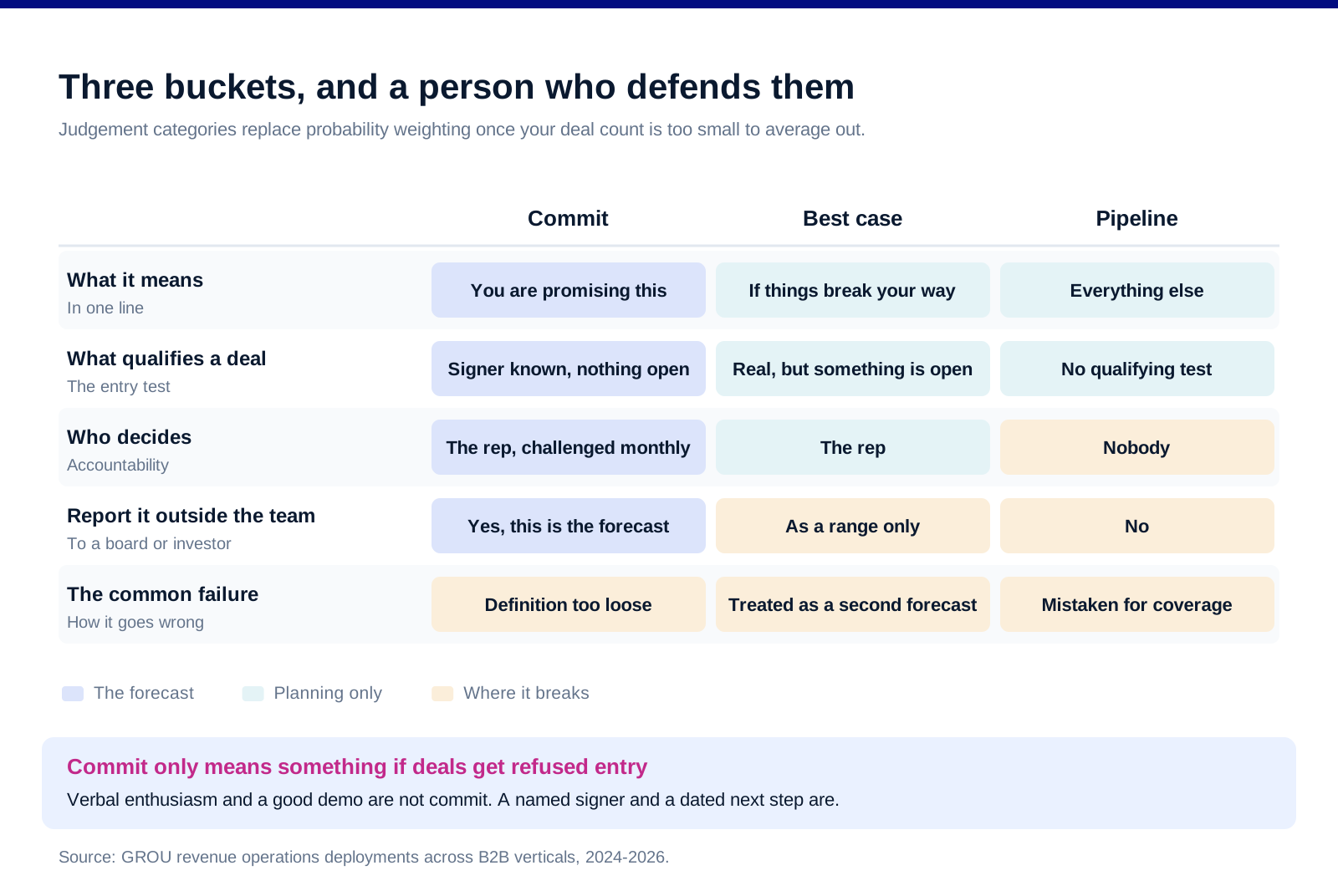
Three buckets is enough. Commit is what you are promising. Best case is what you would hit if things break your way. Pipeline is everything else. No percentages, no arithmetic, just a person putting each deal in a bucket and being able to say why.
Commit means a specific thing, and the definition is the whole method. A deal is commit when the buyer has said yes in substance, the paperwork path is known, and the only thing left is a process you have seen complete before. Not "they seem keen." Not "verbal." A named next step with a date, an identified signer, and no open questions that could reopen the decision.
Best case is the honest home for optimism. It exists so that reps have somewhere to put the deal they believe in without contaminating the commit number. Removing that release valve is why forecasts inflate.
HubSpot's own documentation frames the same choice. By default its forecast tool uses deal stages to forecast revenue based on likelihood to close, and it describes categories as letting a team adjust the forecast based on their knowledge of the deals without losing track of where they are in the process. That is the trade: you give up the appearance of objectivity and get a number someone is accountable for.
Track one metric about the method itself. The gap between commit and actual, every quarter, per person. That number tells you whether your definitions are working and whether a particular rep is systematically optimistic. It is worth more than any refinement to the probabilities.
Do not forecast the best case to anyone outside the team. It is a planning tool. The moment it reaches a board pack it becomes a promise.
Fix the inputs before you change the method
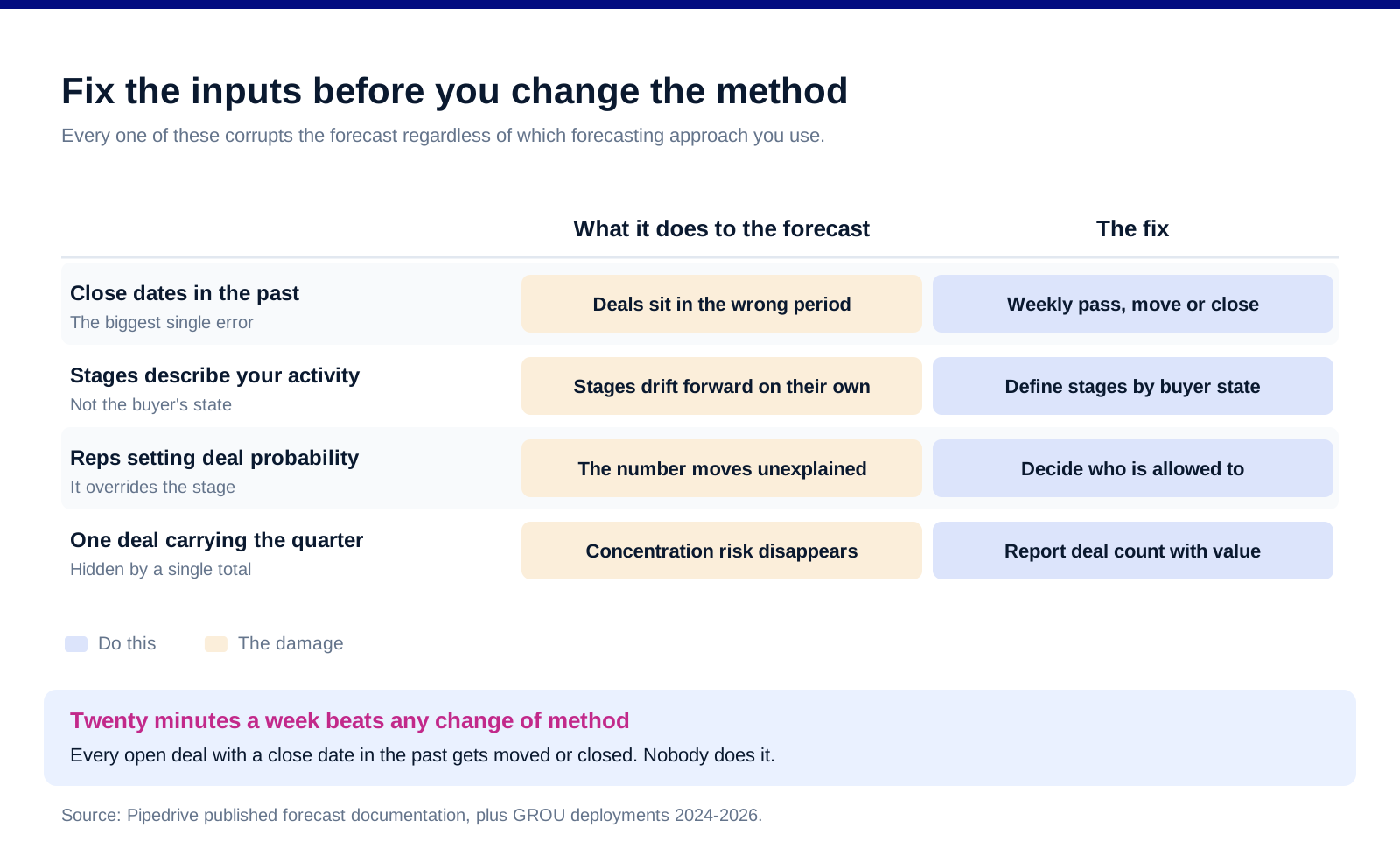
Expected close dates are the single biggest source of error. Pipedrive's forecast view groups deals into date-based columns by expected close date, switching to the won date once a deal is marked won. Every deal carrying a date that passed three weeks ago is sitting in the wrong column and quietly corrupting the period totals.
Make the date mean something specific. "When the buyer has said they intend to decide" is a usable definition. "When I hope this closes" is not, and it is what most CRMs are full of.
Stage definitions should describe the buyer, not you. "Demo completed" is your activity. "Buyer has confirmed budget and a decision date" is their state. Stages built on your activity will always drift forward, because activity is easy to complete and buyer state is not.
One person should own hygiene, weekly, in twenty minutes. Every open deal with a close date in the past gets moved or closed. That single pass is worth more than any change of method, and it is the one nobody does.
Then check the forecast against reality, not against the pipeline. Our pipeline coverage piece covers how much pipeline you need to support a number, which is the other half of this and the part that tells you whether the forecast is achievable at all rather than merely accurate.
What to actually report
Report the commit number as the forecast. One figure, owned by a person, defensible deal by deal.
Show the gap to target separately. Commit against quota is the useful comparison. Burying it inside a weighted total hides the size of the problem.
Show best case as a range, not a second forecast. Commit to best case is your realistic band. Anything above best case is not a forecast, it is a wish.
Report deal count alongside value. A quarter carried by one large deal is a completely different risk profile from the same number spread across eight, and a single total conceals that entirely.
Do not report a weighted pipeline figure at all if you have fewer than thirty closes a quarter. It looks rigorous, it has never been the answer, and its presence stops anyone asking the harder question about which deals are actually real.
FAQ
How do you forecast sales with a small team?
Use judgement categories rather than probability weighting. Sort every open deal into commit, best case or pipeline, where commit means the buyer has said yes in substance and only a known process remains. Report the commit figure as your forecast and track the gap between commit and actual every quarter. That gap is the measure of whether your definitions work.
Why does weighted pipeline not work for small teams?
Because it is a statistical technique that needs volume. Multiplying a $100,000 deal by 50% gives $50,000, which is an outcome that cannot occur; the deal closes or it does not. Across hundreds of deals those errors cancel out. Across the twenty a small team closes in a quarter they do not, so the forecast is unbiased on average and wrong almost every time.
What is the difference between stage probability and deal probability?
Stage probability applies to every deal in a pipeline stage and represents the likelihood of closing from that stage. Deal probability is set on an individual deal. Pipedrive states that deal probability is always prioritised over stage probability, so a rep setting a number on a deal silently overrides the pipeline's logic, which is worth knowing if your forecast moves without explanation.
What should count as a commit deal?
The buyer has said yes in substance, you know the paperwork path, a signer is identified, and nothing outstanding could reopen the decision. There is a named next step with a date. Verbal enthusiasm, a good demo and a champion who likes you are not commit. If the definition is loose the category is worthless, because commit only means something if deals get refused entry to it.
How often should a small B2B team forecast?
Weekly for hygiene, monthly for the number. The weekly pass is one person spending twenty minutes moving or closing every deal whose expected close date has passed. The monthly review is where category placement gets challenged. Forecasting more often than that on a small deal count produces motion rather than information.
Should you use your CRM's built-in forecast?
Use it for the pipeline view and the date grouping, which is what it is genuinely good at, and ignore the weighted total if your deal count is low. Both Pipedrive and HubSpot support category-based forecasting alongside the automated version, and HubSpot's documentation describes categories as the way to adjust a forecast using knowledge of the deals rather than stage-based likelihood.
Bottom line
The reason small-team forecasts miss is rarely the model. It is that nobody has defined what commit means, half the close dates are in the past, and the stages describe what the seller did rather than what the buyer decided. Fix those three things and a simple three-bucket forecast will beat any weighting scheme you could build. Report the commit number, show the gap to target, put a deal count next to the value, and measure your own accuracy by the distance between commit and actual. When your deal count passes thirty a quarter, weighted pipeline starts to earn its place. Until then it is arithmetic dressed as rigour.
Want the pipeline built rather than the forecast argued about? Book a call with GROU. We run lead generation and outbound inside B2B revenue engines across verticals.
We are GROU, a B2B pipeline agency that runs lead generation, outbound, and LinkedIn content for clients across manufacturing, fintech, iGaming, software, and professional services. The forecasting guidance reflects our revenue operations deployments between 2024 and 2026, anonymized to protect client confidentiality.
Some links in this article are affiliate. We may earn a small commission at no extra cost to you. We only recommend tools we've deployed for clients.
Weighted pipeline is a large-numbers technique, and a small B2B team does not have large numbers.
Take a $100,000 deal sitting in a stage your CRM has marked 50% likely. The forecast says $50,000. The actual outcome is $100,000 or nothing. It is never $50,000. That is fine across five hundred deals, where the overs and unders cancel out. Across the twenty deals a small team closes in a quarter, they do not cancel. They just move the number around.
This is how to forecast when your deal count is too small for the standard method to work.
TL;DR
Probability-weighted forecasting multiplies each deal's value by a likelihood percentage, which is exactly how Pipedrive computes weighted value: total value times probability divided by 100. Deal probability overrides stage probability where both are set. That works when you have enough deals for the errors to average out, and it produces a number no individual deal can actually deliver when you do not. Below roughly thirty closes a quarter, switch to judgement categories instead: commit, best case and pipeline, where a human decides which bucket each deal is in and defends it. HubSpot describes exactly this trade in its own documentation, contrasting stage-based forecasting with categories that let a team "adjust your forecast based on your knowledge of the deals, without losing track of where you are in your sales process." Then fix the two inputs that break every small-team forecast regardless of method: expected close dates that nobody updates, and stage definitions that describe your activity rather than the buyer's. Forecast the commit number, track the gap between commit and actual, and stop reporting a weighted total that has never once been the answer.
Why weighted pipeline breaks below thirty deals
The arithmetic is real and it is not controversial. Pipedrive's probability documentation states the formula plainly: total value multiplied by probability divided by 100 gives weighted value, and it works the same whether the probability came from the stage or from the deal. Its own worked example takes $4,245.74 at 50% and returns $2,122.87.
That $2,122.87 is a real number about a population and a fiction about a deal. It means that across many deals like this one, half convert. For the single deal in front of you it describes an outcome that cannot happen.
Deal probability beats stage probability, and that is worth knowing. Pipedrive states that deal probability is always prioritised over stage probability. So a rep who sets a number on a deal has overridden the pipeline logic, which is either exactly what you want or a silent source of forecast drift depending on whether anyone knows they did it.
The failure is variance, not bias. With twenty deals, a weighted forecast is unbiased on average and wrong almost every quarter. You will land above it or below it by a wide margin, and neither result tells you anything about whether the method is working. That is what makes it so hard to abandon.
Small teams also have correlated deals, which makes it worse. One economic wobble, one competitor price cut, one champion leaving a customer, and several of your twenty deals move together. Weighted forecasting assumes they are independent. At small scale they frequently are not.
Use categories instead, and make someone defend them
Three buckets is enough. Commit is what you are promising. Best case is what you would hit if things break your way. Pipeline is everything else. No percentages, no arithmetic, just a person putting each deal in a bucket and being able to say why.
Commit means a specific thing, and the definition is the whole method. A deal is commit when the buyer has said yes in substance, the paperwork path is known, and the only thing left is a process you have seen complete before. Not "they seem keen." Not "verbal." A named next step with a date, an identified signer, and no open questions that could reopen the decision.
Best case is the honest home for optimism. It exists so that reps have somewhere to put the deal they believe in without contaminating the commit number. Removing that release valve is why forecasts inflate.
HubSpot's own documentation frames the same choice. By default its forecast tool uses deal stages to forecast revenue based on likelihood to close, and it describes categories as letting a team adjust the forecast based on their knowledge of the deals without losing track of where they are in the process. That is the trade: you give up the appearance of objectivity and get a number someone is accountable for.
Track one metric about the method itself. The gap between commit and actual, every quarter, per person. That number tells you whether your definitions are working and whether a particular rep is systematically optimistic. It is worth more than any refinement to the probabilities.
Do not forecast the best case to anyone outside the team. It is a planning tool. The moment it reaches a board pack it becomes a promise.
Fix the inputs before you change the method
Expected close dates are the single biggest source of error. Pipedrive's forecast view groups deals into date-based columns by expected close date, switching to the won date once a deal is marked won. Every deal carrying a date that passed three weeks ago is sitting in the wrong column and quietly corrupting the period totals.
Make the date mean something specific. "When the buyer has said they intend to decide" is a usable definition. "When I hope this closes" is not, and it is what most CRMs are full of.
Stage definitions should describe the buyer, not you. "Demo completed" is your activity. "Buyer has confirmed budget and a decision date" is their state. Stages built on your activity will always drift forward, because activity is easy to complete and buyer state is not.
One person should own hygiene, weekly, in twenty minutes. Every open deal with a close date in the past gets moved or closed. That single pass is worth more than any change of method, and it is the one nobody does.
Then check the forecast against reality, not against the pipeline. Our pipeline coverage piece covers how much pipeline you need to support a number, which is the other half of this and the part that tells you whether the forecast is achievable at all rather than merely accurate.
What to actually report
Report the commit number as the forecast. One figure, owned by a person, defensible deal by deal.
Show the gap to target separately. Commit against quota is the useful comparison. Burying it inside a weighted total hides the size of the problem.
Show best case as a range, not a second forecast. Commit to best case is your realistic band. Anything above best case is not a forecast, it is a wish.
Report deal count alongside value. A quarter carried by one large deal is a completely different risk profile from the same number spread across eight, and a single total conceals that entirely.
Do not report a weighted pipeline figure at all if you have fewer than thirty closes a quarter. It looks rigorous, it has never been the answer, and its presence stops anyone asking the harder question about which deals are actually real.
FAQ
How do you forecast sales with a small team?
Use judgement categories rather than probability weighting. Sort every open deal into commit, best case or pipeline, where commit means the buyer has said yes in substance and only a known process remains. Report the commit figure as your forecast and track the gap between commit and actual every quarter. That gap is the measure of whether your definitions work.
Why does weighted pipeline not work for small teams?
Because it is a statistical technique that needs volume. Multiplying a $100,000 deal by 50% gives $50,000, which is an outcome that cannot occur; the deal closes or it does not. Across hundreds of deals those errors cancel out. Across the twenty a small team closes in a quarter they do not, so the forecast is unbiased on average and wrong almost every time.
What is the difference between stage probability and deal probability?
Stage probability applies to every deal in a pipeline stage and represents the likelihood of closing from that stage. Deal probability is set on an individual deal. Pipedrive states that deal probability is always prioritised over stage probability, so a rep setting a number on a deal silently overrides the pipeline's logic, which is worth knowing if your forecast moves without explanation.
What should count as a commit deal?
The buyer has said yes in substance, you know the paperwork path, a signer is identified, and nothing outstanding could reopen the decision. There is a named next step with a date. Verbal enthusiasm, a good demo and a champion who likes you are not commit. If the definition is loose the category is worthless, because commit only means something if deals get refused entry to it.
How often should a small B2B team forecast?
Weekly for hygiene, monthly for the number. The weekly pass is one person spending twenty minutes moving or closing every deal whose expected close date has passed. The monthly review is where category placement gets challenged. Forecasting more often than that on a small deal count produces motion rather than information.
Should you use your CRM's built-in forecast?
Use it for the pipeline view and the date grouping, which is what it is genuinely good at, and ignore the weighted total if your deal count is low. Both Pipedrive and HubSpot support category-based forecasting alongside the automated version, and HubSpot's documentation describes categories as the way to adjust a forecast using knowledge of the deals rather than stage-based likelihood.
Bottom line
The reason small-team forecasts miss is rarely the model. It is that nobody has defined what commit means, half the close dates are in the past, and the stages describe what the seller did rather than what the buyer decided. Fix those three things and a simple three-bucket forecast will beat any weighting scheme you could build. Report the commit number, show the gap to target, put a deal count next to the value, and measure your own accuracy by the distance between commit and actual. When your deal count passes thirty a quarter, weighted pipeline starts to earn its place. Until then it is arithmetic dressed as rigour.
Want the pipeline built rather than the forecast argued about? Book a call with GROU. We run lead generation and outbound inside B2B revenue engines across verticals.
We are GROU, a B2B pipeline agency that runs lead generation, outbound, and LinkedIn content for clients across manufacturing, fintech, iGaming, software, and professional services. The forecasting guidance reflects our revenue operations deployments between 2024 and 2026, anonymized to protect client confidentiality.
Some links in this article are affiliate. We may earn a small commission at no extra cost to you. We only recommend tools we've deployed for clients.
Weighted pipeline is a large-numbers technique, and a small B2B team does not have large numbers.
Take a $100,000 deal sitting in a stage your CRM has marked 50% likely. The forecast says $50,000. The actual outcome is $100,000 or nothing. It is never $50,000. That is fine across five hundred deals, where the overs and unders cancel out. Across the twenty deals a small team closes in a quarter, they do not cancel. They just move the number around.
This is how to forecast when your deal count is too small for the standard method to work.
TL;DR
Probability-weighted forecasting multiplies each deal's value by a likelihood percentage, which is exactly how Pipedrive computes weighted value: total value times probability divided by 100. Deal probability overrides stage probability where both are set. That works when you have enough deals for the errors to average out, and it produces a number no individual deal can actually deliver when you do not. Below roughly thirty closes a quarter, switch to judgement categories instead: commit, best case and pipeline, where a human decides which bucket each deal is in and defends it. HubSpot describes exactly this trade in its own documentation, contrasting stage-based forecasting with categories that let a team "adjust your forecast based on your knowledge of the deals, without losing track of where you are in your sales process." Then fix the two inputs that break every small-team forecast regardless of method: expected close dates that nobody updates, and stage definitions that describe your activity rather than the buyer's. Forecast the commit number, track the gap between commit and actual, and stop reporting a weighted total that has never once been the answer.
Why weighted pipeline breaks below thirty deals
The arithmetic is real and it is not controversial. Pipedrive's probability documentation states the formula plainly: total value multiplied by probability divided by 100 gives weighted value, and it works the same whether the probability came from the stage or from the deal. Its own worked example takes $4,245.74 at 50% and returns $2,122.87.
That $2,122.87 is a real number about a population and a fiction about a deal. It means that across many deals like this one, half convert. For the single deal in front of you it describes an outcome that cannot happen.
Deal probability beats stage probability, and that is worth knowing. Pipedrive states that deal probability is always prioritised over stage probability. So a rep who sets a number on a deal has overridden the pipeline logic, which is either exactly what you want or a silent source of forecast drift depending on whether anyone knows they did it.
The failure is variance, not bias. With twenty deals, a weighted forecast is unbiased on average and wrong almost every quarter. You will land above it or below it by a wide margin, and neither result tells you anything about whether the method is working. That is what makes it so hard to abandon.
Small teams also have correlated deals, which makes it worse. One economic wobble, one competitor price cut, one champion leaving a customer, and several of your twenty deals move together. Weighted forecasting assumes they are independent. At small scale they frequently are not.
Use categories instead, and make someone defend them
Three buckets is enough. Commit is what you are promising. Best case is what you would hit if things break your way. Pipeline is everything else. No percentages, no arithmetic, just a person putting each deal in a bucket and being able to say why.
Commit means a specific thing, and the definition is the whole method. A deal is commit when the buyer has said yes in substance, the paperwork path is known, and the only thing left is a process you have seen complete before. Not "they seem keen." Not "verbal." A named next step with a date, an identified signer, and no open questions that could reopen the decision.
Best case is the honest home for optimism. It exists so that reps have somewhere to put the deal they believe in without contaminating the commit number. Removing that release valve is why forecasts inflate.
HubSpot's own documentation frames the same choice. By default its forecast tool uses deal stages to forecast revenue based on likelihood to close, and it describes categories as letting a team adjust the forecast based on their knowledge of the deals without losing track of where they are in the process. That is the trade: you give up the appearance of objectivity and get a number someone is accountable for.
Track one metric about the method itself. The gap between commit and actual, every quarter, per person. That number tells you whether your definitions are working and whether a particular rep is systematically optimistic. It is worth more than any refinement to the probabilities.
Do not forecast the best case to anyone outside the team. It is a planning tool. The moment it reaches a board pack it becomes a promise.
Fix the inputs before you change the method
Expected close dates are the single biggest source of error. Pipedrive's forecast view groups deals into date-based columns by expected close date, switching to the won date once a deal is marked won. Every deal carrying a date that passed three weeks ago is sitting in the wrong column and quietly corrupting the period totals.
Make the date mean something specific. "When the buyer has said they intend to decide" is a usable definition. "When I hope this closes" is not, and it is what most CRMs are full of.
Stage definitions should describe the buyer, not you. "Demo completed" is your activity. "Buyer has confirmed budget and a decision date" is their state. Stages built on your activity will always drift forward, because activity is easy to complete and buyer state is not.
One person should own hygiene, weekly, in twenty minutes. Every open deal with a close date in the past gets moved or closed. That single pass is worth more than any change of method, and it is the one nobody does.
Then check the forecast against reality, not against the pipeline. Our pipeline coverage piece covers how much pipeline you need to support a number, which is the other half of this and the part that tells you whether the forecast is achievable at all rather than merely accurate.
What to actually report
Report the commit number as the forecast. One figure, owned by a person, defensible deal by deal.
Show the gap to target separately. Commit against quota is the useful comparison. Burying it inside a weighted total hides the size of the problem.
Show best case as a range, not a second forecast. Commit to best case is your realistic band. Anything above best case is not a forecast, it is a wish.
Report deal count alongside value. A quarter carried by one large deal is a completely different risk profile from the same number spread across eight, and a single total conceals that entirely.
Do not report a weighted pipeline figure at all if you have fewer than thirty closes a quarter. It looks rigorous, it has never been the answer, and its presence stops anyone asking the harder question about which deals are actually real.
FAQ
How do you forecast sales with a small team?
Use judgement categories rather than probability weighting. Sort every open deal into commit, best case or pipeline, where commit means the buyer has said yes in substance and only a known process remains. Report the commit figure as your forecast and track the gap between commit and actual every quarter. That gap is the measure of whether your definitions work.
Why does weighted pipeline not work for small teams?
Because it is a statistical technique that needs volume. Multiplying a $100,000 deal by 50% gives $50,000, which is an outcome that cannot occur; the deal closes or it does not. Across hundreds of deals those errors cancel out. Across the twenty a small team closes in a quarter they do not, so the forecast is unbiased on average and wrong almost every time.
What is the difference between stage probability and deal probability?
Stage probability applies to every deal in a pipeline stage and represents the likelihood of closing from that stage. Deal probability is set on an individual deal. Pipedrive states that deal probability is always prioritised over stage probability, so a rep setting a number on a deal silently overrides the pipeline's logic, which is worth knowing if your forecast moves without explanation.
What should count as a commit deal?
The buyer has said yes in substance, you know the paperwork path, a signer is identified, and nothing outstanding could reopen the decision. There is a named next step with a date. Verbal enthusiasm, a good demo and a champion who likes you are not commit. If the definition is loose the category is worthless, because commit only means something if deals get refused entry to it.
How often should a small B2B team forecast?
Weekly for hygiene, monthly for the number. The weekly pass is one person spending twenty minutes moving or closing every deal whose expected close date has passed. The monthly review is where category placement gets challenged. Forecasting more often than that on a small deal count produces motion rather than information.
Should you use your CRM's built-in forecast?
Use it for the pipeline view and the date grouping, which is what it is genuinely good at, and ignore the weighted total if your deal count is low. Both Pipedrive and HubSpot support category-based forecasting alongside the automated version, and HubSpot's documentation describes categories as the way to adjust a forecast using knowledge of the deals rather than stage-based likelihood.
Bottom line
The reason small-team forecasts miss is rarely the model. It is that nobody has defined what commit means, half the close dates are in the past, and the stages describe what the seller did rather than what the buyer decided. Fix those three things and a simple three-bucket forecast will beat any weighting scheme you could build. Report the commit number, show the gap to target, put a deal count next to the value, and measure your own accuracy by the distance between commit and actual. When your deal count passes thirty a quarter, weighted pipeline starts to earn its place. Until then it is arithmetic dressed as rigour.
Want the pipeline built rather than the forecast argued about? Book a call with GROU. We run lead generation and outbound inside B2B revenue engines across verticals.
We are GROU, a B2B pipeline agency that runs lead generation, outbound, and LinkedIn content for clients across manufacturing, fintech, iGaming, software, and professional services. The forecasting guidance reflects our revenue operations deployments between 2024 and 2026, anonymized to protect client confidentiality.
Some links in this article are affiliate. We may earn a small commission at no extra cost to you. We only recommend tools we've deployed for clients.

Pipeline OS Newsletter
Build qualified pipeline
Get weekly tactics to generate demand, improve lead quality, and book more meetings.





Trusted by industry leaders
Trusted by industry leaders
Trusted by industry leaders
Ready to build qualified pipeline?
Ready to build qualified pipeline?
Ready to build qualified pipeline?
Book a call to see if we're the right fit, or take the 2-minute quiz to get a clear starting point.
Book a call to see if we're the right fit, or take the 2-minute quiz to get a clear starting point.
Book a call to see if we're the right fit, or take the 2-minute quiz to get a clear starting point.
" height="30.21639343089746px" id="hfGbXmQR2" width="30.216393430897455px"/></svg>)
Copyright © 2026 – All Right Reserved
Company
Resources
Copyright © 2026 – All Right Reserved
Copyright © 2026 – All Right Reserved