

Meta is the channel most B2B teams write off and then quietly envy, because the CPMs are a fraction of LinkedIn's and the audience is the same people after work. What has changed for 2026 is that the old B2B approach, stacking job-title interests into a narrow saved audience, is now the thing that makes campaigns perform worse. This playbook covers the offers that work on the platform, what Meta's own performance data actually claims, which controls to hand over and which to keep, and how to measure a channel that will never attribute cleanly.
The paid comparison sits alongside our LinkedIn ads CPC benchmarks and the demand-side view in B2B demand generation.
TL;DR
Meta works for B2B when you stop trying to target job titles and start letting the offer do the qualifying. Meta's Advantage+ leads campaigns are now the default setup, and narrowing your audience past a certain point switches the automation off, which usually costs more than the precision gains. Meta's own published figures: 14% lower cost per lead and 10% lower cost per qualified lead with Advantage+ on, 15% lower cost per quality lead and a 44% higher lead-to-quality rate when you feed CRM outcomes back through the Conversions API, and 60% lower cost per lead with 125% more volume when instant forms run alongside website forms rather than instead of them. Treat all of those as vendor claims and test them. The offer matters more than any of it: webinars, benchmark reports and case studies convert on Meta, while demo and pricing requests almost never survive a cold audience. Suppress existing customers and open deals with exclusion audiences, which is the one hard control that does not disable the automation. Measure on pipeline created and cost per qualified lead over a 30 to 90 day window, never on last-click.
What Meta's own numbers claim
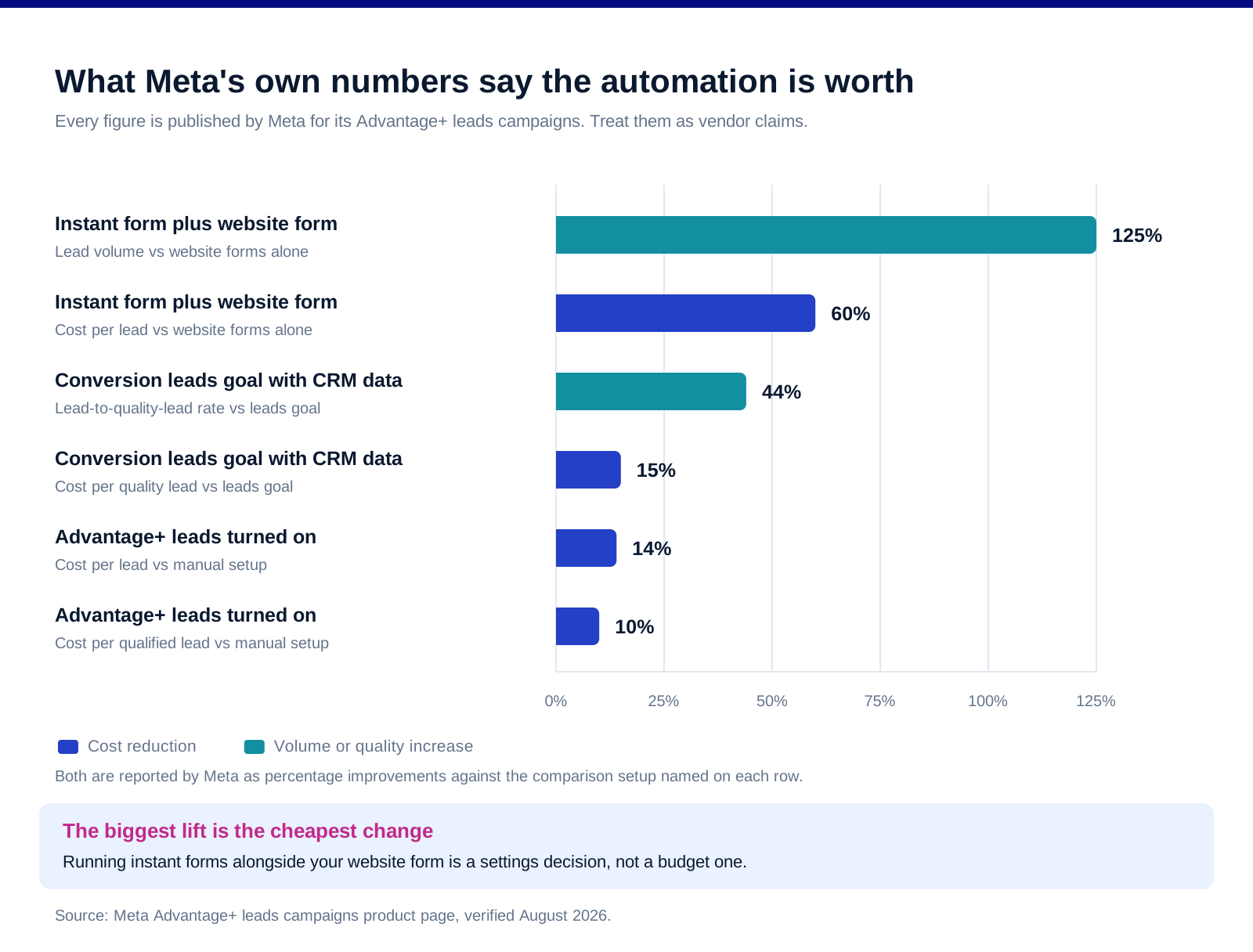
Every figure above comes from Meta's own product documentation, which means it is a marketing claim from an interested party. Read it that way and it is still useful, because it tells you what Meta has optimized for and therefore where the platform will reward you.
The largest claimed lift is also the cheapest to test. Meta reports that website-form campaigns running alongside instant-form campaigns see 60% lower cost per lead and 125% higher lead volume than website forms alone. That is a campaign-structure decision, not a budget one, and it is the first thing to try because the downside is one extra ad set.
Feeding conversions back is the second lever. Using the conversion leads performance goal with your CRM connected through the Conversions API is credited with 15% lower cost per quality lead and a 44% increase in the rate at which a lead becomes a quality lead. This is the mechanism that matters most in B2B: without outcome data flowing back, Meta optimizes toward whoever fills in forms, which in B2B is students, competitors and consultants.
The automation itself claims the smallest numbers. Advantage+ on versus manual setup is 14% lower cost per lead and 10% lower cost per qualified lead. Modest, and worth having, but not the reason to run the channel.
Which offer to run
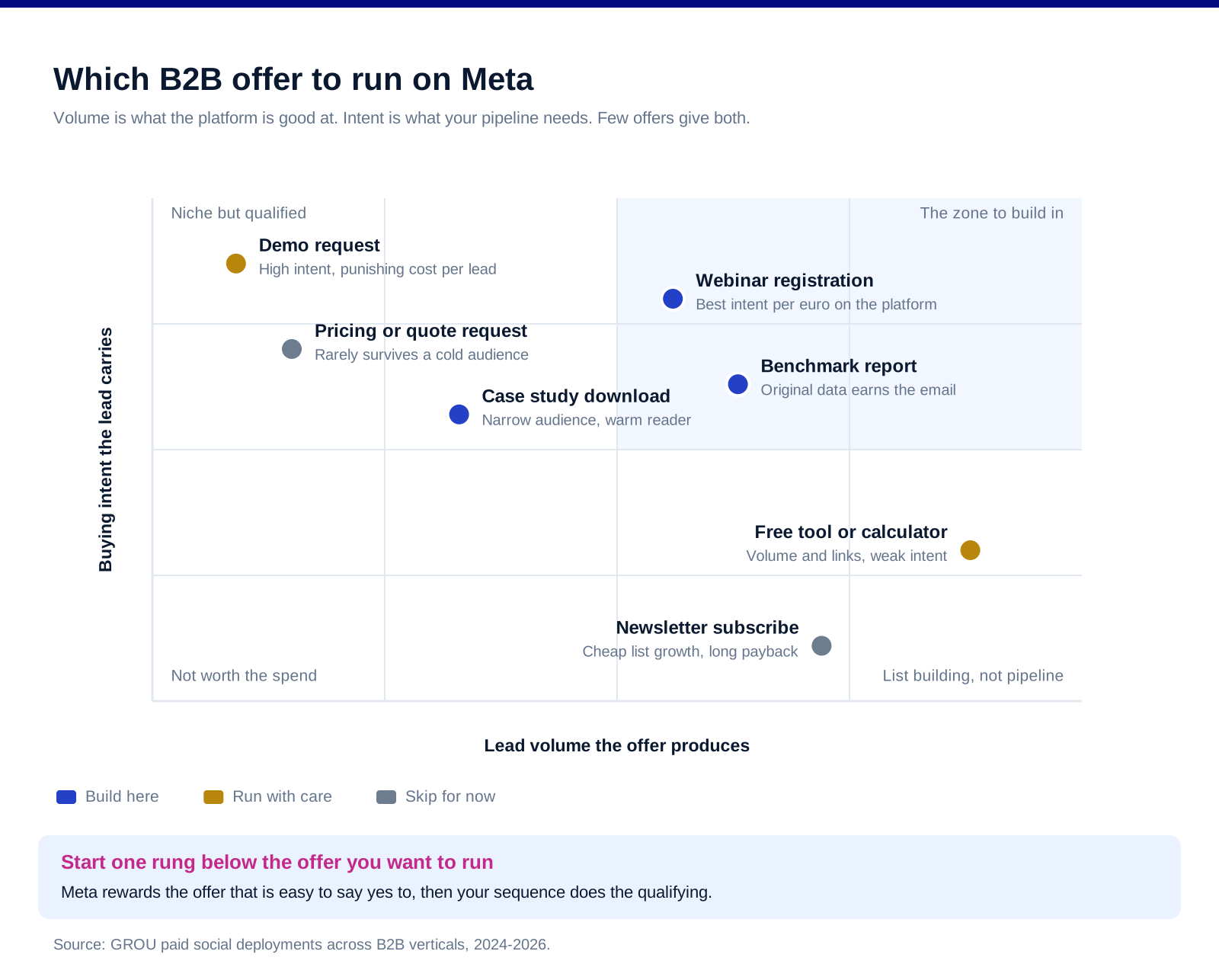
Meta's strength is reach at low cost against people who are not currently thinking about your category. That rules out anything requiring an active buying decision at the moment of the click.
Webinars are the strongest B2B offer on the platform. Registration is a low-friction yes, the topic filters the audience better than any interest targeting, and the event itself does the qualifying. A webinar on a problem only your buyer has will out-qualify a demo ad targeted at their job title.
Benchmark reports and original data work because they are not available elsewhere. A number a buyer cannot get from a search result earns the email address, and it gives your sales team a reason to follow up that is not "you downloaded a PDF."
Case study downloads convert narrowly and well. Lower volume, but the reader is self-selecting into your exact problem space.
Free tools and calculators produce volume and links with weak intent. Useful for building retargeting pools and earning coverage, poor as a direct pipeline source.
Demo and pricing requests almost never work cold. The intent is right and the cost per lead is punishing, because you are asking someone scrolling a social feed to enter a buying process. Run these to warm audiences only: site visitors, video viewers, lead-form openers.
The build, in the order that matters
Step 1: get conversion data flowing back before you spend. Connect the CRM through the Conversions API and use the conversion leads performance goal, so Meta optimizes toward leads that became opportunities rather than leads that filled a form. Without this the channel optimizes for the wrong thing, efficiently. Zapier covers the routing if your CRM has no native integration.
Step 2: build the exclusion audiences first. Existing customers, open opportunities, and anyone who already converted. These are custom-audience exclusions, and Meta confirms they are the one audience control that does not switch Advantage+ off. In B2B this alone can move cost per qualified lead more than any bid change, because your customer list is disproportionately likely to click.
Step 3: run both form types. An instant-form ad set and a website-form ad set against the same offer, which is the structure carrying Meta's largest reported lift.
Step 4: write the ad so it does the targeting. Name the role, the industry and the problem in the first line and on screen. "Operations directors at contract manufacturers" in the creative filters harder than any interest stack, and it does not narrow delivery in a way that penalizes the campaign.
Step 5: add qualifying questions to the instant form, carefully. Company size or role as a dropdown raises quality and lowers volume. Add one, measure, then decide whether a second is worth the drop.
Step 6: route leads in minutes, not days. Instant-form leads are the least considered leads you will ever receive, because the friction was near zero. Speed to first touch is doing most of the work.
What to hand the algorithm, and what to keep
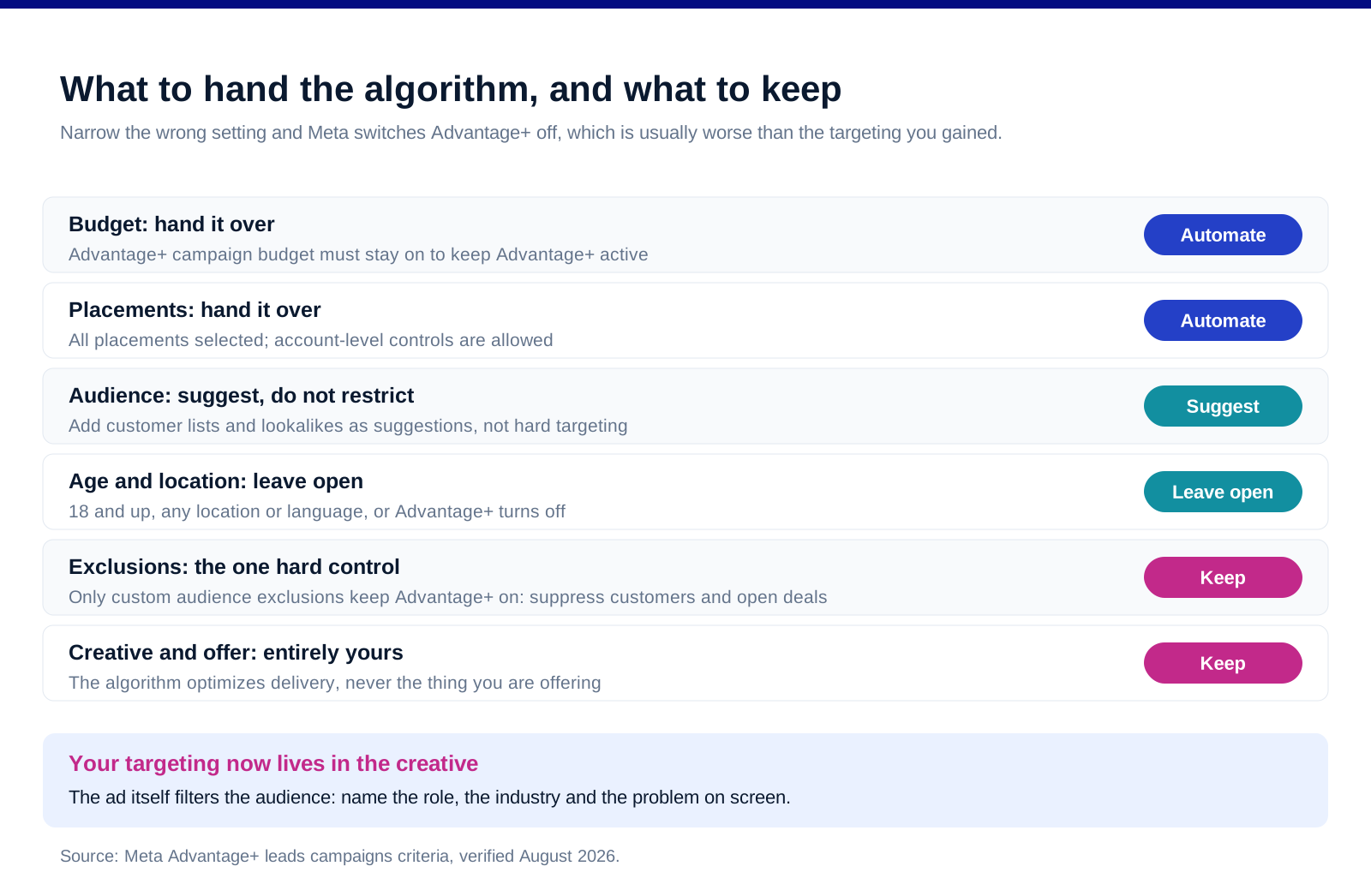
Meta publishes the exact criteria that keep a leads campaign in the Advantage+ state: Advantage+ campaign budget stays on, at least one ad set has Advantage+ audience on with age set to 18 and up and no location or language restriction, only custom-audience exclusions applied, and all placements selected. Break any of those and the campaign silently drops out of the optimization you were relying on.
The practical translation for B2B is uncomfortable but consistent: your targeting now lives in the creative and the offer, not in the audience builder. The instinct to narrow, which served B2B advertisers well for a decade, is the instinct that now costs money. Test it directly rather than taking anyone's word for it, including Meta's: run one campaign in the Advantage+ state and one narrowed the old way, and compare on qualified leads rather than on cost per lead.
Measuring a channel that will not attribute cleanly
Meta will over-report its own contribution and your CRM will under-report it, and both are structurally true rather than fixable. Three things make the channel measurable enough to fund.
Judge on cost per qualified lead, not cost per lead. The gap between the two is the entire question in B2B, and it only becomes visible once CRM outcomes flow back through the Conversions API.
Use a 30 to 90 day window. B2B cycles outlast Meta's attribution windows. Cohort the leads by the month they arrived and read pipeline against that cohort rather than against the reporting month.
Ask on the form or in the first call. A self-reported "how did you hear about us" field is imprecise, cheap, and consistently better than platform attribution for a channel that mostly creates demand it does not get credit for closing.
FAQ
Does Meta advertising work for B2B?
Yes, for demand creation rather than demand capture. The economics are good when the offer is a low-friction yes such as a webinar, benchmark report or case study, and poor when the ad asks a cold viewer to request a demo or pricing. The buyers are the same people who use LinkedIn, at a fraction of the CPM, in a mindset that suits education rather than purchase.
Can you target job titles on Meta?
Detailed targeting still includes employer, industry and job-title-adjacent interests, but Meta's current setup pushes toward Advantage+ audience, where those inputs act as suggestions rather than restrictions. Narrowing past Meta's criteria switches Advantage+ off, so most B2B advertisers now do their targeting in the creative and the offer instead.
Are Meta lead ads or website forms better for B2B?
Run both. Meta reports that website-form campaigns running alongside instant-form campaigns see 60% lower cost per lead and 125% higher lead volume than website forms alone. Instant forms produce volume at low friction, website forms produce fewer and better-qualified leads, and the combination is where the reported lift comes from.
How do I stop Meta sending me unqualified B2B leads?
Three things, in order: feed CRM outcomes back through the Conversions API so the algorithm optimizes toward leads that became opportunities, add one qualifying question to the instant form, and exclude existing customers and open deals with custom audiences. Tightening the audience is usually the least effective of the options and the most likely to disable the automation.
What budget do you need to test Meta Ads for B2B?
Enough for the algorithm to exit the learning phase on one offer, which in practice means committing to a single offer and a single audience structure for four to six weeks rather than spreading a small budget across several tests. Splitting a small budget across offers produces data that cannot be read.
How does Meta compare to LinkedIn for B2B?
Different jobs. LinkedIn buys precision at a high CPM and suits bottom-funnel offers to a defined account list. Meta buys reach cheaply and suits top-funnel education that fills the retargeting pool LinkedIn later closes. Teams running both usually find Meta creates the demand and LinkedIn takes the credit.
Bottom line
Meta rewards B2B advertisers who invert the usual approach: broad delivery, specific creative, a low-friction offer, and conversion data flowing back so the algorithm learns what a good lead looks like in your business. The three highest-leverage moves cost nothing in media budget, which is running both form types, connecting the CRM through the Conversions API, and excluding customers and open deals. Judge the whole thing on cost per qualified lead across a 30 to 90 day cohort, and accept that the channel will always be under-credited by the systems measuring it.
Want paid social run against pipeline rather than form fills? Book a call with GROU. We run paid acquisition inside B2B revenue engines across verticals.
We are GROU, a B2B pipeline agency that runs lead generation, outbound, and LinkedIn content for clients across manufacturing, fintech, iGaming, software, and professional services. The offer positioning and build order reflect our paid social deployments between 2024 and 2026, anonymized to protect client confidentiality.
Some links in this article are affiliate. We may earn a small commission at no extra cost to you. We only recommend tools we've deployed for clients.
Meta is the channel most B2B teams write off and then quietly envy, because the CPMs are a fraction of LinkedIn's and the audience is the same people after work. What has changed for 2026 is that the old B2B approach, stacking job-title interests into a narrow saved audience, is now the thing that makes campaigns perform worse. This playbook covers the offers that work on the platform, what Meta's own performance data actually claims, which controls to hand over and which to keep, and how to measure a channel that will never attribute cleanly.
The paid comparison sits alongside our LinkedIn ads CPC benchmarks and the demand-side view in B2B demand generation.
TL;DR
Meta works for B2B when you stop trying to target job titles and start letting the offer do the qualifying. Meta's Advantage+ leads campaigns are now the default setup, and narrowing your audience past a certain point switches the automation off, which usually costs more than the precision gains. Meta's own published figures: 14% lower cost per lead and 10% lower cost per qualified lead with Advantage+ on, 15% lower cost per quality lead and a 44% higher lead-to-quality rate when you feed CRM outcomes back through the Conversions API, and 60% lower cost per lead with 125% more volume when instant forms run alongside website forms rather than instead of them. Treat all of those as vendor claims and test them. The offer matters more than any of it: webinars, benchmark reports and case studies convert on Meta, while demo and pricing requests almost never survive a cold audience. Suppress existing customers and open deals with exclusion audiences, which is the one hard control that does not disable the automation. Measure on pipeline created and cost per qualified lead over a 30 to 90 day window, never on last-click.
What Meta's own numbers claim
Every figure above comes from Meta's own product documentation, which means it is a marketing claim from an interested party. Read it that way and it is still useful, because it tells you what Meta has optimized for and therefore where the platform will reward you.
The largest claimed lift is also the cheapest to test. Meta reports that website-form campaigns running alongside instant-form campaigns see 60% lower cost per lead and 125% higher lead volume than website forms alone. That is a campaign-structure decision, not a budget one, and it is the first thing to try because the downside is one extra ad set.
Feeding conversions back is the second lever. Using the conversion leads performance goal with your CRM connected through the Conversions API is credited with 15% lower cost per quality lead and a 44% increase in the rate at which a lead becomes a quality lead. This is the mechanism that matters most in B2B: without outcome data flowing back, Meta optimizes toward whoever fills in forms, which in B2B is students, competitors and consultants.
The automation itself claims the smallest numbers. Advantage+ on versus manual setup is 14% lower cost per lead and 10% lower cost per qualified lead. Modest, and worth having, but not the reason to run the channel.
Which offer to run
Meta's strength is reach at low cost against people who are not currently thinking about your category. That rules out anything requiring an active buying decision at the moment of the click.
Webinars are the strongest B2B offer on the platform. Registration is a low-friction yes, the topic filters the audience better than any interest targeting, and the event itself does the qualifying. A webinar on a problem only your buyer has will out-qualify a demo ad targeted at their job title.
Benchmark reports and original data work because they are not available elsewhere. A number a buyer cannot get from a search result earns the email address, and it gives your sales team a reason to follow up that is not "you downloaded a PDF."
Case study downloads convert narrowly and well. Lower volume, but the reader is self-selecting into your exact problem space.
Free tools and calculators produce volume and links with weak intent. Useful for building retargeting pools and earning coverage, poor as a direct pipeline source.
Demo and pricing requests almost never work cold. The intent is right and the cost per lead is punishing, because you are asking someone scrolling a social feed to enter a buying process. Run these to warm audiences only: site visitors, video viewers, lead-form openers.
The build, in the order that matters
Step 1: get conversion data flowing back before you spend. Connect the CRM through the Conversions API and use the conversion leads performance goal, so Meta optimizes toward leads that became opportunities rather than leads that filled a form. Without this the channel optimizes for the wrong thing, efficiently. Zapier covers the routing if your CRM has no native integration.
Step 2: build the exclusion audiences first. Existing customers, open opportunities, and anyone who already converted. These are custom-audience exclusions, and Meta confirms they are the one audience control that does not switch Advantage+ off. In B2B this alone can move cost per qualified lead more than any bid change, because your customer list is disproportionately likely to click.
Step 3: run both form types. An instant-form ad set and a website-form ad set against the same offer, which is the structure carrying Meta's largest reported lift.
Step 4: write the ad so it does the targeting. Name the role, the industry and the problem in the first line and on screen. "Operations directors at contract manufacturers" in the creative filters harder than any interest stack, and it does not narrow delivery in a way that penalizes the campaign.
Step 5: add qualifying questions to the instant form, carefully. Company size or role as a dropdown raises quality and lowers volume. Add one, measure, then decide whether a second is worth the drop.
Step 6: route leads in minutes, not days. Instant-form leads are the least considered leads you will ever receive, because the friction was near zero. Speed to first touch is doing most of the work.
What to hand the algorithm, and what to keep
Meta publishes the exact criteria that keep a leads campaign in the Advantage+ state: Advantage+ campaign budget stays on, at least one ad set has Advantage+ audience on with age set to 18 and up and no location or language restriction, only custom-audience exclusions applied, and all placements selected. Break any of those and the campaign silently drops out of the optimization you were relying on.
The practical translation for B2B is uncomfortable but consistent: your targeting now lives in the creative and the offer, not in the audience builder. The instinct to narrow, which served B2B advertisers well for a decade, is the instinct that now costs money. Test it directly rather than taking anyone's word for it, including Meta's: run one campaign in the Advantage+ state and one narrowed the old way, and compare on qualified leads rather than on cost per lead.
Measuring a channel that will not attribute cleanly
Meta will over-report its own contribution and your CRM will under-report it, and both are structurally true rather than fixable. Three things make the channel measurable enough to fund.
Judge on cost per qualified lead, not cost per lead. The gap between the two is the entire question in B2B, and it only becomes visible once CRM outcomes flow back through the Conversions API.
Use a 30 to 90 day window. B2B cycles outlast Meta's attribution windows. Cohort the leads by the month they arrived and read pipeline against that cohort rather than against the reporting month.
Ask on the form or in the first call. A self-reported "how did you hear about us" field is imprecise, cheap, and consistently better than platform attribution for a channel that mostly creates demand it does not get credit for closing.
FAQ
Does Meta advertising work for B2B?
Yes, for demand creation rather than demand capture. The economics are good when the offer is a low-friction yes such as a webinar, benchmark report or case study, and poor when the ad asks a cold viewer to request a demo or pricing. The buyers are the same people who use LinkedIn, at a fraction of the CPM, in a mindset that suits education rather than purchase.
Can you target job titles on Meta?
Detailed targeting still includes employer, industry and job-title-adjacent interests, but Meta's current setup pushes toward Advantage+ audience, where those inputs act as suggestions rather than restrictions. Narrowing past Meta's criteria switches Advantage+ off, so most B2B advertisers now do their targeting in the creative and the offer instead.
Are Meta lead ads or website forms better for B2B?
Run both. Meta reports that website-form campaigns running alongside instant-form campaigns see 60% lower cost per lead and 125% higher lead volume than website forms alone. Instant forms produce volume at low friction, website forms produce fewer and better-qualified leads, and the combination is where the reported lift comes from.
How do I stop Meta sending me unqualified B2B leads?
Three things, in order: feed CRM outcomes back through the Conversions API so the algorithm optimizes toward leads that became opportunities, add one qualifying question to the instant form, and exclude existing customers and open deals with custom audiences. Tightening the audience is usually the least effective of the options and the most likely to disable the automation.
What budget do you need to test Meta Ads for B2B?
Enough for the algorithm to exit the learning phase on one offer, which in practice means committing to a single offer and a single audience structure for four to six weeks rather than spreading a small budget across several tests. Splitting a small budget across offers produces data that cannot be read.
How does Meta compare to LinkedIn for B2B?
Different jobs. LinkedIn buys precision at a high CPM and suits bottom-funnel offers to a defined account list. Meta buys reach cheaply and suits top-funnel education that fills the retargeting pool LinkedIn later closes. Teams running both usually find Meta creates the demand and LinkedIn takes the credit.
Bottom line
Meta rewards B2B advertisers who invert the usual approach: broad delivery, specific creative, a low-friction offer, and conversion data flowing back so the algorithm learns what a good lead looks like in your business. The three highest-leverage moves cost nothing in media budget, which is running both form types, connecting the CRM through the Conversions API, and excluding customers and open deals. Judge the whole thing on cost per qualified lead across a 30 to 90 day cohort, and accept that the channel will always be under-credited by the systems measuring it.
Want paid social run against pipeline rather than form fills? Book a call with GROU. We run paid acquisition inside B2B revenue engines across verticals.
We are GROU, a B2B pipeline agency that runs lead generation, outbound, and LinkedIn content for clients across manufacturing, fintech, iGaming, software, and professional services. The offer positioning and build order reflect our paid social deployments between 2024 and 2026, anonymized to protect client confidentiality.
Some links in this article are affiliate. We may earn a small commission at no extra cost to you. We only recommend tools we've deployed for clients.
Meta is the channel most B2B teams write off and then quietly envy, because the CPMs are a fraction of LinkedIn's and the audience is the same people after work. What has changed for 2026 is that the old B2B approach, stacking job-title interests into a narrow saved audience, is now the thing that makes campaigns perform worse. This playbook covers the offers that work on the platform, what Meta's own performance data actually claims, which controls to hand over and which to keep, and how to measure a channel that will never attribute cleanly.
The paid comparison sits alongside our LinkedIn ads CPC benchmarks and the demand-side view in B2B demand generation.
TL;DR
Meta works for B2B when you stop trying to target job titles and start letting the offer do the qualifying. Meta's Advantage+ leads campaigns are now the default setup, and narrowing your audience past a certain point switches the automation off, which usually costs more than the precision gains. Meta's own published figures: 14% lower cost per lead and 10% lower cost per qualified lead with Advantage+ on, 15% lower cost per quality lead and a 44% higher lead-to-quality rate when you feed CRM outcomes back through the Conversions API, and 60% lower cost per lead with 125% more volume when instant forms run alongside website forms rather than instead of them. Treat all of those as vendor claims and test them. The offer matters more than any of it: webinars, benchmark reports and case studies convert on Meta, while demo and pricing requests almost never survive a cold audience. Suppress existing customers and open deals with exclusion audiences, which is the one hard control that does not disable the automation. Measure on pipeline created and cost per qualified lead over a 30 to 90 day window, never on last-click.
What Meta's own numbers claim
Every figure above comes from Meta's own product documentation, which means it is a marketing claim from an interested party. Read it that way and it is still useful, because it tells you what Meta has optimized for and therefore where the platform will reward you.
The largest claimed lift is also the cheapest to test. Meta reports that website-form campaigns running alongside instant-form campaigns see 60% lower cost per lead and 125% higher lead volume than website forms alone. That is a campaign-structure decision, not a budget one, and it is the first thing to try because the downside is one extra ad set.
Feeding conversions back is the second lever. Using the conversion leads performance goal with your CRM connected through the Conversions API is credited with 15% lower cost per quality lead and a 44% increase in the rate at which a lead becomes a quality lead. This is the mechanism that matters most in B2B: without outcome data flowing back, Meta optimizes toward whoever fills in forms, which in B2B is students, competitors and consultants.
The automation itself claims the smallest numbers. Advantage+ on versus manual setup is 14% lower cost per lead and 10% lower cost per qualified lead. Modest, and worth having, but not the reason to run the channel.
Which offer to run
Meta's strength is reach at low cost against people who are not currently thinking about your category. That rules out anything requiring an active buying decision at the moment of the click.
Webinars are the strongest B2B offer on the platform. Registration is a low-friction yes, the topic filters the audience better than any interest targeting, and the event itself does the qualifying. A webinar on a problem only your buyer has will out-qualify a demo ad targeted at their job title.
Benchmark reports and original data work because they are not available elsewhere. A number a buyer cannot get from a search result earns the email address, and it gives your sales team a reason to follow up that is not "you downloaded a PDF."
Case study downloads convert narrowly and well. Lower volume, but the reader is self-selecting into your exact problem space.
Free tools and calculators produce volume and links with weak intent. Useful for building retargeting pools and earning coverage, poor as a direct pipeline source.
Demo and pricing requests almost never work cold. The intent is right and the cost per lead is punishing, because you are asking someone scrolling a social feed to enter a buying process. Run these to warm audiences only: site visitors, video viewers, lead-form openers.
The build, in the order that matters
Step 1: get conversion data flowing back before you spend. Connect the CRM through the Conversions API and use the conversion leads performance goal, so Meta optimizes toward leads that became opportunities rather than leads that filled a form. Without this the channel optimizes for the wrong thing, efficiently. Zapier covers the routing if your CRM has no native integration.
Step 2: build the exclusion audiences first. Existing customers, open opportunities, and anyone who already converted. These are custom-audience exclusions, and Meta confirms they are the one audience control that does not switch Advantage+ off. In B2B this alone can move cost per qualified lead more than any bid change, because your customer list is disproportionately likely to click.
Step 3: run both form types. An instant-form ad set and a website-form ad set against the same offer, which is the structure carrying Meta's largest reported lift.
Step 4: write the ad so it does the targeting. Name the role, the industry and the problem in the first line and on screen. "Operations directors at contract manufacturers" in the creative filters harder than any interest stack, and it does not narrow delivery in a way that penalizes the campaign.
Step 5: add qualifying questions to the instant form, carefully. Company size or role as a dropdown raises quality and lowers volume. Add one, measure, then decide whether a second is worth the drop.
Step 6: route leads in minutes, not days. Instant-form leads are the least considered leads you will ever receive, because the friction was near zero. Speed to first touch is doing most of the work.
What to hand the algorithm, and what to keep
Meta publishes the exact criteria that keep a leads campaign in the Advantage+ state: Advantage+ campaign budget stays on, at least one ad set has Advantage+ audience on with age set to 18 and up and no location or language restriction, only custom-audience exclusions applied, and all placements selected. Break any of those and the campaign silently drops out of the optimization you were relying on.
The practical translation for B2B is uncomfortable but consistent: your targeting now lives in the creative and the offer, not in the audience builder. The instinct to narrow, which served B2B advertisers well for a decade, is the instinct that now costs money. Test it directly rather than taking anyone's word for it, including Meta's: run one campaign in the Advantage+ state and one narrowed the old way, and compare on qualified leads rather than on cost per lead.
Measuring a channel that will not attribute cleanly
Meta will over-report its own contribution and your CRM will under-report it, and both are structurally true rather than fixable. Three things make the channel measurable enough to fund.
Judge on cost per qualified lead, not cost per lead. The gap between the two is the entire question in B2B, and it only becomes visible once CRM outcomes flow back through the Conversions API.
Use a 30 to 90 day window. B2B cycles outlast Meta's attribution windows. Cohort the leads by the month they arrived and read pipeline against that cohort rather than against the reporting month.
Ask on the form or in the first call. A self-reported "how did you hear about us" field is imprecise, cheap, and consistently better than platform attribution for a channel that mostly creates demand it does not get credit for closing.
FAQ
Does Meta advertising work for B2B?
Yes, for demand creation rather than demand capture. The economics are good when the offer is a low-friction yes such as a webinar, benchmark report or case study, and poor when the ad asks a cold viewer to request a demo or pricing. The buyers are the same people who use LinkedIn, at a fraction of the CPM, in a mindset that suits education rather than purchase.
Can you target job titles on Meta?
Detailed targeting still includes employer, industry and job-title-adjacent interests, but Meta's current setup pushes toward Advantage+ audience, where those inputs act as suggestions rather than restrictions. Narrowing past Meta's criteria switches Advantage+ off, so most B2B advertisers now do their targeting in the creative and the offer instead.
Are Meta lead ads or website forms better for B2B?
Run both. Meta reports that website-form campaigns running alongside instant-form campaigns see 60% lower cost per lead and 125% higher lead volume than website forms alone. Instant forms produce volume at low friction, website forms produce fewer and better-qualified leads, and the combination is where the reported lift comes from.
How do I stop Meta sending me unqualified B2B leads?
Three things, in order: feed CRM outcomes back through the Conversions API so the algorithm optimizes toward leads that became opportunities, add one qualifying question to the instant form, and exclude existing customers and open deals with custom audiences. Tightening the audience is usually the least effective of the options and the most likely to disable the automation.
What budget do you need to test Meta Ads for B2B?
Enough for the algorithm to exit the learning phase on one offer, which in practice means committing to a single offer and a single audience structure for four to six weeks rather than spreading a small budget across several tests. Splitting a small budget across offers produces data that cannot be read.
How does Meta compare to LinkedIn for B2B?
Different jobs. LinkedIn buys precision at a high CPM and suits bottom-funnel offers to a defined account list. Meta buys reach cheaply and suits top-funnel education that fills the retargeting pool LinkedIn later closes. Teams running both usually find Meta creates the demand and LinkedIn takes the credit.
Bottom line
Meta rewards B2B advertisers who invert the usual approach: broad delivery, specific creative, a low-friction offer, and conversion data flowing back so the algorithm learns what a good lead looks like in your business. The three highest-leverage moves cost nothing in media budget, which is running both form types, connecting the CRM through the Conversions API, and excluding customers and open deals. Judge the whole thing on cost per qualified lead across a 30 to 90 day cohort, and accept that the channel will always be under-credited by the systems measuring it.
Want paid social run against pipeline rather than form fills? Book a call with GROU. We run paid acquisition inside B2B revenue engines across verticals.
We are GROU, a B2B pipeline agency that runs lead generation, outbound, and LinkedIn content for clients across manufacturing, fintech, iGaming, software, and professional services. The offer positioning and build order reflect our paid social deployments between 2024 and 2026, anonymized to protect client confidentiality.
Some links in this article are affiliate. We may earn a small commission at no extra cost to you. We only recommend tools we've deployed for clients.
Pipeline OS Newsletter
Build qualified pipeline
Get weekly tactics to generate demand, improve lead quality, and book more meetings.





Trusted by industry leaders
Trusted by industry leaders
Trusted by industry leaders
Ready to build qualified pipeline?
Ready to build qualified pipeline?
Ready to build qualified pipeline?
Book a call to see if we're the right fit, or take the 2-minute quiz to get a clear starting point.
Book a call to see if we're the right fit, or take the 2-minute quiz to get a clear starting point.
Book a call to see if we're the right fit, or take the 2-minute quiz to get a clear starting point.
" height="30.21639343089746px" id="hfGbXmQR2" width="30.216393430897455px"/></svg>)
Copyright © 2026 – All Right Reserved
Company
Resources
Copyright © 2026 – All Right Reserved
Copyright © 2026 – All Right Reserved