›
›
›
›
HeyReach pricing 2026 explained
HeyReach pricing 2026 explained
HeyReach pricing 2026 explained
HeyReach pricing 2026 explained
HeyReach pricing 2026 explained
HeyReach pricing 2026 explained

Author
Aljaz Peklaj

HeyReach prices by LinkedIn sender account rather than by user seat, which makes it cheap for one person and unusual at scale. It also means the price you should be comparing is not the sticker on the pricing page. There is a volume break that page does not mention, and it produces the strangest line in the whole rate card: buying ten sender accounts costs less than buying nine.
This is the full ladder with current figures, the two places HeyReach's own pages disagree, and the three sender counts where the tier you are on stops being the right one.
If you are still choosing between platforms rather than tiers, our HeyReach versus Expandi comparison covers that decision.
TL;DR
HeyReach charges per connected LinkedIn account, not per human. Growth is $79 a month per sender on monthly billing and $63 on annual, but at ten senders and above those rates drop to $59 and $47, which is published in the help centre and not on the pricing page. The practical consequence is that nine senders on annual billing costs $567 a month while ten costs $470, so the tenth account makes your bill smaller. Agency starts at $999 monthly or $799 annual for 25 senders and adds whitelabel, 1,000 enrichment credits and done-for-you onboarding, and on annual billing it matches Growth's price at exactly 17 senders, which means anyone running 17 or more is paying the same money for fewer features. A second agency tier covers 50 senders at $1,399 monthly or $1,119 annual, and Unlimited is $2,999 monthly or $2,399 annual with no sender cap, which only beats Growth's per-sender maths past 51 accounts. Annual billing is a uniform 20% off every tier, which is unusually honest as rate cards go. Every plan gets a 14-day trial with three LinkedIn accounts and no card required.
The ladder, and the volume break that is not on the pricing page
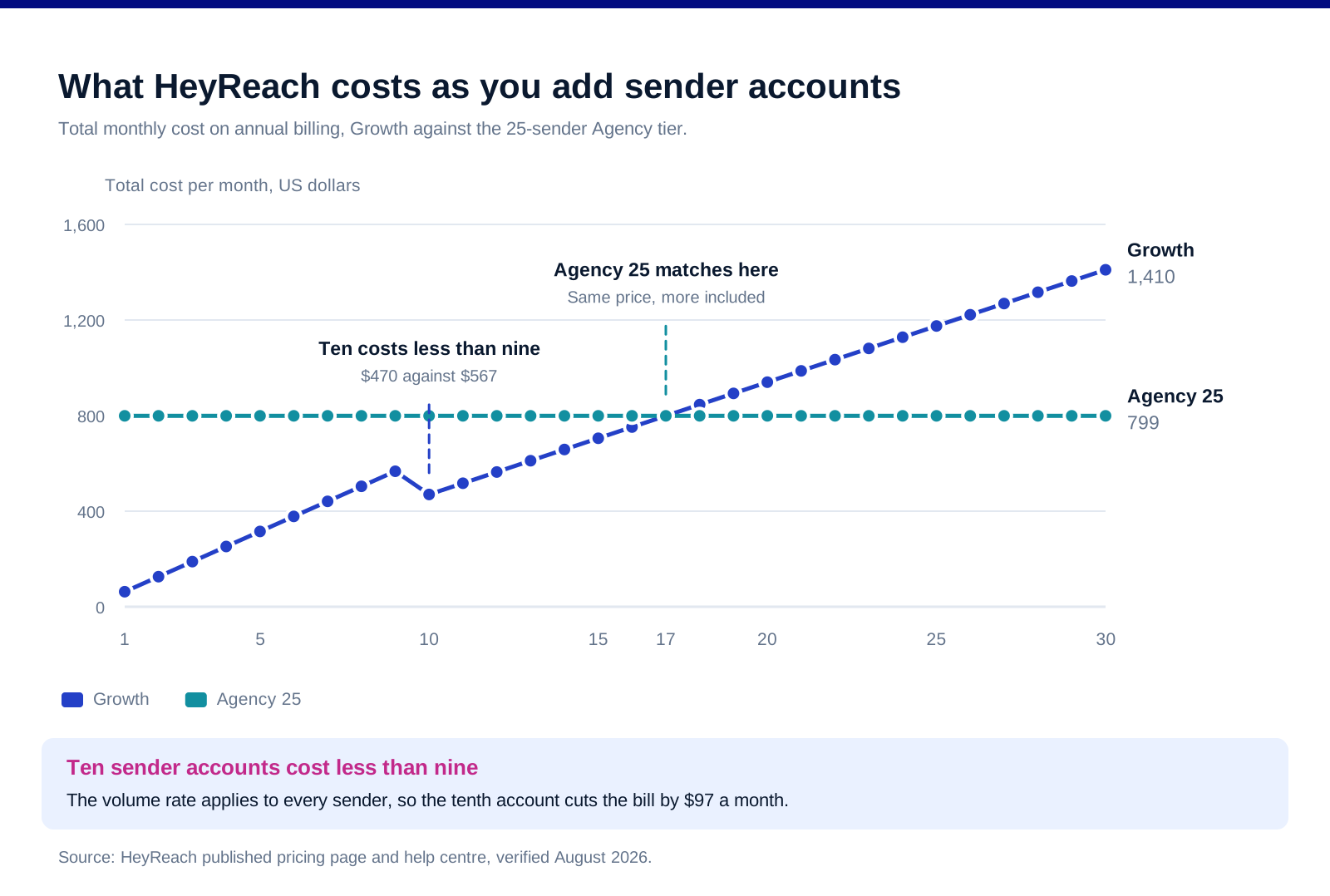
Growth is $79 per sender monthly, $71 quarterly and $63 on annual billing. That is what the pricing page shows, and for most people evaluating the tool it is the only number they will see.
At ten senders and above, those rates become $59 and $47. This is published in HeyReach's help centre rather than on the pricing page. It is the same plan, and nothing about it changes except the rate.
Which produces the volume cliff. Nine senders on annual billing is $567 a month. Ten is $470. The tenth account does not cost you $47, it saves you $97, because the discount applies to every sender rather than only the ones past the threshold. If you are sitting at eight or nine accounts, adding one or two is cheaper than staying where you are, and nothing in the checkout will tell you that.
Annual billing is a flat 20% off everywhere. Growth, both agency tiers and Unlimited all discount at essentially the same rate, which is rare enough to be worth noting. There is no tier where committing annually is a materially better or worse deal than any other, so the annual decision is purely about whether you want to commit, not about hunting a deeper cut.
What each tier actually includes
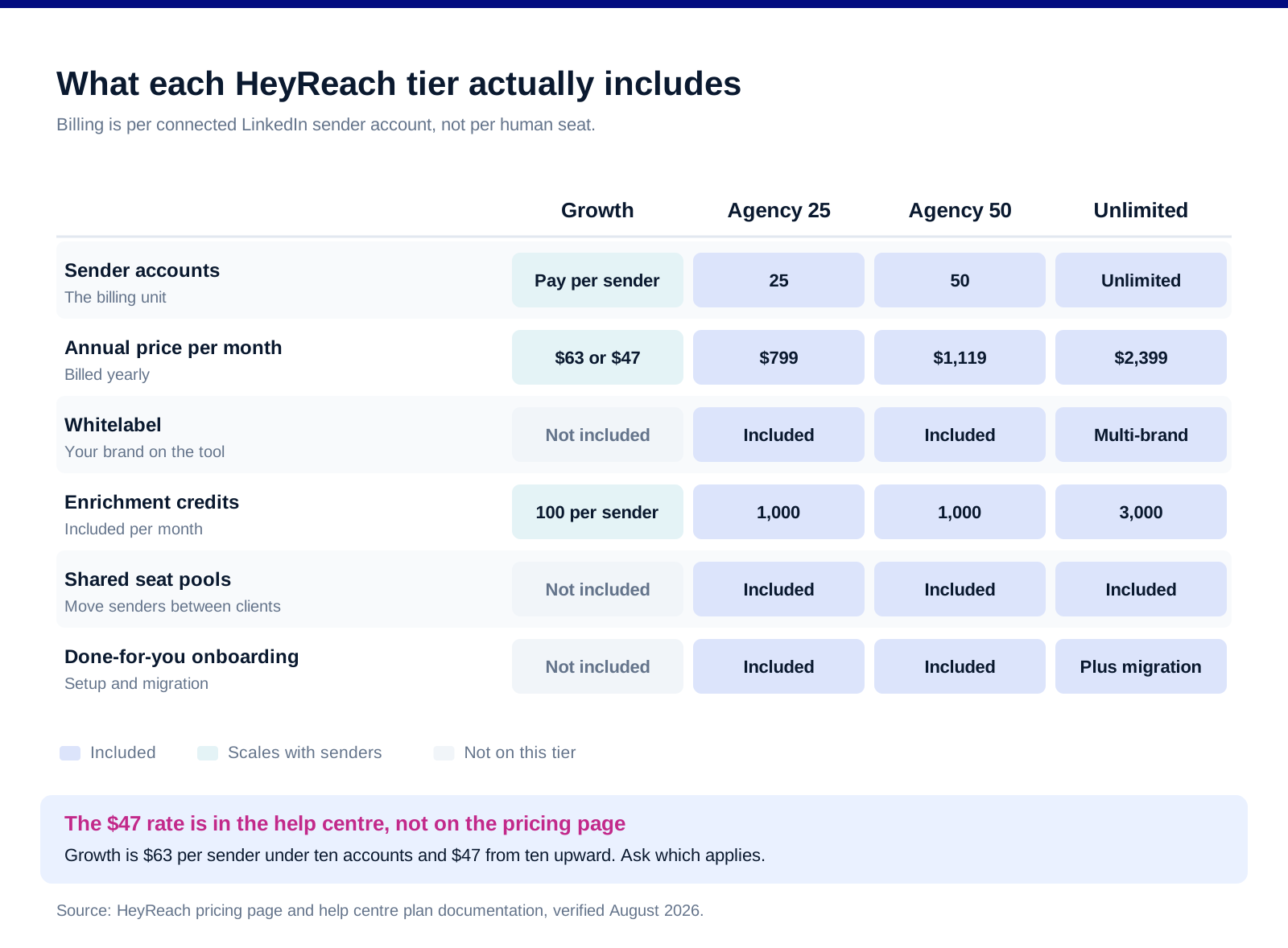
Growth gives you the product without the agency furniture. Unlimited campaigns, multichannel outreach, API access, integrations, and 100 enrichment credits per sender. What it does not include is whitelabel and dedicated support. For an in-house team running its own outreach, that is not a gap.
Agency 25 is where whitelabel arrives. 25 sender accounts, whitelabel, 1,000 enrichment credits, done-for-you onboarding, a dedicated Slack channel, and shared seat pools across separate client workspaces. That last one is the feature agencies actually buy, because it lets senders move between clients rather than being stranded in one workspace.
Agency 50 is the same thing with double the senders. $1,399 monthly or $1,119 on annual billing.
Unlimited removes the cap and adds migration. No sender limit, 3,000 enrichment credits, priority support, done-for-you migration, and multi-brand whitelabel available as a $500 add-on per brand. The add-on pricing matters if you run several agency brands, because it is the one line that scales with something other than senders.
Done For You is a service, not a tier. Full campaign management, ICP research, a dedicated GTM engineer and a dedicated inbox manager, priced on a demo. Worth naming as a category rather than comparing on price, because you are buying people rather than software.
There is an early-stage programme. Under $250,000 ARR, a team of fewer than five, and not an existing customer. HeyReach describes it as heavily discounted but does not publish the figure, so treat it as worth applying for and not as a number you can plan against.
The three sender counts that change the answer
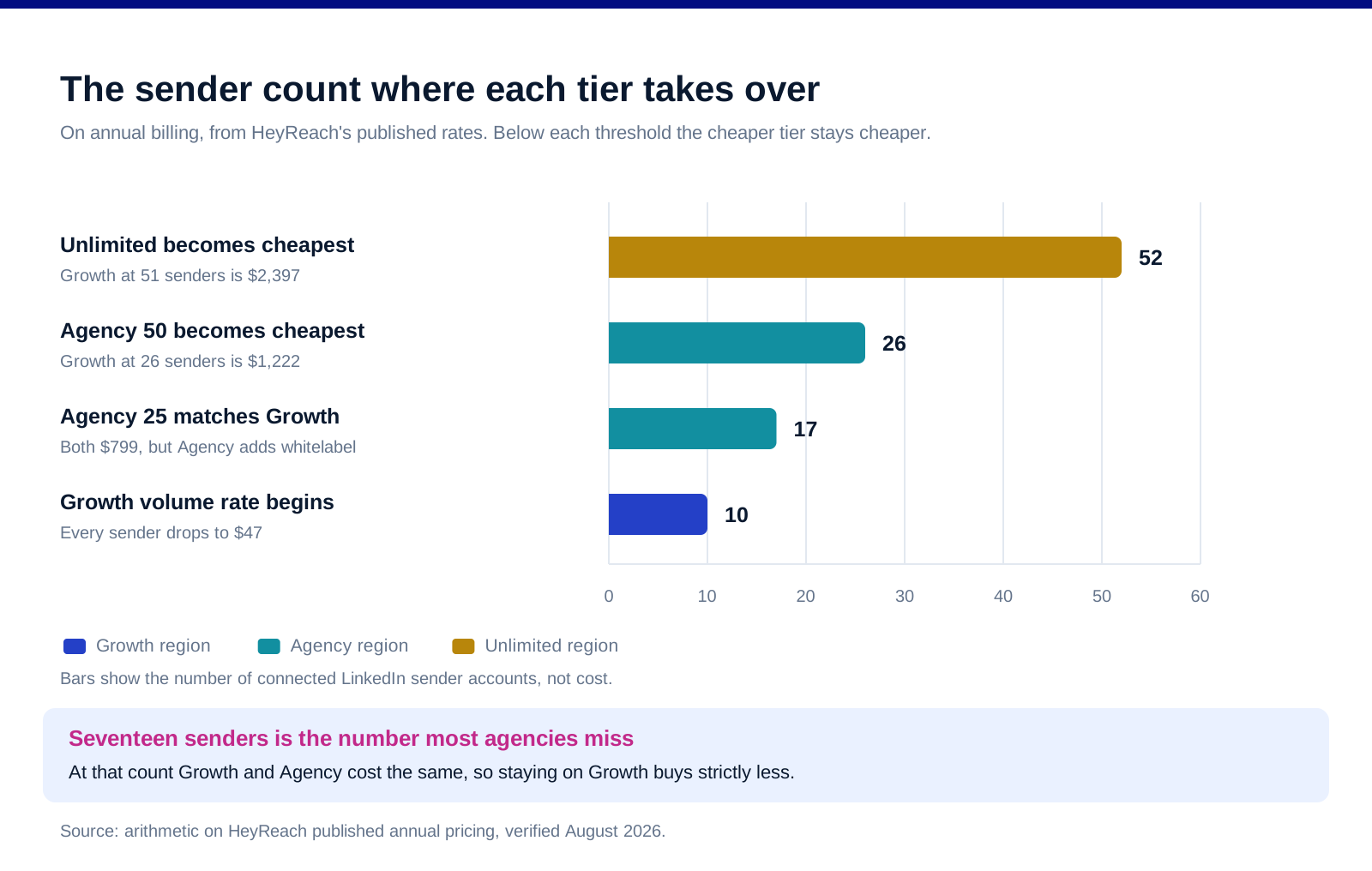
All of this is arithmetic on HeyReach's own published prices, on annual billing.
At ten senders, stay on Growth and add accounts. The volume break makes this the cheapest region by a wide margin. Growth at ten to sixteen senders runs $470 to $752 a month, and no other tier comes close.
At seventeen senders, Agency 25 catches up exactly. Seventeen senders on Growth annual is $799 a month. Agency 25 on annual is $799 a month. Identical price, except Agency also gives you whitelabel, ten times the enrichment credits, onboarding and eight spare sender slots. Above seventeen, staying on Growth means paying more for less.
At twenty-six senders, Agency 50 takes over. Growth at 26 is $1,222 against Agency 50's $1,119, and the gap widens from there.
Unlimited only wins past fifty-one. Growth at 51 senders is $2,397 a month, two dollars under Unlimited's $2,399. From 52 accounts up, Unlimited is cheaper and stops being a per-seat decision at all. Below that, Unlimited is a bet on where you are going rather than a saving on where you are.
Where HeyReach's own pages disagree
The Growth volume break appears in the help centre and not on the pricing page. The pricing page presents $79, $71 and $63 as the Growth rates with no mention of a threshold. The help centre publishes $59 and $47 for ten senders or more. Both are HeyReach's own properties, the prices are different, and nothing on the pricing page tells you the other rate exists.
The second agency tier is described rather than priced in one place and priced in the other. The pricing page presents Agency as 25 senders "expandable to 50 with yearly plan". The help centre prices a distinct Agency 50 tier at $1,399 monthly and $1,119 annual. Whether that is one plan with an expansion or two plans is not resolvable from outside, so check what the checkout screen offers before you assume either.
Neither is a trap, both are worth verifying. Ask which rate applies at your sender count before you commit, and get the answer in writing if you are near ten or near twenty-five.
Which tier you should actually buy
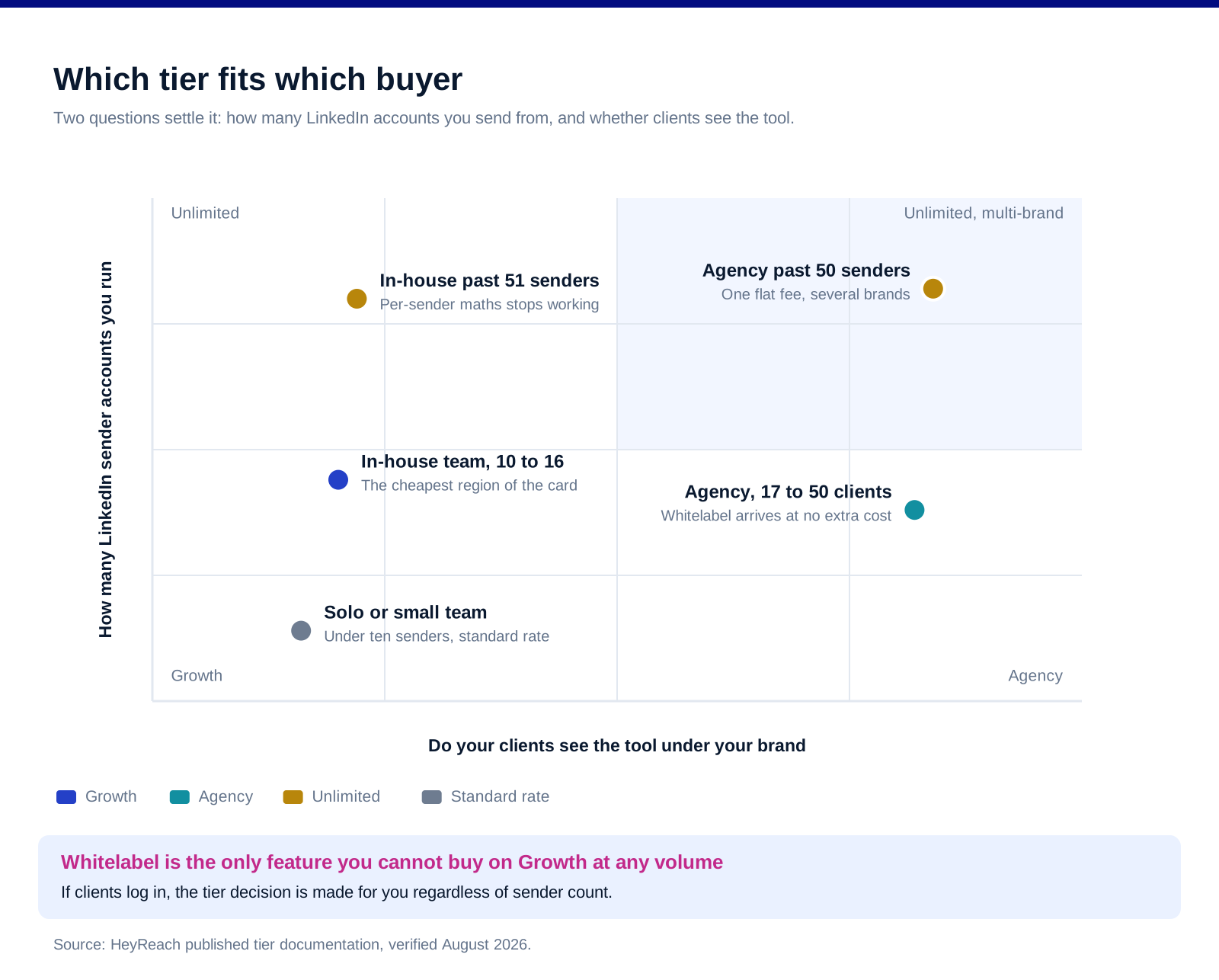
One to nine senders: Growth, and consider jumping to ten. If you are at eight or nine and have any use for another account, the tenth is free in the sense that it reduces the bill. If you genuinely need three, pay the $63 and do not overthink it.
Ten to sixteen senders: Growth, comfortably. This is the best value region in the entire rate card and there is no reason to look at another tier.
Seventeen or more, and you serve clients: Agency. At seventeen the price is identical to Growth and the whitelabel plus shared seat pools are worth real money to an agency. If you are in-house at seventeen senders you are still better off on Agency, because you are paying that money anyway.
Fifty-two or more senders: Unlimited. Past this point the per-sender maths stops working and the flat fee is simply cheaper. It also removes the planning overhead of costing every new account.
Multichannel beyond LinkedIn: pair it, do not replace it. HeyReach is a LinkedIn platform with multichannel steps rather than an email sequencer. If email is the larger half of your motion, Instantly or Lemlist cover that side, and Expandi is the closest direct comparison on the LinkedIn half. Our LinkedIn Premium versus Sales Navigator comparison covers the seat you need underneath any of them.
FAQ
How much does HeyReach cost?
Growth is $79 per sender account per month on monthly billing and $63 on annual, dropping to $59 and $47 once you have ten or more senders. Agency is $999 monthly or $799 annual for 25 senders, with a 50-sender tier at $1,399 and $1,119. Unlimited is $2,999 monthly or $2,399 annual with no sender cap. Annual billing is 20% off across every tier.
Does HeyReach charge per user or per LinkedIn account?
Per connected LinkedIn sender account. Human seats are not the billing unit, which is why the tool is cheap for a solo operator running one profile and why agencies end up on flat-fee tiers rather than buying dozens of individual senders.
Is there a HeyReach free trial?
Yes. Fourteen days, no credit card required, and it includes three LinkedIn accounts. Three accounts is enough to test whether the multi-sender rotation actually works the way you need it to, which is the thing worth testing.
When does the HeyReach Agency plan become cheaper than Growth?
At seventeen sender accounts on annual billing the two cost exactly the same, $799 a month, and Agency includes whitelabel, 1,000 enrichment credits and onboarding on top. Above seventeen, Growth costs more and delivers less. The 50-sender agency tier takes over at twenty-six senders.
Is HeyReach Unlimited worth it?
Only past roughly fifty senders. Growth at 51 accounts on annual billing is $2,397 a month against Unlimited's $2,399, so the crossover is essentially at 52. Below that, Unlimited is a forward bet on growth rather than a saving, and the per-sender tiers are cheaper.
Why does adding a tenth LinkedIn account reduce the HeyReach bill?
Because the volume rate applies to every sender rather than only to those above the threshold. Nine senders on annual billing is $567 a month at $63 each; ten is $470 at $47 each. It is a genuine cliff rather than a rounding effect, and it is published in the help centre rather than on the pricing page, so most people never see it.
Bottom line
Work out your sender count first, because in HeyReach's rate card that number decides everything and the price per sender is not constant. Under ten, pay the standard rate and check whether jumping to ten costs you less than staying put. Between ten and sixteen you are in the cheapest part of the card. From seventeen upward Agency is the same money or less with whitelabel attached, and past fifty-two Unlimited stops the arithmetic altogether. Ask HeyReach in writing which rate applies at your count before you commit, because its own pricing page and help centre do not currently tell the same story.
Want the LinkedIn outreach run rather than the tool chosen? Book a call with GROU. We run LinkedIn outreach and outbound inside B2B revenue engines across verticals.
We are GROU, a B2B pipeline agency that runs lead generation, outbound, and LinkedIn content for clients across manufacturing, fintech, iGaming, software, and professional services. The tier guidance and crossover arithmetic reflect our LinkedIn outreach deployments between 2024 and 2026, anonymized to protect client confidentiality.
Some links in this article are affiliate. We may earn a small commission at no extra cost to you. We only recommend tools we've deployed for clients.
HeyReach prices by LinkedIn sender account rather than by user seat, which makes it cheap for one person and unusual at scale. It also means the price you should be comparing is not the sticker on the pricing page. There is a volume break that page does not mention, and it produces the strangest line in the whole rate card: buying ten sender accounts costs less than buying nine.
This is the full ladder with current figures, the two places HeyReach's own pages disagree, and the three sender counts where the tier you are on stops being the right one.
If you are still choosing between platforms rather than tiers, our HeyReach versus Expandi comparison covers that decision.
TL;DR
HeyReach charges per connected LinkedIn account, not per human. Growth is $79 a month per sender on monthly billing and $63 on annual, but at ten senders and above those rates drop to $59 and $47, which is published in the help centre and not on the pricing page. The practical consequence is that nine senders on annual billing costs $567 a month while ten costs $470, so the tenth account makes your bill smaller. Agency starts at $999 monthly or $799 annual for 25 senders and adds whitelabel, 1,000 enrichment credits and done-for-you onboarding, and on annual billing it matches Growth's price at exactly 17 senders, which means anyone running 17 or more is paying the same money for fewer features. A second agency tier covers 50 senders at $1,399 monthly or $1,119 annual, and Unlimited is $2,999 monthly or $2,399 annual with no sender cap, which only beats Growth's per-sender maths past 51 accounts. Annual billing is a uniform 20% off every tier, which is unusually honest as rate cards go. Every plan gets a 14-day trial with three LinkedIn accounts and no card required.
The ladder, and the volume break that is not on the pricing page
Growth is $79 per sender monthly, $71 quarterly and $63 on annual billing. That is what the pricing page shows, and for most people evaluating the tool it is the only number they will see.
At ten senders and above, those rates become $59 and $47. This is published in HeyReach's help centre rather than on the pricing page. It is the same plan, and nothing about it changes except the rate.
Which produces the volume cliff. Nine senders on annual billing is $567 a month. Ten is $470. The tenth account does not cost you $47, it saves you $97, because the discount applies to every sender rather than only the ones past the threshold. If you are sitting at eight or nine accounts, adding one or two is cheaper than staying where you are, and nothing in the checkout will tell you that.
Annual billing is a flat 20% off everywhere. Growth, both agency tiers and Unlimited all discount at essentially the same rate, which is rare enough to be worth noting. There is no tier where committing annually is a materially better or worse deal than any other, so the annual decision is purely about whether you want to commit, not about hunting a deeper cut.
What each tier actually includes
Growth gives you the product without the agency furniture. Unlimited campaigns, multichannel outreach, API access, integrations, and 100 enrichment credits per sender. What it does not include is whitelabel and dedicated support. For an in-house team running its own outreach, that is not a gap.
Agency 25 is where whitelabel arrives. 25 sender accounts, whitelabel, 1,000 enrichment credits, done-for-you onboarding, a dedicated Slack channel, and shared seat pools across separate client workspaces. That last one is the feature agencies actually buy, because it lets senders move between clients rather than being stranded in one workspace.
Agency 50 is the same thing with double the senders. $1,399 monthly or $1,119 on annual billing.
Unlimited removes the cap and adds migration. No sender limit, 3,000 enrichment credits, priority support, done-for-you migration, and multi-brand whitelabel available as a $500 add-on per brand. The add-on pricing matters if you run several agency brands, because it is the one line that scales with something other than senders.
Done For You is a service, not a tier. Full campaign management, ICP research, a dedicated GTM engineer and a dedicated inbox manager, priced on a demo. Worth naming as a category rather than comparing on price, because you are buying people rather than software.
There is an early-stage programme. Under $250,000 ARR, a team of fewer than five, and not an existing customer. HeyReach describes it as heavily discounted but does not publish the figure, so treat it as worth applying for and not as a number you can plan against.
The three sender counts that change the answer
All of this is arithmetic on HeyReach's own published prices, on annual billing.
At ten senders, stay on Growth and add accounts. The volume break makes this the cheapest region by a wide margin. Growth at ten to sixteen senders runs $470 to $752 a month, and no other tier comes close.
At seventeen senders, Agency 25 catches up exactly. Seventeen senders on Growth annual is $799 a month. Agency 25 on annual is $799 a month. Identical price, except Agency also gives you whitelabel, ten times the enrichment credits, onboarding and eight spare sender slots. Above seventeen, staying on Growth means paying more for less.
At twenty-six senders, Agency 50 takes over. Growth at 26 is $1,222 against Agency 50's $1,119, and the gap widens from there.
Unlimited only wins past fifty-one. Growth at 51 senders is $2,397 a month, two dollars under Unlimited's $2,399. From 52 accounts up, Unlimited is cheaper and stops being a per-seat decision at all. Below that, Unlimited is a bet on where you are going rather than a saving on where you are.
Where HeyReach's own pages disagree
The Growth volume break appears in the help centre and not on the pricing page. The pricing page presents $79, $71 and $63 as the Growth rates with no mention of a threshold. The help centre publishes $59 and $47 for ten senders or more. Both are HeyReach's own properties, the prices are different, and nothing on the pricing page tells you the other rate exists.
The second agency tier is described rather than priced in one place and priced in the other. The pricing page presents Agency as 25 senders "expandable to 50 with yearly plan". The help centre prices a distinct Agency 50 tier at $1,399 monthly and $1,119 annual. Whether that is one plan with an expansion or two plans is not resolvable from outside, so check what the checkout screen offers before you assume either.
Neither is a trap, both are worth verifying. Ask which rate applies at your sender count before you commit, and get the answer in writing if you are near ten or near twenty-five.
Which tier you should actually buy
One to nine senders: Growth, and consider jumping to ten. If you are at eight or nine and have any use for another account, the tenth is free in the sense that it reduces the bill. If you genuinely need three, pay the $63 and do not overthink it.
Ten to sixteen senders: Growth, comfortably. This is the best value region in the entire rate card and there is no reason to look at another tier.
Seventeen or more, and you serve clients: Agency. At seventeen the price is identical to Growth and the whitelabel plus shared seat pools are worth real money to an agency. If you are in-house at seventeen senders you are still better off on Agency, because you are paying that money anyway.
Fifty-two or more senders: Unlimited. Past this point the per-sender maths stops working and the flat fee is simply cheaper. It also removes the planning overhead of costing every new account.
Multichannel beyond LinkedIn: pair it, do not replace it. HeyReach is a LinkedIn platform with multichannel steps rather than an email sequencer. If email is the larger half of your motion, Instantly or Lemlist cover that side, and Expandi is the closest direct comparison on the LinkedIn half. Our LinkedIn Premium versus Sales Navigator comparison covers the seat you need underneath any of them.
FAQ
How much does HeyReach cost?
Growth is $79 per sender account per month on monthly billing and $63 on annual, dropping to $59 and $47 once you have ten or more senders. Agency is $999 monthly or $799 annual for 25 senders, with a 50-sender tier at $1,399 and $1,119. Unlimited is $2,999 monthly or $2,399 annual with no sender cap. Annual billing is 20% off across every tier.
Does HeyReach charge per user or per LinkedIn account?
Per connected LinkedIn sender account. Human seats are not the billing unit, which is why the tool is cheap for a solo operator running one profile and why agencies end up on flat-fee tiers rather than buying dozens of individual senders.
Is there a HeyReach free trial?
Yes. Fourteen days, no credit card required, and it includes three LinkedIn accounts. Three accounts is enough to test whether the multi-sender rotation actually works the way you need it to, which is the thing worth testing.
When does the HeyReach Agency plan become cheaper than Growth?
At seventeen sender accounts on annual billing the two cost exactly the same, $799 a month, and Agency includes whitelabel, 1,000 enrichment credits and onboarding on top. Above seventeen, Growth costs more and delivers less. The 50-sender agency tier takes over at twenty-six senders.
Is HeyReach Unlimited worth it?
Only past roughly fifty senders. Growth at 51 accounts on annual billing is $2,397 a month against Unlimited's $2,399, so the crossover is essentially at 52. Below that, Unlimited is a forward bet on growth rather than a saving, and the per-sender tiers are cheaper.
Why does adding a tenth LinkedIn account reduce the HeyReach bill?
Because the volume rate applies to every sender rather than only to those above the threshold. Nine senders on annual billing is $567 a month at $63 each; ten is $470 at $47 each. It is a genuine cliff rather than a rounding effect, and it is published in the help centre rather than on the pricing page, so most people never see it.
Bottom line
Work out your sender count first, because in HeyReach's rate card that number decides everything and the price per sender is not constant. Under ten, pay the standard rate and check whether jumping to ten costs you less than staying put. Between ten and sixteen you are in the cheapest part of the card. From seventeen upward Agency is the same money or less with whitelabel attached, and past fifty-two Unlimited stops the arithmetic altogether. Ask HeyReach in writing which rate applies at your count before you commit, because its own pricing page and help centre do not currently tell the same story.
Want the LinkedIn outreach run rather than the tool chosen? Book a call with GROU. We run LinkedIn outreach and outbound inside B2B revenue engines across verticals.
We are GROU, a B2B pipeline agency that runs lead generation, outbound, and LinkedIn content for clients across manufacturing, fintech, iGaming, software, and professional services. The tier guidance and crossover arithmetic reflect our LinkedIn outreach deployments between 2024 and 2026, anonymized to protect client confidentiality.
Some links in this article are affiliate. We may earn a small commission at no extra cost to you. We only recommend tools we've deployed for clients.
HeyReach prices by LinkedIn sender account rather than by user seat, which makes it cheap for one person and unusual at scale. It also means the price you should be comparing is not the sticker on the pricing page. There is a volume break that page does not mention, and it produces the strangest line in the whole rate card: buying ten sender accounts costs less than buying nine.
This is the full ladder with current figures, the two places HeyReach's own pages disagree, and the three sender counts where the tier you are on stops being the right one.
If you are still choosing between platforms rather than tiers, our HeyReach versus Expandi comparison covers that decision.
TL;DR
HeyReach charges per connected LinkedIn account, not per human. Growth is $79 a month per sender on monthly billing and $63 on annual, but at ten senders and above those rates drop to $59 and $47, which is published in the help centre and not on the pricing page. The practical consequence is that nine senders on annual billing costs $567 a month while ten costs $470, so the tenth account makes your bill smaller. Agency starts at $999 monthly or $799 annual for 25 senders and adds whitelabel, 1,000 enrichment credits and done-for-you onboarding, and on annual billing it matches Growth's price at exactly 17 senders, which means anyone running 17 or more is paying the same money for fewer features. A second agency tier covers 50 senders at $1,399 monthly or $1,119 annual, and Unlimited is $2,999 monthly or $2,399 annual with no sender cap, which only beats Growth's per-sender maths past 51 accounts. Annual billing is a uniform 20% off every tier, which is unusually honest as rate cards go. Every plan gets a 14-day trial with three LinkedIn accounts and no card required.
The ladder, and the volume break that is not on the pricing page
Growth is $79 per sender monthly, $71 quarterly and $63 on annual billing. That is what the pricing page shows, and for most people evaluating the tool it is the only number they will see.
At ten senders and above, those rates become $59 and $47. This is published in HeyReach's help centre rather than on the pricing page. It is the same plan, and nothing about it changes except the rate.
Which produces the volume cliff. Nine senders on annual billing is $567 a month. Ten is $470. The tenth account does not cost you $47, it saves you $97, because the discount applies to every sender rather than only the ones past the threshold. If you are sitting at eight or nine accounts, adding one or two is cheaper than staying where you are, and nothing in the checkout will tell you that.
Annual billing is a flat 20% off everywhere. Growth, both agency tiers and Unlimited all discount at essentially the same rate, which is rare enough to be worth noting. There is no tier where committing annually is a materially better or worse deal than any other, so the annual decision is purely about whether you want to commit, not about hunting a deeper cut.
What each tier actually includes
Growth gives you the product without the agency furniture. Unlimited campaigns, multichannel outreach, API access, integrations, and 100 enrichment credits per sender. What it does not include is whitelabel and dedicated support. For an in-house team running its own outreach, that is not a gap.
Agency 25 is where whitelabel arrives. 25 sender accounts, whitelabel, 1,000 enrichment credits, done-for-you onboarding, a dedicated Slack channel, and shared seat pools across separate client workspaces. That last one is the feature agencies actually buy, because it lets senders move between clients rather than being stranded in one workspace.
Agency 50 is the same thing with double the senders. $1,399 monthly or $1,119 on annual billing.
Unlimited removes the cap and adds migration. No sender limit, 3,000 enrichment credits, priority support, done-for-you migration, and multi-brand whitelabel available as a $500 add-on per brand. The add-on pricing matters if you run several agency brands, because it is the one line that scales with something other than senders.
Done For You is a service, not a tier. Full campaign management, ICP research, a dedicated GTM engineer and a dedicated inbox manager, priced on a demo. Worth naming as a category rather than comparing on price, because you are buying people rather than software.
There is an early-stage programme. Under $250,000 ARR, a team of fewer than five, and not an existing customer. HeyReach describes it as heavily discounted but does not publish the figure, so treat it as worth applying for and not as a number you can plan against.
The three sender counts that change the answer
All of this is arithmetic on HeyReach's own published prices, on annual billing.
At ten senders, stay on Growth and add accounts. The volume break makes this the cheapest region by a wide margin. Growth at ten to sixteen senders runs $470 to $752 a month, and no other tier comes close.
At seventeen senders, Agency 25 catches up exactly. Seventeen senders on Growth annual is $799 a month. Agency 25 on annual is $799 a month. Identical price, except Agency also gives you whitelabel, ten times the enrichment credits, onboarding and eight spare sender slots. Above seventeen, staying on Growth means paying more for less.
At twenty-six senders, Agency 50 takes over. Growth at 26 is $1,222 against Agency 50's $1,119, and the gap widens from there.
Unlimited only wins past fifty-one. Growth at 51 senders is $2,397 a month, two dollars under Unlimited's $2,399. From 52 accounts up, Unlimited is cheaper and stops being a per-seat decision at all. Below that, Unlimited is a bet on where you are going rather than a saving on where you are.
Where HeyReach's own pages disagree
The Growth volume break appears in the help centre and not on the pricing page. The pricing page presents $79, $71 and $63 as the Growth rates with no mention of a threshold. The help centre publishes $59 and $47 for ten senders or more. Both are HeyReach's own properties, the prices are different, and nothing on the pricing page tells you the other rate exists.
The second agency tier is described rather than priced in one place and priced in the other. The pricing page presents Agency as 25 senders "expandable to 50 with yearly plan". The help centre prices a distinct Agency 50 tier at $1,399 monthly and $1,119 annual. Whether that is one plan with an expansion or two plans is not resolvable from outside, so check what the checkout screen offers before you assume either.
Neither is a trap, both are worth verifying. Ask which rate applies at your sender count before you commit, and get the answer in writing if you are near ten or near twenty-five.
Which tier you should actually buy
One to nine senders: Growth, and consider jumping to ten. If you are at eight or nine and have any use for another account, the tenth is free in the sense that it reduces the bill. If you genuinely need three, pay the $63 and do not overthink it.
Ten to sixteen senders: Growth, comfortably. This is the best value region in the entire rate card and there is no reason to look at another tier.
Seventeen or more, and you serve clients: Agency. At seventeen the price is identical to Growth and the whitelabel plus shared seat pools are worth real money to an agency. If you are in-house at seventeen senders you are still better off on Agency, because you are paying that money anyway.
Fifty-two or more senders: Unlimited. Past this point the per-sender maths stops working and the flat fee is simply cheaper. It also removes the planning overhead of costing every new account.
Multichannel beyond LinkedIn: pair it, do not replace it. HeyReach is a LinkedIn platform with multichannel steps rather than an email sequencer. If email is the larger half of your motion, Instantly or Lemlist cover that side, and Expandi is the closest direct comparison on the LinkedIn half. Our LinkedIn Premium versus Sales Navigator comparison covers the seat you need underneath any of them.
FAQ
How much does HeyReach cost?
Growth is $79 per sender account per month on monthly billing and $63 on annual, dropping to $59 and $47 once you have ten or more senders. Agency is $999 monthly or $799 annual for 25 senders, with a 50-sender tier at $1,399 and $1,119. Unlimited is $2,999 monthly or $2,399 annual with no sender cap. Annual billing is 20% off across every tier.
Does HeyReach charge per user or per LinkedIn account?
Per connected LinkedIn sender account. Human seats are not the billing unit, which is why the tool is cheap for a solo operator running one profile and why agencies end up on flat-fee tiers rather than buying dozens of individual senders.
Is there a HeyReach free trial?
Yes. Fourteen days, no credit card required, and it includes three LinkedIn accounts. Three accounts is enough to test whether the multi-sender rotation actually works the way you need it to, which is the thing worth testing.
When does the HeyReach Agency plan become cheaper than Growth?
At seventeen sender accounts on annual billing the two cost exactly the same, $799 a month, and Agency includes whitelabel, 1,000 enrichment credits and onboarding on top. Above seventeen, Growth costs more and delivers less. The 50-sender agency tier takes over at twenty-six senders.
Is HeyReach Unlimited worth it?
Only past roughly fifty senders. Growth at 51 accounts on annual billing is $2,397 a month against Unlimited's $2,399, so the crossover is essentially at 52. Below that, Unlimited is a forward bet on growth rather than a saving, and the per-sender tiers are cheaper.
Why does adding a tenth LinkedIn account reduce the HeyReach bill?
Because the volume rate applies to every sender rather than only to those above the threshold. Nine senders on annual billing is $567 a month at $63 each; ten is $470 at $47 each. It is a genuine cliff rather than a rounding effect, and it is published in the help centre rather than on the pricing page, so most people never see it.
Bottom line
Work out your sender count first, because in HeyReach's rate card that number decides everything and the price per sender is not constant. Under ten, pay the standard rate and check whether jumping to ten costs you less than staying put. Between ten and sixteen you are in the cheapest part of the card. From seventeen upward Agency is the same money or less with whitelabel attached, and past fifty-two Unlimited stops the arithmetic altogether. Ask HeyReach in writing which rate applies at your count before you commit, because its own pricing page and help centre do not currently tell the same story.
Want the LinkedIn outreach run rather than the tool chosen? Book a call with GROU. We run LinkedIn outreach and outbound inside B2B revenue engines across verticals.
We are GROU, a B2B pipeline agency that runs lead generation, outbound, and LinkedIn content for clients across manufacturing, fintech, iGaming, software, and professional services. The tier guidance and crossover arithmetic reflect our LinkedIn outreach deployments between 2024 and 2026, anonymized to protect client confidentiality.
Some links in this article are affiliate. We may earn a small commission at no extra cost to you. We only recommend tools we've deployed for clients.

Pipeline OS Newsletter
Build qualified pipeline
Get weekly tactics to generate demand, improve lead quality, and book more meetings.





Trusted by industry leaders
Trusted by industry leaders
Trusted by industry leaders
Ready to build qualified pipeline?
Ready to build qualified pipeline?
Ready to build qualified pipeline?
Book a call to see if we're the right fit, or take the 2-minute quiz to get a clear starting point.
Book a call to see if we're the right fit, or take the 2-minute quiz to get a clear starting point.
Book a call to see if we're the right fit, or take the 2-minute quiz to get a clear starting point.
" height="30.21639343089746px" id="hfGbXmQR2" width="30.216393430897455px"/></svg>)
Copyright © 2026 – All Right Reserved
Company
Resources
Copyright © 2026 – All Right Reserved
Copyright © 2026 – All Right Reserved