

Most B2B content teams spend eighty percent of their effort on production and twenty on distribution, then conclude that content does not work. The ratio is backwards. A piece that took three weeks to write gets one LinkedIn post and one newsletter mention, and is never referenced again by anyone including the person who wrote it.
This playbook covers how to plan distribution before production, which surfaces do which job, the sequence that gets one asset in front of the same audience several times without repetition, and what to measure when reach turns out not to be the point.
TL;DR
Distribution is not what happens after the content is finished, it is the thing the content should have been designed around, and the practical version of that is deciding the surfaces before the first draft. The surfaces do different jobs: owned surfaces reach people who already opted in, social reaches people who did not, and syndication and communities reach people who will never see either. A useful default is to plan four to six touches per asset across three weeks rather than one launch day, because your audience is not synchronised and a single post reaches whoever happened to be scrolling. The metric that misleads most here is impressions, and we have first-party evidence for it: across two B2B LinkedIn programmes we ran for twelve months each, the page with roughly a third of the impressions returned nearly double the click-through rate, which means the larger audience was worse at the only thing that mattered. Measure clicks, replies and whether sales can reuse the asset in a deal. And build the two compounding assets early, an email list and a set of personal profiles with reach, because those are the only surfaces you own outright and the only ones that get cheaper over time.
Decide the surfaces before you write
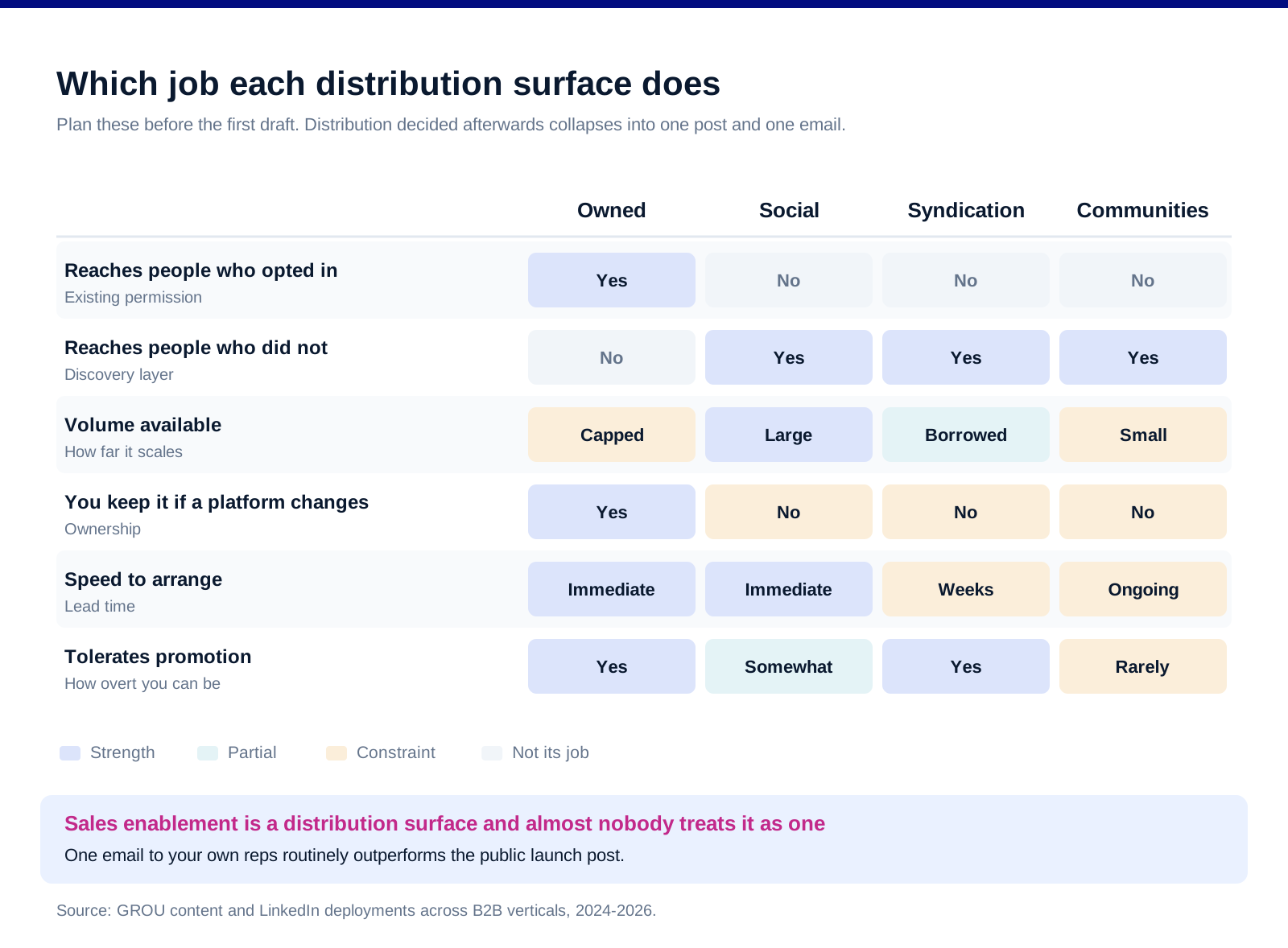
The order of operations is what most teams get wrong, and it costs nothing to fix.
Owned surfaces reach people who already said yes. Your email list, your customer base, your existing subscribers. High trust, capped volume, and the only audience nobody can take away from you. This is where the piece should convert, not where it should be discovered.
Social surfaces reach people who did not opt in. Company pages, and more importantly personal profiles, which consistently outperform brand accounts for the same content. This is your discovery layer and the one that decides whether anything else happens.
Syndication and partner surfaces reach audiences you cannot build. Guest posts, newsletter sponsorships, podcast appearances, partner co-marketing. Slower to arrange, and the only route to people who will never encounter you organically.
Communities reach people who are actively asking. Industry Slack groups, forums, subreddits, and comment sections. High intent, unforgiving of anything that reads as promotion, and worth almost nothing if you show up only when you have something to share.
Sales enablement is a distribution channel and almost nobody treats it as one. If a piece answers an objection reps hear weekly, the highest-value distribution is putting it in their hands with a sentence explaining when to send it. That is one email to your own team and it routinely outperforms the public launch.
Reach is the metric that will mislead you
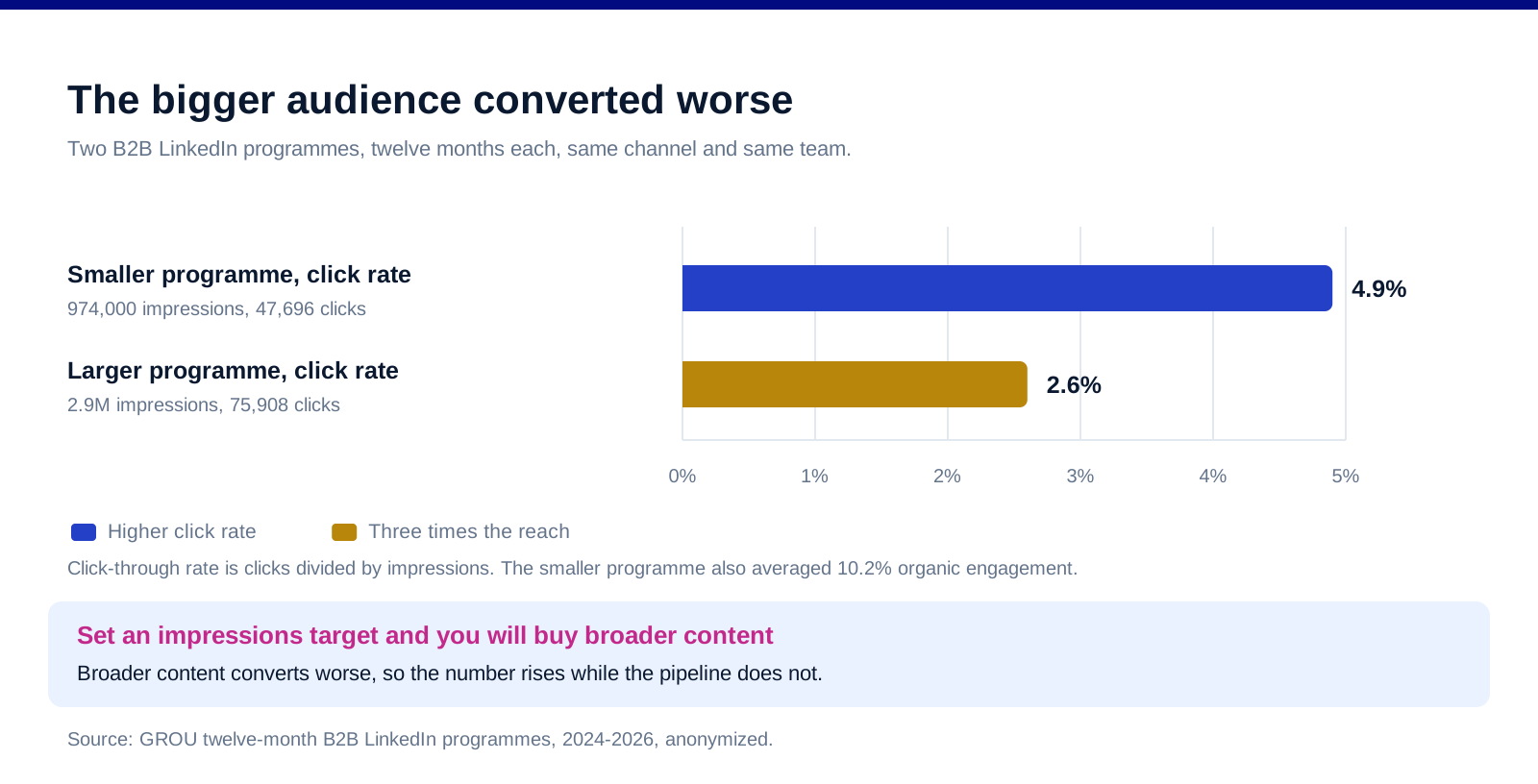
This is the part where our own numbers say something uncomfortable about a metric everyone reports.
Two programmes, twelve months each, very different outcomes on the same channel. The first generated over 974,000 impressions and 47,696 clicks, a click-through rate of roughly 4.9%. The second generated over 2.9 million impressions and 75,908 clicks, roughly 2.6%. Three times the reach, and just over half the conversion.
The larger audience was the worse audience. Not because it was badly built, but because reach and relevance pull against each other. Content that travels widely travels to people with no reason to click, and the impression count rises while the thing you actually wanted falls.
Which means impressions cannot be a target. If you set an impressions goal, the fastest route to it is broader content, and broader content converts worse. The number goes up and the pipeline does not. This is the single most common way B2B content programmes fail while appearing to succeed.
Click-through rate is the honest headline metric for distribution. It measures whether the people who saw it were the right people, which is the only question distribution can actually answer. Engagement rate is a reasonable second, and in the first programme above it averaged 10.2% organically.
The three-week sequence for one asset
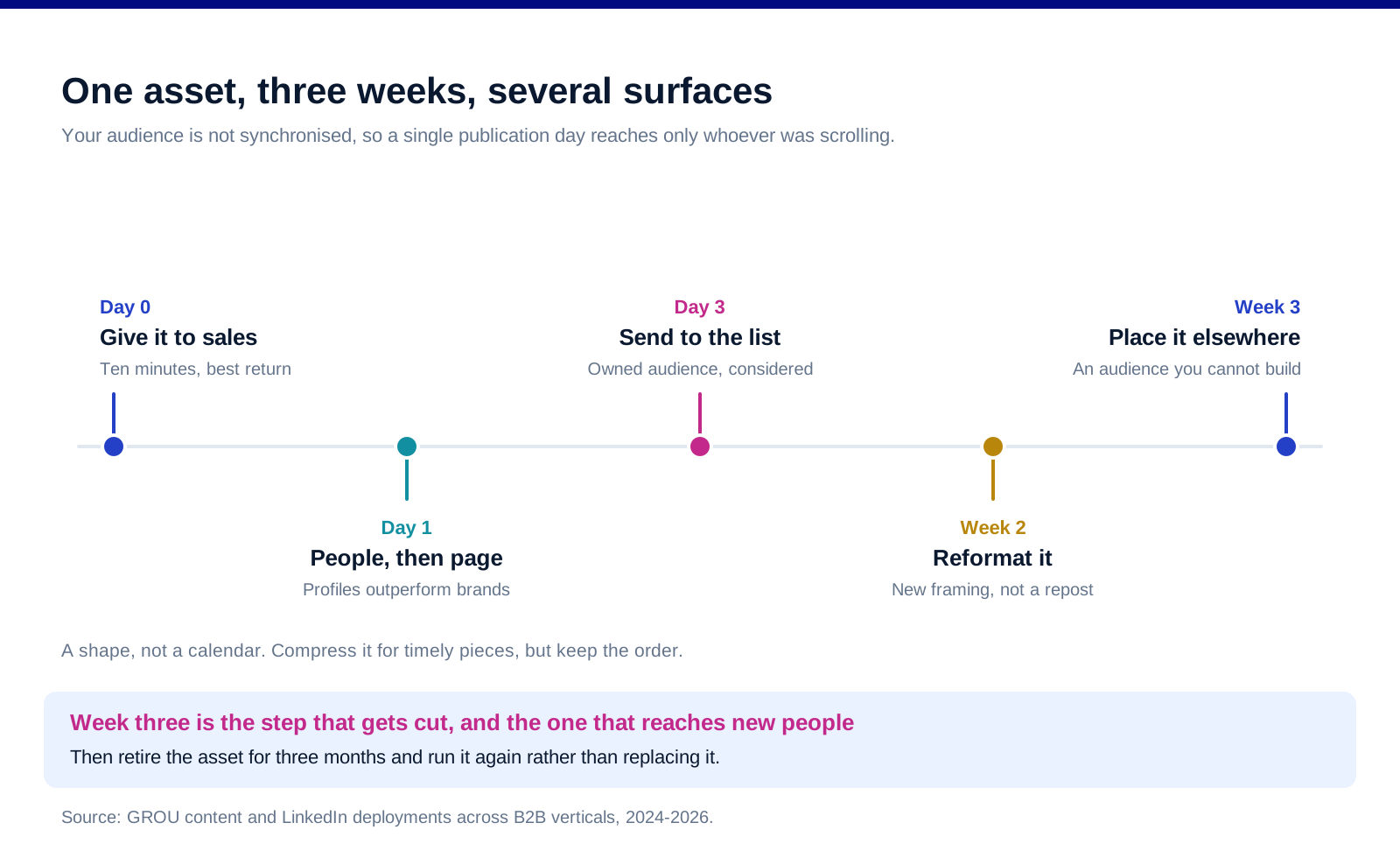
One asset, several surfaces, spread out. The shape matters more than the specific days.
Day zero, give it to sales before anyone else. One email to the revenue team explaining what the piece is, which objection it answers, and when to send it. Costs ten minutes and is usually the highest-return step in the entire sequence.
Day one, publish and post from personal profiles. Not the company page first. The people on the team with actual audiences post their own take, linking through. The company page amplifies rather than leads.
Day three, send it to the list. Your owned audience gets it as a considered send rather than a same-day blast, which also gives you a first read on whether the framing works before you spend anything on it.
Week two, reformat rather than repost. The same argument as a short post, a diagram, a comment on someone else's discussion. Reposting the link a second time reaches nobody new. Reframing the argument reaches people who scrolled past the first version.
Week three, place it somewhere you do not own. A newsletter, a partner audience, a community where the question keeps coming up. This is the step that gets cut when the team is busy, and it is the one that reaches people who were never going to find you.
Then stop, and reuse it in three months. Evergreen assets should re-enter the sequence rather than being retired. Most B2B content is read by a different set of people the second time it goes out.
Who owns distribution
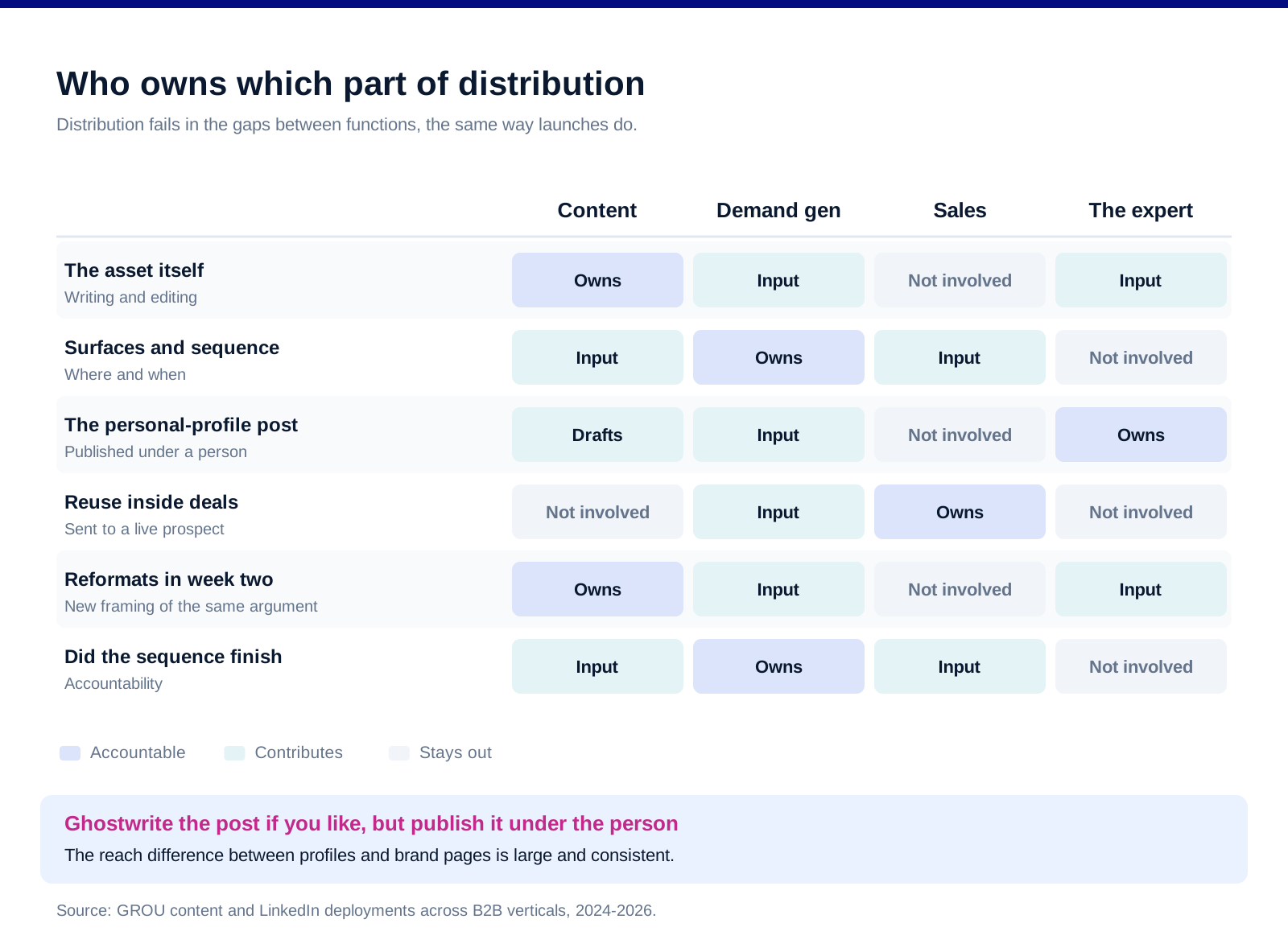
Distribution fails in the same place launches do, which is the gap between functions where nobody is accountable.
Content owns the asset and the reformats, not the calendar. Writers are the wrong people to own scheduling, and asking them to do both is how the reformat step disappears first.
Demand generation owns the surfaces and the sequence. Someone has to decide which channels this piece goes to and when, and to notice that week three never happened.
Sales owns reuse in deals, and needs to be told the asset exists. This does not happen by osmosis. It happens because someone sends a specific email.
The subject matter expert owns the personal-profile post. Ghostwriting the post is fine. Publishing it under the brand account instead is not, because the reach difference is large and consistent.
One person owns whether the sequence completed. Without that, the first two days happen and the rest quietly does not.
What to fix before scaling distribution
A list you own. Everything else is rented. If a channel changed its algorithm tomorrow, the email list is what survives, and it is the asset that takes longest to build, so start it before you need it. Tools like Brevo or ActiveCampaign cover the sending side; the harder part is having something worth subscribing to.
Personal profiles with actual reach. The consistent finding across our LinkedIn programmes is that people outperform pages. Building two or three profiles with real audiences is worth more than any amount of company page optimisation. Taplio helps with the consistency problem if that is the blocker.
A reason for the second touch. If your only plan for week two is to repost the link, you do not have a sequence, you have a launch. Decide the reformat when you commission the piece.
Somewhere to see whether it worked. Clicks by surface, not aggregate traffic. If you cannot tell which surface produced the visit, you cannot cut the one that produced nothing. Zapier is usually enough to get the tagging into a sheet without a project.
FAQ
How much time should you spend on content distribution versus creation?
Closer to half than the twenty percent most teams spend. The practical test is whether the distribution plan exists before the first draft. If distribution is decided after the piece is finished, it will consist of one post and one email regardless of what the plan said, because by then the team has moved on.
How many times should you distribute the same B2B content?
Four to six touches across about three weeks, using different framings rather than repeated links. Your audience is not synchronised, so a single publication day reaches only the fraction of people who happened to be looking. Evergreen pieces should also re-enter the rotation after a few months.
Should B2B content be posted from the company page or personal profiles?
Personal profiles first, company page as amplification. Across the LinkedIn programmes we run this is one of the most consistent findings, and it holds even when the post is ghostwritten. The company page is worth maintaining as a credibility surface, but it is not the discovery layer.
What is the best metric for B2B content distribution?
Click-through rate by surface, because it answers whether the people who saw it were the right people. Impressions actively mislead: in two twelve-month programmes we ran, the account with three times the impressions had roughly half the click-through rate. If you set an impressions target you will get broader content and worse conversion.
How do you distribute B2B content without a large audience?
Borrow audiences rather than building one first. Newsletter sponsorships, guest posts, podcast appearances and genuine participation in communities where your buyers already are. Meanwhile build the email list, because it is the only surface you own and it takes the longest to compound.
Does content syndication still work for B2B in 2026?
Placing content in front of audiences you cannot build yourself still works, provided the placement is a real audience rather than a lead-gen list rental. The distinction that matters is whether the people on the other side chose to be there. Paid syndication that delivers contact details without intent produces volume your sales team will resent.
Bottom line
Decide the surfaces before the draft, because distribution planned afterwards collapses into one post and one email every time. Give it to sales on day zero, publish from people rather than the brand, and space the touches across three weeks with a different framing each time rather than reposting the same link. Build the two assets that compound, an email list and personal profiles with reach, because everything else is rented. And take impressions off the report, because our own numbers show the account with three times the reach converting at half the rate, which is exactly the outcome an impressions target will buy you.
Want the distribution engine built rather than described? Book a call with GROU. We run LinkedIn content and demand generation inside B2B revenue engines across verticals.
We are GROU, a B2B pipeline agency that runs lead generation, outbound, and LinkedIn content for clients across manufacturing, fintech, iGaming, software, and professional services. The distribution figures come from our own twelve-month LinkedIn programmes between 2024 and 2026, anonymized to protect client confidentiality.
Some links in this article are affiliate. We may earn a small commission at no extra cost to you. We only recommend tools we've deployed for clients.
Most B2B content teams spend eighty percent of their effort on production and twenty on distribution, then conclude that content does not work. The ratio is backwards. A piece that took three weeks to write gets one LinkedIn post and one newsletter mention, and is never referenced again by anyone including the person who wrote it.
This playbook covers how to plan distribution before production, which surfaces do which job, the sequence that gets one asset in front of the same audience several times without repetition, and what to measure when reach turns out not to be the point.
TL;DR
Distribution is not what happens after the content is finished, it is the thing the content should have been designed around, and the practical version of that is deciding the surfaces before the first draft. The surfaces do different jobs: owned surfaces reach people who already opted in, social reaches people who did not, and syndication and communities reach people who will never see either. A useful default is to plan four to six touches per asset across three weeks rather than one launch day, because your audience is not synchronised and a single post reaches whoever happened to be scrolling. The metric that misleads most here is impressions, and we have first-party evidence for it: across two B2B LinkedIn programmes we ran for twelve months each, the page with roughly a third of the impressions returned nearly double the click-through rate, which means the larger audience was worse at the only thing that mattered. Measure clicks, replies and whether sales can reuse the asset in a deal. And build the two compounding assets early, an email list and a set of personal profiles with reach, because those are the only surfaces you own outright and the only ones that get cheaper over time.
Decide the surfaces before you write
The order of operations is what most teams get wrong, and it costs nothing to fix.
Owned surfaces reach people who already said yes. Your email list, your customer base, your existing subscribers. High trust, capped volume, and the only audience nobody can take away from you. This is where the piece should convert, not where it should be discovered.
Social surfaces reach people who did not opt in. Company pages, and more importantly personal profiles, which consistently outperform brand accounts for the same content. This is your discovery layer and the one that decides whether anything else happens.
Syndication and partner surfaces reach audiences you cannot build. Guest posts, newsletter sponsorships, podcast appearances, partner co-marketing. Slower to arrange, and the only route to people who will never encounter you organically.
Communities reach people who are actively asking. Industry Slack groups, forums, subreddits, and comment sections. High intent, unforgiving of anything that reads as promotion, and worth almost nothing if you show up only when you have something to share.
Sales enablement is a distribution channel and almost nobody treats it as one. If a piece answers an objection reps hear weekly, the highest-value distribution is putting it in their hands with a sentence explaining when to send it. That is one email to your own team and it routinely outperforms the public launch.
Reach is the metric that will mislead you
This is the part where our own numbers say something uncomfortable about a metric everyone reports.
Two programmes, twelve months each, very different outcomes on the same channel. The first generated over 974,000 impressions and 47,696 clicks, a click-through rate of roughly 4.9%. The second generated over 2.9 million impressions and 75,908 clicks, roughly 2.6%. Three times the reach, and just over half the conversion.
The larger audience was the worse audience. Not because it was badly built, but because reach and relevance pull against each other. Content that travels widely travels to people with no reason to click, and the impression count rises while the thing you actually wanted falls.
Which means impressions cannot be a target. If you set an impressions goal, the fastest route to it is broader content, and broader content converts worse. The number goes up and the pipeline does not. This is the single most common way B2B content programmes fail while appearing to succeed.
Click-through rate is the honest headline metric for distribution. It measures whether the people who saw it were the right people, which is the only question distribution can actually answer. Engagement rate is a reasonable second, and in the first programme above it averaged 10.2% organically.
The three-week sequence for one asset
One asset, several surfaces, spread out. The shape matters more than the specific days.
Day zero, give it to sales before anyone else. One email to the revenue team explaining what the piece is, which objection it answers, and when to send it. Costs ten minutes and is usually the highest-return step in the entire sequence.
Day one, publish and post from personal profiles. Not the company page first. The people on the team with actual audiences post their own take, linking through. The company page amplifies rather than leads.
Day three, send it to the list. Your owned audience gets it as a considered send rather than a same-day blast, which also gives you a first read on whether the framing works before you spend anything on it.
Week two, reformat rather than repost. The same argument as a short post, a diagram, a comment on someone else's discussion. Reposting the link a second time reaches nobody new. Reframing the argument reaches people who scrolled past the first version.
Week three, place it somewhere you do not own. A newsletter, a partner audience, a community where the question keeps coming up. This is the step that gets cut when the team is busy, and it is the one that reaches people who were never going to find you.
Then stop, and reuse it in three months. Evergreen assets should re-enter the sequence rather than being retired. Most B2B content is read by a different set of people the second time it goes out.
Who owns distribution
Distribution fails in the same place launches do, which is the gap between functions where nobody is accountable.
Content owns the asset and the reformats, not the calendar. Writers are the wrong people to own scheduling, and asking them to do both is how the reformat step disappears first.
Demand generation owns the surfaces and the sequence. Someone has to decide which channels this piece goes to and when, and to notice that week three never happened.
Sales owns reuse in deals, and needs to be told the asset exists. This does not happen by osmosis. It happens because someone sends a specific email.
The subject matter expert owns the personal-profile post. Ghostwriting the post is fine. Publishing it under the brand account instead is not, because the reach difference is large and consistent.
One person owns whether the sequence completed. Without that, the first two days happen and the rest quietly does not.
What to fix before scaling distribution
A list you own. Everything else is rented. If a channel changed its algorithm tomorrow, the email list is what survives, and it is the asset that takes longest to build, so start it before you need it. Tools like Brevo or ActiveCampaign cover the sending side; the harder part is having something worth subscribing to.
Personal profiles with actual reach. The consistent finding across our LinkedIn programmes is that people outperform pages. Building two or three profiles with real audiences is worth more than any amount of company page optimisation. Taplio helps with the consistency problem if that is the blocker.
A reason for the second touch. If your only plan for week two is to repost the link, you do not have a sequence, you have a launch. Decide the reformat when you commission the piece.
Somewhere to see whether it worked. Clicks by surface, not aggregate traffic. If you cannot tell which surface produced the visit, you cannot cut the one that produced nothing. Zapier is usually enough to get the tagging into a sheet without a project.
FAQ
How much time should you spend on content distribution versus creation?
Closer to half than the twenty percent most teams spend. The practical test is whether the distribution plan exists before the first draft. If distribution is decided after the piece is finished, it will consist of one post and one email regardless of what the plan said, because by then the team has moved on.
How many times should you distribute the same B2B content?
Four to six touches across about three weeks, using different framings rather than repeated links. Your audience is not synchronised, so a single publication day reaches only the fraction of people who happened to be looking. Evergreen pieces should also re-enter the rotation after a few months.
Should B2B content be posted from the company page or personal profiles?
Personal profiles first, company page as amplification. Across the LinkedIn programmes we run this is one of the most consistent findings, and it holds even when the post is ghostwritten. The company page is worth maintaining as a credibility surface, but it is not the discovery layer.
What is the best metric for B2B content distribution?
Click-through rate by surface, because it answers whether the people who saw it were the right people. Impressions actively mislead: in two twelve-month programmes we ran, the account with three times the impressions had roughly half the click-through rate. If you set an impressions target you will get broader content and worse conversion.
How do you distribute B2B content without a large audience?
Borrow audiences rather than building one first. Newsletter sponsorships, guest posts, podcast appearances and genuine participation in communities where your buyers already are. Meanwhile build the email list, because it is the only surface you own and it takes the longest to compound.
Does content syndication still work for B2B in 2026?
Placing content in front of audiences you cannot build yourself still works, provided the placement is a real audience rather than a lead-gen list rental. The distinction that matters is whether the people on the other side chose to be there. Paid syndication that delivers contact details without intent produces volume your sales team will resent.
Bottom line
Decide the surfaces before the draft, because distribution planned afterwards collapses into one post and one email every time. Give it to sales on day zero, publish from people rather than the brand, and space the touches across three weeks with a different framing each time rather than reposting the same link. Build the two assets that compound, an email list and personal profiles with reach, because everything else is rented. And take impressions off the report, because our own numbers show the account with three times the reach converting at half the rate, which is exactly the outcome an impressions target will buy you.
Want the distribution engine built rather than described? Book a call with GROU. We run LinkedIn content and demand generation inside B2B revenue engines across verticals.
We are GROU, a B2B pipeline agency that runs lead generation, outbound, and LinkedIn content for clients across manufacturing, fintech, iGaming, software, and professional services. The distribution figures come from our own twelve-month LinkedIn programmes between 2024 and 2026, anonymized to protect client confidentiality.
Some links in this article are affiliate. We may earn a small commission at no extra cost to you. We only recommend tools we've deployed for clients.
Most B2B content teams spend eighty percent of their effort on production and twenty on distribution, then conclude that content does not work. The ratio is backwards. A piece that took three weeks to write gets one LinkedIn post and one newsletter mention, and is never referenced again by anyone including the person who wrote it.
This playbook covers how to plan distribution before production, which surfaces do which job, the sequence that gets one asset in front of the same audience several times without repetition, and what to measure when reach turns out not to be the point.
TL;DR
Distribution is not what happens after the content is finished, it is the thing the content should have been designed around, and the practical version of that is deciding the surfaces before the first draft. The surfaces do different jobs: owned surfaces reach people who already opted in, social reaches people who did not, and syndication and communities reach people who will never see either. A useful default is to plan four to six touches per asset across three weeks rather than one launch day, because your audience is not synchronised and a single post reaches whoever happened to be scrolling. The metric that misleads most here is impressions, and we have first-party evidence for it: across two B2B LinkedIn programmes we ran for twelve months each, the page with roughly a third of the impressions returned nearly double the click-through rate, which means the larger audience was worse at the only thing that mattered. Measure clicks, replies and whether sales can reuse the asset in a deal. And build the two compounding assets early, an email list and a set of personal profiles with reach, because those are the only surfaces you own outright and the only ones that get cheaper over time.
Decide the surfaces before you write
The order of operations is what most teams get wrong, and it costs nothing to fix.
Owned surfaces reach people who already said yes. Your email list, your customer base, your existing subscribers. High trust, capped volume, and the only audience nobody can take away from you. This is where the piece should convert, not where it should be discovered.
Social surfaces reach people who did not opt in. Company pages, and more importantly personal profiles, which consistently outperform brand accounts for the same content. This is your discovery layer and the one that decides whether anything else happens.
Syndication and partner surfaces reach audiences you cannot build. Guest posts, newsletter sponsorships, podcast appearances, partner co-marketing. Slower to arrange, and the only route to people who will never encounter you organically.
Communities reach people who are actively asking. Industry Slack groups, forums, subreddits, and comment sections. High intent, unforgiving of anything that reads as promotion, and worth almost nothing if you show up only when you have something to share.
Sales enablement is a distribution channel and almost nobody treats it as one. If a piece answers an objection reps hear weekly, the highest-value distribution is putting it in their hands with a sentence explaining when to send it. That is one email to your own team and it routinely outperforms the public launch.
Reach is the metric that will mislead you
This is the part where our own numbers say something uncomfortable about a metric everyone reports.
Two programmes, twelve months each, very different outcomes on the same channel. The first generated over 974,000 impressions and 47,696 clicks, a click-through rate of roughly 4.9%. The second generated over 2.9 million impressions and 75,908 clicks, roughly 2.6%. Three times the reach, and just over half the conversion.
The larger audience was the worse audience. Not because it was badly built, but because reach and relevance pull against each other. Content that travels widely travels to people with no reason to click, and the impression count rises while the thing you actually wanted falls.
Which means impressions cannot be a target. If you set an impressions goal, the fastest route to it is broader content, and broader content converts worse. The number goes up and the pipeline does not. This is the single most common way B2B content programmes fail while appearing to succeed.
Click-through rate is the honest headline metric for distribution. It measures whether the people who saw it were the right people, which is the only question distribution can actually answer. Engagement rate is a reasonable second, and in the first programme above it averaged 10.2% organically.
The three-week sequence for one asset
One asset, several surfaces, spread out. The shape matters more than the specific days.
Day zero, give it to sales before anyone else. One email to the revenue team explaining what the piece is, which objection it answers, and when to send it. Costs ten minutes and is usually the highest-return step in the entire sequence.
Day one, publish and post from personal profiles. Not the company page first. The people on the team with actual audiences post their own take, linking through. The company page amplifies rather than leads.
Day three, send it to the list. Your owned audience gets it as a considered send rather than a same-day blast, which also gives you a first read on whether the framing works before you spend anything on it.
Week two, reformat rather than repost. The same argument as a short post, a diagram, a comment on someone else's discussion. Reposting the link a second time reaches nobody new. Reframing the argument reaches people who scrolled past the first version.
Week three, place it somewhere you do not own. A newsletter, a partner audience, a community where the question keeps coming up. This is the step that gets cut when the team is busy, and it is the one that reaches people who were never going to find you.
Then stop, and reuse it in three months. Evergreen assets should re-enter the sequence rather than being retired. Most B2B content is read by a different set of people the second time it goes out.
Who owns distribution
Distribution fails in the same place launches do, which is the gap between functions where nobody is accountable.
Content owns the asset and the reformats, not the calendar. Writers are the wrong people to own scheduling, and asking them to do both is how the reformat step disappears first.
Demand generation owns the surfaces and the sequence. Someone has to decide which channels this piece goes to and when, and to notice that week three never happened.
Sales owns reuse in deals, and needs to be told the asset exists. This does not happen by osmosis. It happens because someone sends a specific email.
The subject matter expert owns the personal-profile post. Ghostwriting the post is fine. Publishing it under the brand account instead is not, because the reach difference is large and consistent.
One person owns whether the sequence completed. Without that, the first two days happen and the rest quietly does not.
What to fix before scaling distribution
A list you own. Everything else is rented. If a channel changed its algorithm tomorrow, the email list is what survives, and it is the asset that takes longest to build, so start it before you need it. Tools like Brevo or ActiveCampaign cover the sending side; the harder part is having something worth subscribing to.
Personal profiles with actual reach. The consistent finding across our LinkedIn programmes is that people outperform pages. Building two or three profiles with real audiences is worth more than any amount of company page optimisation. Taplio helps with the consistency problem if that is the blocker.
A reason for the second touch. If your only plan for week two is to repost the link, you do not have a sequence, you have a launch. Decide the reformat when you commission the piece.
Somewhere to see whether it worked. Clicks by surface, not aggregate traffic. If you cannot tell which surface produced the visit, you cannot cut the one that produced nothing. Zapier is usually enough to get the tagging into a sheet without a project.
FAQ
How much time should you spend on content distribution versus creation?
Closer to half than the twenty percent most teams spend. The practical test is whether the distribution plan exists before the first draft. If distribution is decided after the piece is finished, it will consist of one post and one email regardless of what the plan said, because by then the team has moved on.
How many times should you distribute the same B2B content?
Four to six touches across about three weeks, using different framings rather than repeated links. Your audience is not synchronised, so a single publication day reaches only the fraction of people who happened to be looking. Evergreen pieces should also re-enter the rotation after a few months.
Should B2B content be posted from the company page or personal profiles?
Personal profiles first, company page as amplification. Across the LinkedIn programmes we run this is one of the most consistent findings, and it holds even when the post is ghostwritten. The company page is worth maintaining as a credibility surface, but it is not the discovery layer.
What is the best metric for B2B content distribution?
Click-through rate by surface, because it answers whether the people who saw it were the right people. Impressions actively mislead: in two twelve-month programmes we ran, the account with three times the impressions had roughly half the click-through rate. If you set an impressions target you will get broader content and worse conversion.
How do you distribute B2B content without a large audience?
Borrow audiences rather than building one first. Newsletter sponsorships, guest posts, podcast appearances and genuine participation in communities where your buyers already are. Meanwhile build the email list, because it is the only surface you own and it takes the longest to compound.
Does content syndication still work for B2B in 2026?
Placing content in front of audiences you cannot build yourself still works, provided the placement is a real audience rather than a lead-gen list rental. The distinction that matters is whether the people on the other side chose to be there. Paid syndication that delivers contact details without intent produces volume your sales team will resent.
Bottom line
Decide the surfaces before the draft, because distribution planned afterwards collapses into one post and one email every time. Give it to sales on day zero, publish from people rather than the brand, and space the touches across three weeks with a different framing each time rather than reposting the same link. Build the two assets that compound, an email list and personal profiles with reach, because everything else is rented. And take impressions off the report, because our own numbers show the account with three times the reach converting at half the rate, which is exactly the outcome an impressions target will buy you.
Want the distribution engine built rather than described? Book a call with GROU. We run LinkedIn content and demand generation inside B2B revenue engines across verticals.
We are GROU, a B2B pipeline agency that runs lead generation, outbound, and LinkedIn content for clients across manufacturing, fintech, iGaming, software, and professional services. The distribution figures come from our own twelve-month LinkedIn programmes between 2024 and 2026, anonymized to protect client confidentiality.
Some links in this article are affiliate. We may earn a small commission at no extra cost to you. We only recommend tools we've deployed for clients.
Pipeline OS Newsletter
Build qualified pipeline
Get weekly tactics to generate demand, improve lead quality, and book more meetings.





Trusted by industry leaders
Trusted by industry leaders
Trusted by industry leaders
Ready to build qualified pipeline?
Ready to build qualified pipeline?
Ready to build qualified pipeline?
Book a call to see if we're the right fit, or take the 2-minute quiz to get a clear starting point.
Book a call to see if we're the right fit, or take the 2-minute quiz to get a clear starting point.
Book a call to see if we're the right fit, or take the 2-minute quiz to get a clear starting point.
" height="30.21639343089746px" id="hfGbXmQR2" width="30.216393430897455px"/></svg>)
Copyright © 2026 – All Right Reserved
Company
Resources
Copyright © 2026 – All Right Reserved
Copyright © 2026 – All Right Reserved