›
›
›
›
10 Apollo Alternatives for B2B Teams in 2026
10 Apollo Alternatives for B2B Teams in 2026
10 Apollo Alternatives for B2B Teams in 2026
10 Apollo Alternatives for B2B Teams in 2026
10 Apollo Alternatives for B2B Teams in 2026
10 Apollo Alternatives for B2B Teams in 2026

Author
Aljaz Peklaj

Apollo remains a sensible starting point for lean teams under 50 reps, while Clay is the #1 alternative when you need source-agnostic enrichment and signal-triggered workflows. The lead generation software market is projected to reach USD 8.9 billion by 2030, up from USD 5.88 billion in 2025, which means this category is becoming a serious buying decision, not a minor tooling choice.
The popular advice says to replace Apollo with another database. That framing misses the operational problem. A single source leaves coverage gaps, stale records, weak regional reach, and no dependable signal layer. A sequencer can't repair poor targeting, and good data can't compensate for a reply that sits unrouted in the CRM.
#1 pick: Clay, for waterfall enrichment across Apollo and other providers.
Best LinkedIn-led option: LinkedIn Sales Navigator, paired with enrichment and sequencing.
Strongest EMEA option: Cognism, when compliance and verified mobile data matter.
Lowest-friction budget choice: UpLead, for self-serve data access and credit control.
The scoring framework here is practical: reachable coverage → signal depth → LinkedIn context → sequencing → CRM handoff speed → governance → pricing transparency → implementation effort. At GROU, the operating principle is simple: structure turns attention into pipeline. The right answer may be a layered stack rather than a one-for-one replacement.
Table of Contents
1. ZoomInfo SalesOS
ZoomInfo SalesOS is the strongest choice when Apollo's broad self-serve workflow no longer gives an enterprise team enough account intelligence. An independent comparison identifies ZoomInfo as the top overall Apollo alternative because it combines a verified 500 million-contact database with a GTM Context Graph, a useful distinction for teams evaluating data depth rather than lead volume alone. Read GROU's Apollo versus ZoomInfo comparison for the stack-level trade-off.
SalesOS supports deep company and contact filtering, including firmographic and technographic criteria. Its Scoops provide company developments that can help reps prioritize accounts, while CRM and marketing automation integrations support enrichment inside Salesforce and HubSpot. Teams can add Engage for sales execution and connect conversation intelligence workflows through Chorus or Gong.
Where it earns the premium
ZoomInfo fits organizations with formal RevOps ownership, complex permissions, and several systems that must share account data. The platform's governance controls and integration depth matter when marketing, sales, and customer teams need a common record rather than another isolated prospecting login.
The trade-off is commercial friction. Pricing is sales-led, public price visibility is limited, and enterprise contracts can be difficult to assess before a full buying process. That makes a controlled data pilot essential, especially for pharma, legal tech, and manufacturing teams with regional coverage requirements.
Practical rule: Don't compare ZoomInfo's contact count with Apollo's in isolation. Compare verified coverage inside your actual ICP, the signals your reps can act on, and the time required to route a qualified response.
Verdict: Buy ZoomInfo when enterprise data governance and intent programs justify a premium contract. Skip it if you need a fast, transparent starting point for a small outbound team.
2. LinkedIn Sales Navigator
LinkedIn Sales Navigator is the best Apollo alternative for teams whose prospecting motion starts with people, relationships, and organizational context. It isn't a replacement for Apollo's database plus sequencer. It is the live professional graph that should feed a separate enrichment and engagement system.
Its strength is list-building accuracy around role changes, company movement, relationship paths, and account activity. Advanced lead and account search helps reps isolate the right seniority, function, geography, and company profile. Job-change alerts and TeamLink can reveal a warmer route into an account than a blind email sequence.
The missing execution layer
Sales Navigator doesn't provide a native email-sending sequencer. Many teams pair it with a data layer such as Clay, Cognism, Lusha, or UpLead, then send through Lemlist, Instantly, Smartlead, or Outreach. That modular structure gives the team more control, but it also creates more integration points to maintain.
LinkedIn's own help documentation warns that unusual activity can trigger temporary subscription restrictions, generally lifted automatically after 24 hours. LinkedIn Sales Navigator documentation also makes clear that activity controls matter. Company-page research has a separate limit of 250 companies within a 24-hour period, according to LinkedIn's Premium Insights guidance.
For a LinkedIn-led ABM motion, the workflow should be explicit: save the account → monitor role and company signals → enrich only qualified contacts → send a context-specific message → route replies to the owner with the profile history attached.
Verdict: Choose Sales Navigator when LinkedIn context drives account selection. Skip it as a standalone Apollo replacement if your team needs email data, sequencing, and CRM execution in one interface. See GROU's LinkedIn Sales Navigator versus Apollo analysis.
3. Cognism
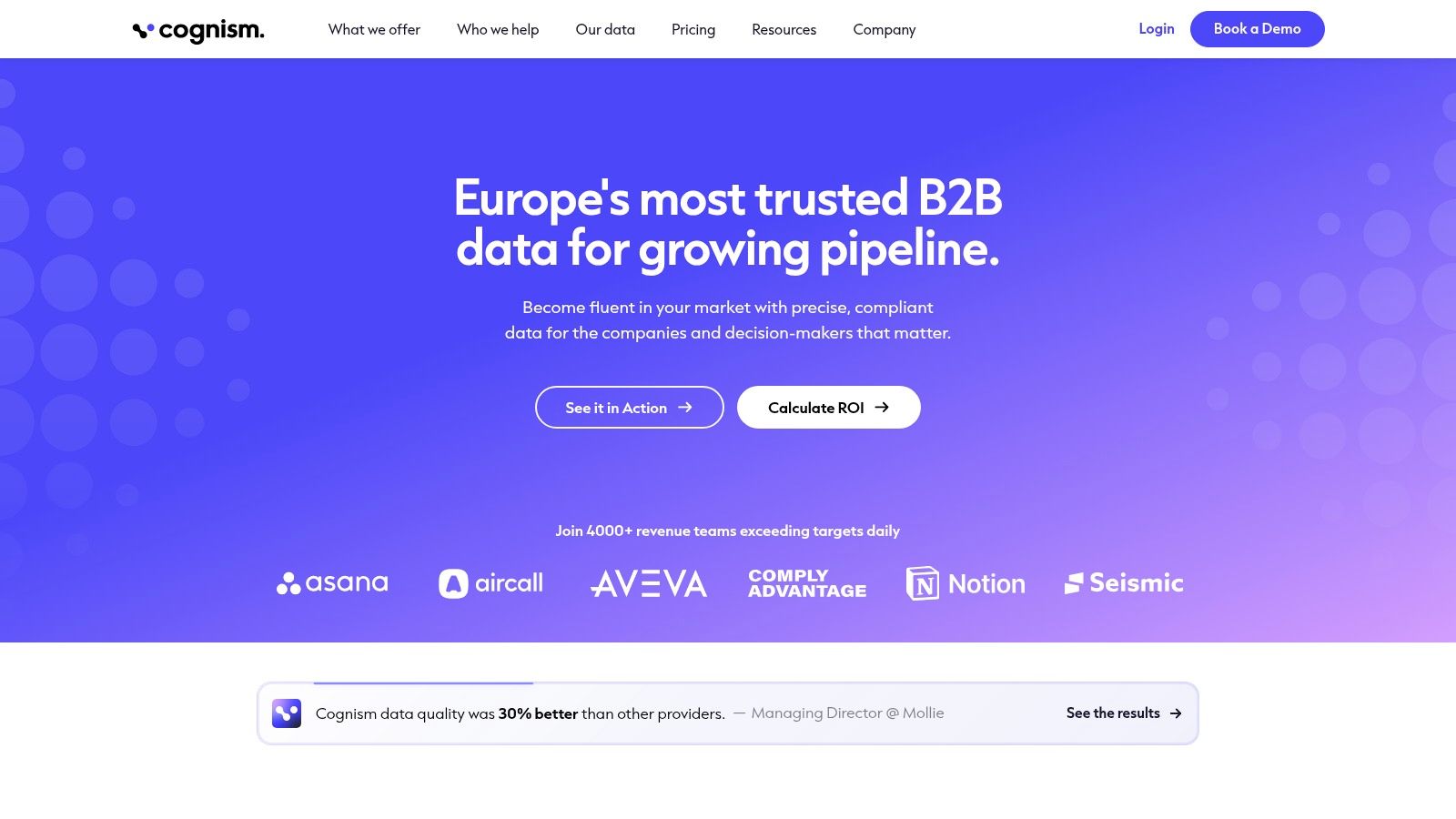
Cognism is the strongest option for EMEA-heavy programs where compliance posture, mobile verification, and regional coverage carry more weight than a low-friction self-serve plan. Its product is built around phone-verified mobile numbers, refreshed decision-maker data, and signals tied to intent, hiring, and funding.
That makes Cognism especially relevant to manufacturing, pharma, and legal tech teams selling across European markets. A contact that looks useful in a database but lacks a verified mobile number or has unclear compliance provenance can create operational and legal risk. Cognism's positioning addresses that layer directly.
Data quality needs a process around it
Cognism supports CRM enrichment, API and DaaS delivery, and workflows that push data into the systems reps already use. It can therefore serve as the data foundation while Outreach, Salesloft, Lemlist, or Smartlead handles execution.
The cost is not only the subscription. Pricing is quote-only and usually sits above SMB-focused tools, while the team must change its process to capture the value of verified mobile data. If reps still send generic email sequences to every record, the premium database won't solve the targeting problem.
Cognism is also better judged by market segment than by a global contact total. Test the exact countries, job functions, and account types you sell into. An iGaming team targeting regulated European operators has a different data requirement from a US SaaS company selling to venture-backed startups.
Verdict: Buy Cognism for EMEA-heavy, phone-led, or compliance-sensitive programs. Skip it when your team mainly needs affordable US data and native sequencing.
4. UpLead
UpLead is the lowest-friction budget option in this list. It suits SMB and mid-market teams that want contact and company data, verified emails, mobile numbers, a Chrome extension, API access, and a clear credit model without entering an enterprise procurement cycle.
The appeal is operational control. A founder or RevOps lead can run a focused pilot, inspect the credit mechanics, and decide whether coverage is sufficient before committing to a larger stack. That matters when the team serves several verticals, such as SaaS and manufacturing, where niche coverage can vary sharply between regions and roles.
A data layer, not an outbound system
UpLead is useful when the team already has a sending system. Export qualified contacts into HubSpot, Salesforce, Lemlist, Instantly, Smartlead, or Outreach, then keep enrichment separate from engagement. That separation makes attribution cleaner because the data provider isn't also claiming credit for the message, timing, and routing system.
The trade-off is feature depth. UpLead has fewer built-in engagement features than Apollo, and coverage in specialized niches or regions may trail enterprise providers. Its value comes from controlling spend and testing data quality, not from replacing every part of the revenue workflow.
Use a simple pilot: take one ICP-aligned account segment → compare usable contacts → verify deliverability → send through the same sequence → measure reply routing and held meetings. Don't change the data source and messaging system at the same time if you want to learn what caused the result.
Verdict: Choose UpLead when transparent, self-serve data access is the immediate need. Skip it if your team expects native sequencing, advanced intent, or enterprise governance from the same product.
5. Lusha
Lusha is built for quick profile-based prospecting. Its Chrome extension lets reps reveal email and phone details while working through LinkedIn or company websites, making it a practical choice for small teams that don't want to design a large data operation.
The credit logic is straightforward. Email and phone reveals consume credits, with 10 credits charged per phone according to the product plan notes. That difference matters when a sales team depends on direct dials. A workflow that looks inexpensive for email lookup can become restrictive once reps routinely reveal both channels.
Fast adoption, limited orchestration
Lusha offers CRM and workflow integrations, with optional Engage and buyer-intelligence capabilities. It can fit neatly beside Sales Navigator when reps identify the account and person first, then need a fast enrichment step before adding the record to a sequencer.
What it doesn't provide is the same depth of orchestration as Clay or the enterprise intelligence surface of ZoomInfo. Analytics and intent capabilities are lighter, and teams that need compound event filtering will likely add another layer.
Lusha is a better fit for profile-based prospecting than for a full replacement of Apollo's database, sequencing, and workflow system. Keep the operating question in view: does the rep need a contact detail now, or does RevOps need a repeatable account activation process?
Verdict: Buy Lusha for quick LinkedIn lookups and lightweight rollout. Skip it for large-scale enrichment, multi-provider coverage, or signal-led account activation.
6. Seamless.AI
Seamless.AI is a lookup-first tool for reps who need contact research while browsing LinkedIn or company sites. Its browser extension and credit-based model make it easy to add a prospect to an active workflow without asking the rep to move through a separate database interface.
That can work well for founder-led selling, partner research, or SDRs who already have a tightly defined account list. The tool is best treated as an on-demand source, not as the sole system of record for a complex outbound program.
Speed doesn't remove verification work
Seamless.AI connects with CRM and workflow tools, and its free trials can lower the barrier to testing. Public pricing isn't fully transparent, though, so buyers need to clarify credit usage, contract terms, renewal behavior, and any fair-use limits before signing.
The core operational risk is assuming that a fast lookup equals a send-ready contact. Every returned email should pass the team's verification and suppression process. For a pharma or legal tech campaign, that review should include regional compliance rules and internal do-not-contact records, not just syntax checks.
Use Seamless.AI as a supplement when Sales Navigator supplies the context and another system owns sequencing. If it becomes the primary database, monitor bounce rate and field completeness by segment rather than relying on the vendor's general positioning.
Verdict: Choose Seamless.AI for fast, rep-led lookups. Skip it as the foundation of a high-governance data program until a segment-specific pilot proves its coverage and contract economics.
7. Clay
Clay is the #1 Apollo alternative for teams that need a waterfall across multiple data providers and want signals to trigger intake. It isn't a like-for-like replacement. Apollo is a database plus sequencer, while Clay is an orchestration layer that can sit above Apollo, Cognism, and other providers.
That distinction changed our own setup. We didn't drop Apollo and pick a rival. We kept Apollo in the chain, then used Clay to fall through to other sources when Apollo returned an empty or unverified field.
Coverage is the measurable advantage
On the same target lists, first-month coverage moved from 60 to 70% with a single source to 85 to 90% through the waterfall. That result measures reachable coverage, not warmth. Enrichment creates accurate, deliverable contacts. Signals and prior engagement create warmth, so attributing a warm-contact lift to enrichment alone would be misleading.
Clay supports a data marketplace with 150-plus providers, bring-your-own keys, AI research through Claygent, Actions, CRM and warehouse synchronization, native sequencing, and ad-audience pushes. Its compound filtering is the bigger practical difference. A manufacturing campaign, for example, can activate an account when a capacity expansion is announced within a defined period and a new operations executive has been appointed recently, rather than filtering only by title and headcount.
The data layer makes a prospect reachable. The signal layer gives the message a reason to arrive now.
Clay's weakness is setup complexity and cost modeling. You still pay for third-party data, credits, and provider calls, so RevOps must document every enrichment step before scaling.
Verdict: Buy Clay when coverage gaps, regional variation, and compound signals are limiting pipeline. Skip it if the team lacks ownership for workflow design and wants a ready-made database with minimal configuration. GROU's Clay versus Apollo breakdown covers the category difference in more detail.
8. Outreach
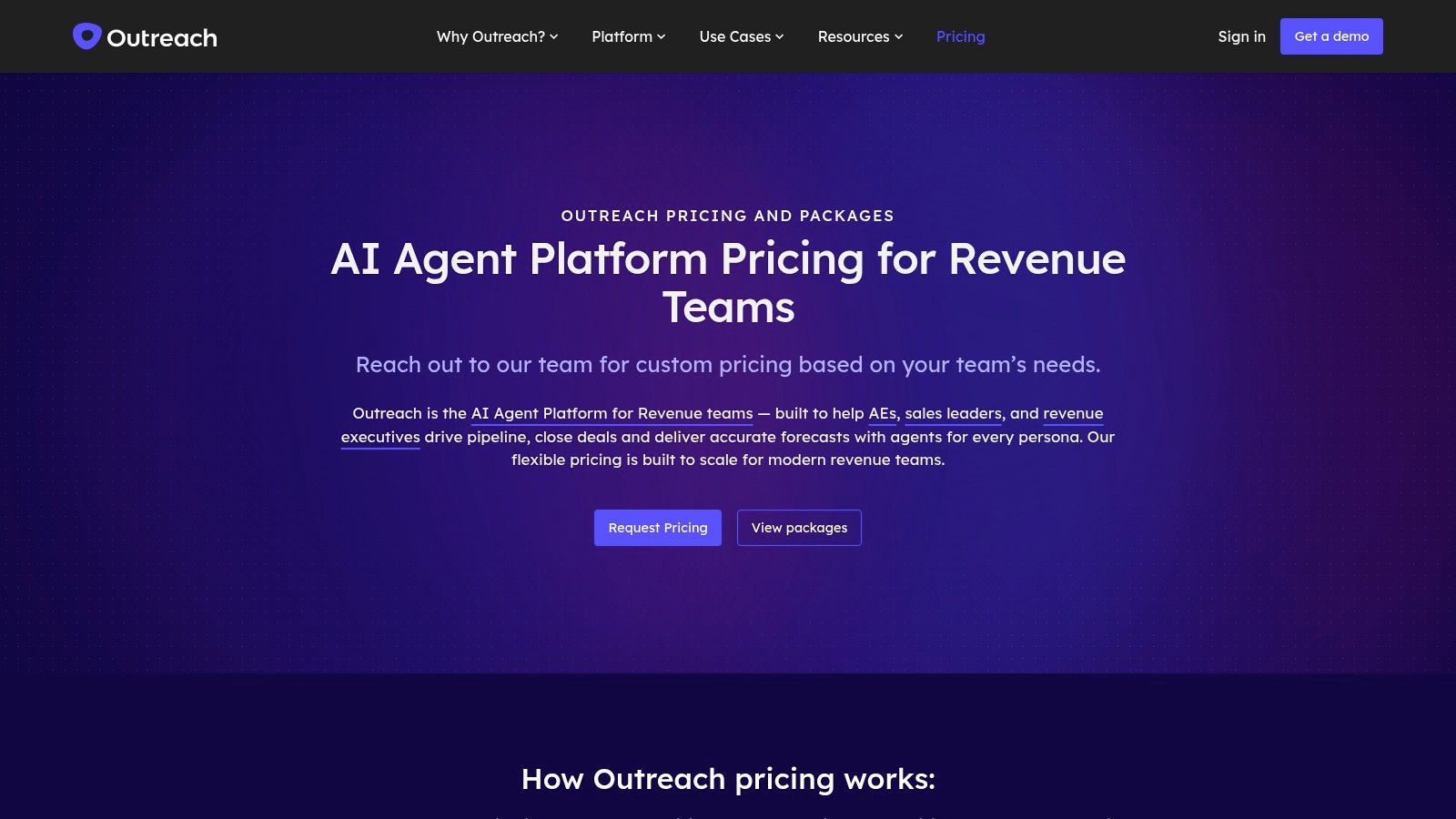
Outreach is the right Apollo alternative when sequencing, governance, analytics, and enterprise handoffs are the main concern. It doesn't replace Apollo's data layer, so the standard architecture is Outreach plus ZoomInfo, Cognism, Clay, or another approved provider.
The platform supports email, voice, and social sequences with detailed rules and reporting. Kaia adds conversation assistance, summaries, coaching, and post-call insights, which can help managers inspect execution quality beyond activity counts.
The handoff is where the value appears
A real failure mode from a B2B SaaS program illustrates the point. Positive replies were arriving, but they weren't syncing to the CRM or alerting the account owner quickly enough. Some follow-up lagged by a day or more, creating a gap between reply rate and held-meeting rate.
The fix was integration wiring, not a magic vendor switch. Positive replies went to the account owner's Slack within two minutes, while the CRM record received the sequence, trigger, and prior-touch context at the same time. Held-meeting rate rose from roughly 68% to 84% on that program. The evidence supports a process lesson: reply routing and context can matter more than another upstream filter.
Outreach is expensive and sales-led, with no public per-seat price list. It also requires disciplined administration. A badly configured integration will leak just as badly on Outreach as it would on Apollo.
Verdict: Choose Outreach for enterprise engagement governance and reporting. Skip it if you still need a low-complexity data-plus-sequencing product for a small team. Compare Apollo and Outreach through the pipeline handoff lens.
9. Amplemarket
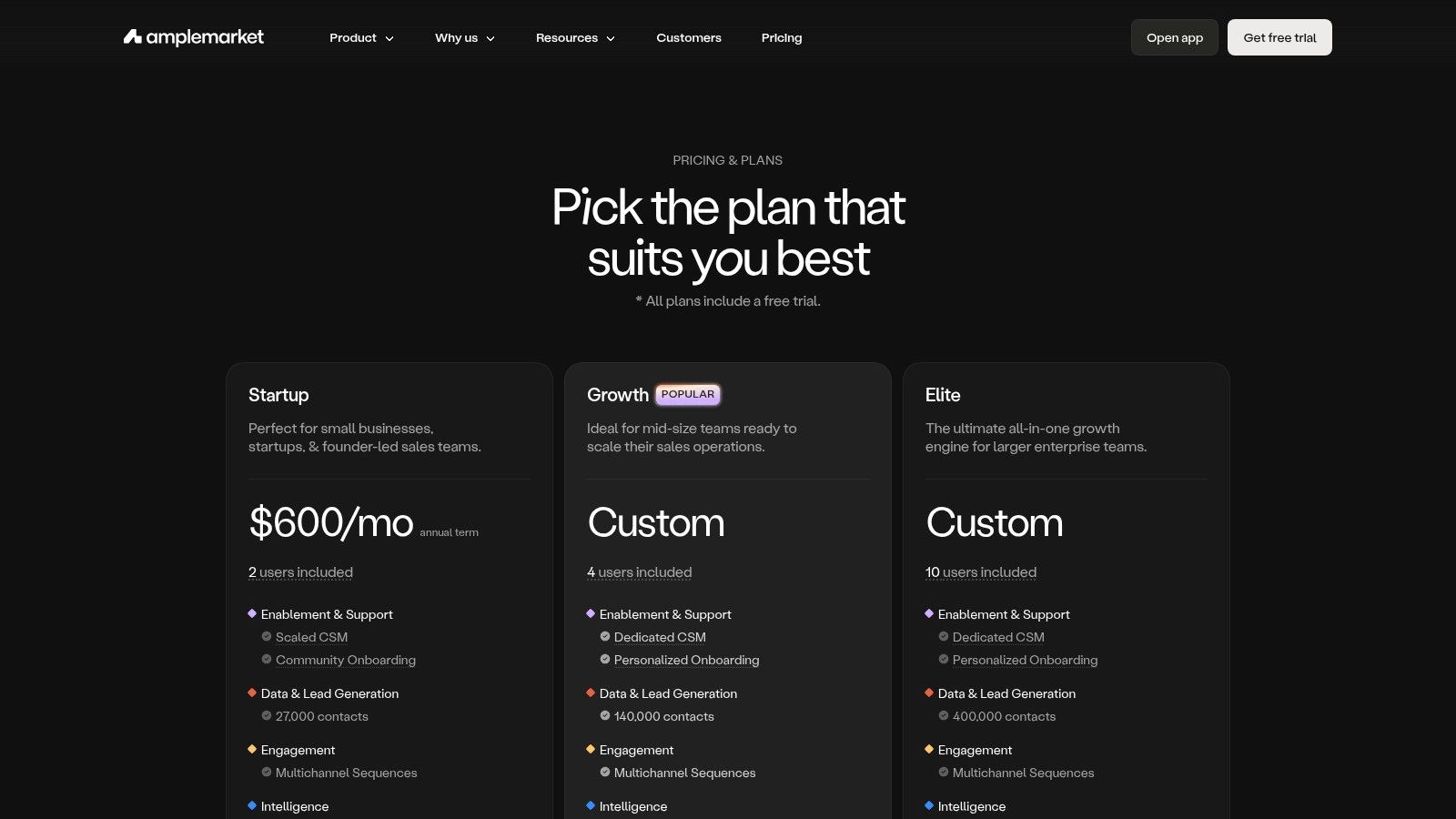
Amplemarket is the closest AI-native rival to Apollo for teams that still want a bundled workflow. It combines data, buying intent, AI signals, multichannel sequencing, deliverability features, and Duo Copilot in one subscription.
That packaging makes sense for founder-led sales and SMB teams that don't want to assemble Clay, a data provider, a sequencer, and separate deliverability tooling. AI can help with personalization and automation, but the system still needs an ICP, message rules, suppression logic, and a human owner for positive replies.
Bundling versus provider choice
Amplemarket's advantage is fewer handoffs between data, signals, and execution. That can reduce implementation effort for a lean team. The trade-off is that dataset breadth may differ from database-first providers, so the team should test coverage in its actual markets rather than assume AI features compensate for missing records.
The product is more attractive when the team's main bottleneck is manual outbound production. It is less attractive when the bottleneck is regional data quality, strict source requirements, or custom enrichment logic. A European manufacturing motion may need Cognism or a Clay waterfall even if Amplemarket's bundled workflow is easier to launch.
Measure the full system, not generated copy volume: reachable accounts → signal-qualified contacts → deliverable sends → replies → qualified meetings held. AI can reduce manual work, but it doesn't create buying intent.
Verdict: Buy Amplemarket when you want a bundled, AI-assisted alternative with less assembly. Skip it when source control and custom enrichment matter more than convenience.
10. Lead411
Lead411 is a pragmatic option for US-centric teams that prioritize direct dials, verified email data, and basic growth signals without committing to a large enterprise platform. Its workflow includes hiring, funding, and news triggers, which gives reps a reason to prioritize one account over another.
The tool makes sense for SMB sales teams that already have a sequencer. Lead411 supplies the prospecting and signal layer, while Instantly, Smartlead, Lemlist, or Outreach handles sending and reply management.
Useful when the buying motion is US-focused
Lead411's direct-dial orientation fits industries where phone outreach still plays a meaningful role. A manufacturing team targeting US operators may value a verified phone path more than a broader global database. A SaaS team expanding into EMEA may find the international depth less suitable and should validate that before buying.
The public free-trial pathway lowers pilot friction. Still, the product has fewer native engagement features than Apollo, so the total stack cost includes the sending platform and the integration work between systems.
Lead411 is also a reminder that a contact database shouldn't be judged only by search filters. The test is whether a trigger changes rep behavior. If hiring or funding alerts add another tab that no owner checks, they won't improve pipeline quality.
Verdict: Choose Lead411 for US direct-dial prospecting and straightforward intent triggers. Skip it for EMEA-heavy coverage or teams seeking a single platform for data and engagement.
Top 10 Apollo Alternatives Comparison
Solution | Core features | ★ Quality | 💰 Price / Value | 👥 Target audience | ✨ / 🏆 Unique selling points |
|---|---|---|---|---|---|
ZoomInfo SalesOS | Advanced firmographics, Scoops (intent), enrichment, CRM integrations, optional Engage | ★★★★☆ 🏆 | 💰 Premium, quote-only | 👥 Enterprise RevOps & large GTM teams | ✨ Broad data coverage, governance, deep integrations |
LinkedIn Sales Navigator | Live professional graph, advanced lead/account search, job-change alerts, TeamLink | ★★★★☆ | 💰 Mid (plan-dependent, limited public pricing) | 👥 Relationship-driven sellers & list-builders | ✨ Best-in-class org context & warm-paths |
Cognism | GDPR/CCPA-aware data, phone-verified mobiles, intent/hiring signals, API | ★★★★☆ | 💰 Quote-only, usually higher | 👥 EMEA teams & compliance-sensitive orgs | ✨ Phone-verified mobile numbers, strong EU posture 🏆 |
UpLead | Credit-based contacts, verified emails/phones, Chrome extension, API | ★★★★☆ | 💰 Transparent per-credit pricing (self-serve) | 👥 SMB / mid-market teams piloting cost-control | ✨ Clear pricing, easy pilotability |
Lusha | Credit reveals (email/phone), Chrome extension, CRM integrations | ★★★☆☆ | 💰 Budget-friendly, free plan with credits | 👥 SDRs & fast LinkedIn lookups across teams | ✨ Simple credit logic, quick rollout |
Seamless.AI | Real-time lookup-first contact research, browser extension, CRM sync | ★★★☆☆ | 💰 Sales-led; mixed public clarity | 👥 SDRs needing on-the-fly sourcing | ✨ Fast lookup workflow, complements SalesNav |
Clay | Data marketplace (150+ sources), AI agents (Claygent), native sequencing & automations | ★★★★☆ | 💰 Mid, platform + third-party data costs | 👥 RevOps & teams wanting modular stacks | ✨ Source-agnostic orchestration + AI agents 🏆 |
Outreach | Multichannel sequencing, Kaia AI convo intelligence, governance & analytics | ★★★★★ 🏆 | 💰 Enterprise, quote-only | 👥 Large sales orgs & RevOps with strict governance | ✨ Advanced sequencing + real-time AI coaching |
Amplemarket | Bundled data, intent signals, multichannel sequencing, Duo Copilot, deliverability tools | ★★★★☆ | 💰 Bundled subscription; higher than barebones | 👥 Founder-led & SMBs wanting AI-first outbound | ✨ All-in-one AI automation for outreach |
Lead411 | US-centric verified emails & direct dials, intent triggers, flexible plans | ★★★★☆ | 💰 Lower entry, published trial options | 👥 SMBs prioritizing US direct-dial reach | ✨ Value-focused US direct-dials and intent signals |
Choose the layer your pipeline is missing
The right Apollo alternative depends on the layer creating leakage. If records are missing, test reachable coverage. If reps lack a reason to write, test signal quality. If replies go stale, test routing time. If managers can't inspect execution, test governance and CRM context.
The category is expanding with buyer expectations. The lead generation software market is projected to grow from USD 5.88 billion in 2025 to USD 8.9 billion by 2030, at an 8.4% CAGR, according to Research and Markets' lead generation software report. Buyers are therefore comparing workflows, not just contact databases.
AI is part of that shift. Salesforce's State of Sales 2026 survey covered 4,050 sales professionals, with 87% of sales organizations using AI for activities such as prospecting, forecasting, lead scoring, or email drafting, as reported in industry coverage of AI sales tools. Another industry summary reports formal AI deployment among 61% of B2B sales teams, rising to 74% in large enterprise organizations and 43% in SMB teams, with separate adoption figures for AI prospecting and outreach tools in the same 2026 sales tooling analysis.
Match the stack to the missing layer
Reachable coverage: Apollo remains a strong starting point for lean teams under 50 reps. Clay is the better choice when one provider leaves regional or role-based gaps. Cognism deserves priority for EMEA-heavy programs.
Signal depth: Clay handles compound, event-based activation. ZoomInfo and Cognism fit larger intelligence programs. Amplemarket suits teams that want signals bundled with execution.
LinkedIn context: Sales Navigator should lead when job changes, relationship paths, and organizational context shape account selection. Add enrichment and a sequencer rather than expecting Sales Navigator to send cold email.
Sequencing: Outreach fits enterprise governance. Instantly, Smartlead, and Lemlist suit email-led execution. Amplemarket is more appropriate when the team wants bundled AI-assisted engagement.
CRM handoff speed: Configure positive replies to reach the owner and CRM within minutes, with sequence, trigger, and prior-touch context attached. The observed move from roughly 68% to 84% held-meeting rate came from that handoff change, not a claim that one brand is superior.
Governance: ZoomInfo and Outreach fit organizations with formal administration. Cognism fits programs where compliance and regional data handling are central. Every stack still needs suppression rules and clear ownership.
Pricing transparency: UpLead and Apollo are easier to pilot than quote-only enterprise products. Clay requires careful modeling because platform actions and third-party data costs sit in the same workflow.
Implementation effort: Apollo and Amplemarket reduce assembly. Clay and a Sales Navigator-led stack demand more design, but they give RevOps more control over sources, signals, and routing.
Apollo's own pricing mechanics deserve attention during migration. Export credits are consumed when data leaves Apollo through CSV, CRM, or Person API enrichment, including external systems such as Outreach or Salesloft. Non-paying Unlimited accounts are capped at 10,000 credits per account per month, while paying accounts are limited to the lesser of the amount paid divided by $0.025 or 1 million credits per account per year, according to Apollo's published pricing page. Apollo also states that it never charges more than one credit per contact, and company-data exports can consume credits, as explained on Apollo's credits page.
Don't confuse reachability with warmth
Our own first-month coverage moved from 60 to 70% with one source to 85 to 90% through a waterfall, but that wasn't a warm-contact lift. Reachability came from enrichment. Warmth came from signals, timing, and message quality.
The same principle applies to reply metrics. Open rate is unreliable because Apple Mail privacy protection and bot-opened tracking pixels distort the signal. Deliverability is more useful, and verified data helped keep bounce rate below 3%, often near 1%, while signal-triggered targeting and message reframing drove the larger reply improvement.
One B2B SaaS customer program moved from 6.4% to 15.8% reply rate, but the main driver was a “top account risk” message pivot, not the enrichment layer alone. The measured qualification rate held at 55 to 72%, against an industry median of 32 to 40%, and cost per qualified opportunity dropped 62% on that program. Those results came from a combined system of data, targeting, messaging, and execution, not a login swap.
A practical audit starts with the last 100 target accounts. Mark reachable contacts, signal presence, bounce rate, reply-routing time, and held-meeting rate, then run a controlled comparison before changing the entire stack. For more context on the data layer, read this guide on how enrichment improves B2B data.
GROU supports global B2B pipeline programs across iGaming, SaaS, manufacturing, legal tech, pharma, and professional services. Its methodology connects one ICP-aligned target list, one message system, LinkedIn credibility, outbound execution, fast reply routing, and a shared reporting line.
Audit your last 100 accounts this Friday and record where each one leaks. Then compare Apollo, Clay, Sales Navigator, or Cognism against the same list and the same message system before approving a full migration.
Grou builds the connected system behind Apollo alternatives, combining ICP-aligned data, LinkedIn content, outbound execution, and fast reply routing into one pipeline process. Visit Grou to see how your team can test the missing layer before replacing the tools that already work.
Apollo remains a sensible starting point for lean teams under 50 reps, while Clay is the #1 alternative when you need source-agnostic enrichment and signal-triggered workflows. The lead generation software market is projected to reach USD 8.9 billion by 2030, up from USD 5.88 billion in 2025, which means this category is becoming a serious buying decision, not a minor tooling choice.
The popular advice says to replace Apollo with another database. That framing misses the operational problem. A single source leaves coverage gaps, stale records, weak regional reach, and no dependable signal layer. A sequencer can't repair poor targeting, and good data can't compensate for a reply that sits unrouted in the CRM.
#1 pick: Clay, for waterfall enrichment across Apollo and other providers.
Best LinkedIn-led option: LinkedIn Sales Navigator, paired with enrichment and sequencing.
Strongest EMEA option: Cognism, when compliance and verified mobile data matter.
Lowest-friction budget choice: UpLead, for self-serve data access and credit control.
The scoring framework here is practical: reachable coverage → signal depth → LinkedIn context → sequencing → CRM handoff speed → governance → pricing transparency → implementation effort. At GROU, the operating principle is simple: structure turns attention into pipeline. The right answer may be a layered stack rather than a one-for-one replacement.
Table of Contents
1. ZoomInfo SalesOS
ZoomInfo SalesOS is the strongest choice when Apollo's broad self-serve workflow no longer gives an enterprise team enough account intelligence. An independent comparison identifies ZoomInfo as the top overall Apollo alternative because it combines a verified 500 million-contact database with a GTM Context Graph, a useful distinction for teams evaluating data depth rather than lead volume alone. Read GROU's Apollo versus ZoomInfo comparison for the stack-level trade-off.
SalesOS supports deep company and contact filtering, including firmographic and technographic criteria. Its Scoops provide company developments that can help reps prioritize accounts, while CRM and marketing automation integrations support enrichment inside Salesforce and HubSpot. Teams can add Engage for sales execution and connect conversation intelligence workflows through Chorus or Gong.
Where it earns the premium
ZoomInfo fits organizations with formal RevOps ownership, complex permissions, and several systems that must share account data. The platform's governance controls and integration depth matter when marketing, sales, and customer teams need a common record rather than another isolated prospecting login.
The trade-off is commercial friction. Pricing is sales-led, public price visibility is limited, and enterprise contracts can be difficult to assess before a full buying process. That makes a controlled data pilot essential, especially for pharma, legal tech, and manufacturing teams with regional coverage requirements.
Practical rule: Don't compare ZoomInfo's contact count with Apollo's in isolation. Compare verified coverage inside your actual ICP, the signals your reps can act on, and the time required to route a qualified response.
Verdict: Buy ZoomInfo when enterprise data governance and intent programs justify a premium contract. Skip it if you need a fast, transparent starting point for a small outbound team.
2. LinkedIn Sales Navigator
LinkedIn Sales Navigator is the best Apollo alternative for teams whose prospecting motion starts with people, relationships, and organizational context. It isn't a replacement for Apollo's database plus sequencer. It is the live professional graph that should feed a separate enrichment and engagement system.
Its strength is list-building accuracy around role changes, company movement, relationship paths, and account activity. Advanced lead and account search helps reps isolate the right seniority, function, geography, and company profile. Job-change alerts and TeamLink can reveal a warmer route into an account than a blind email sequence.
The missing execution layer
Sales Navigator doesn't provide a native email-sending sequencer. Many teams pair it with a data layer such as Clay, Cognism, Lusha, or UpLead, then send through Lemlist, Instantly, Smartlead, or Outreach. That modular structure gives the team more control, but it also creates more integration points to maintain.
LinkedIn's own help documentation warns that unusual activity can trigger temporary subscription restrictions, generally lifted automatically after 24 hours. LinkedIn Sales Navigator documentation also makes clear that activity controls matter. Company-page research has a separate limit of 250 companies within a 24-hour period, according to LinkedIn's Premium Insights guidance.
For a LinkedIn-led ABM motion, the workflow should be explicit: save the account → monitor role and company signals → enrich only qualified contacts → send a context-specific message → route replies to the owner with the profile history attached.
Verdict: Choose Sales Navigator when LinkedIn context drives account selection. Skip it as a standalone Apollo replacement if your team needs email data, sequencing, and CRM execution in one interface. See GROU's LinkedIn Sales Navigator versus Apollo analysis.
3. Cognism
Cognism is the strongest option for EMEA-heavy programs where compliance posture, mobile verification, and regional coverage carry more weight than a low-friction self-serve plan. Its product is built around phone-verified mobile numbers, refreshed decision-maker data, and signals tied to intent, hiring, and funding.
That makes Cognism especially relevant to manufacturing, pharma, and legal tech teams selling across European markets. A contact that looks useful in a database but lacks a verified mobile number or has unclear compliance provenance can create operational and legal risk. Cognism's positioning addresses that layer directly.
Data quality needs a process around it
Cognism supports CRM enrichment, API and DaaS delivery, and workflows that push data into the systems reps already use. It can therefore serve as the data foundation while Outreach, Salesloft, Lemlist, or Smartlead handles execution.
The cost is not only the subscription. Pricing is quote-only and usually sits above SMB-focused tools, while the team must change its process to capture the value of verified mobile data. If reps still send generic email sequences to every record, the premium database won't solve the targeting problem.
Cognism is also better judged by market segment than by a global contact total. Test the exact countries, job functions, and account types you sell into. An iGaming team targeting regulated European operators has a different data requirement from a US SaaS company selling to venture-backed startups.
Verdict: Buy Cognism for EMEA-heavy, phone-led, or compliance-sensitive programs. Skip it when your team mainly needs affordable US data and native sequencing.
4. UpLead
UpLead is the lowest-friction budget option in this list. It suits SMB and mid-market teams that want contact and company data, verified emails, mobile numbers, a Chrome extension, API access, and a clear credit model without entering an enterprise procurement cycle.
The appeal is operational control. A founder or RevOps lead can run a focused pilot, inspect the credit mechanics, and decide whether coverage is sufficient before committing to a larger stack. That matters when the team serves several verticals, such as SaaS and manufacturing, where niche coverage can vary sharply between regions and roles.
A data layer, not an outbound system
UpLead is useful when the team already has a sending system. Export qualified contacts into HubSpot, Salesforce, Lemlist, Instantly, Smartlead, or Outreach, then keep enrichment separate from engagement. That separation makes attribution cleaner because the data provider isn't also claiming credit for the message, timing, and routing system.
The trade-off is feature depth. UpLead has fewer built-in engagement features than Apollo, and coverage in specialized niches or regions may trail enterprise providers. Its value comes from controlling spend and testing data quality, not from replacing every part of the revenue workflow.
Use a simple pilot: take one ICP-aligned account segment → compare usable contacts → verify deliverability → send through the same sequence → measure reply routing and held meetings. Don't change the data source and messaging system at the same time if you want to learn what caused the result.
Verdict: Choose UpLead when transparent, self-serve data access is the immediate need. Skip it if your team expects native sequencing, advanced intent, or enterprise governance from the same product.
5. Lusha
Lusha is built for quick profile-based prospecting. Its Chrome extension lets reps reveal email and phone details while working through LinkedIn or company websites, making it a practical choice for small teams that don't want to design a large data operation.
The credit logic is straightforward. Email and phone reveals consume credits, with 10 credits charged per phone according to the product plan notes. That difference matters when a sales team depends on direct dials. A workflow that looks inexpensive for email lookup can become restrictive once reps routinely reveal both channels.
Fast adoption, limited orchestration
Lusha offers CRM and workflow integrations, with optional Engage and buyer-intelligence capabilities. It can fit neatly beside Sales Navigator when reps identify the account and person first, then need a fast enrichment step before adding the record to a sequencer.
What it doesn't provide is the same depth of orchestration as Clay or the enterprise intelligence surface of ZoomInfo. Analytics and intent capabilities are lighter, and teams that need compound event filtering will likely add another layer.
Lusha is a better fit for profile-based prospecting than for a full replacement of Apollo's database, sequencing, and workflow system. Keep the operating question in view: does the rep need a contact detail now, or does RevOps need a repeatable account activation process?
Verdict: Buy Lusha for quick LinkedIn lookups and lightweight rollout. Skip it for large-scale enrichment, multi-provider coverage, or signal-led account activation.
6. Seamless.AI
Seamless.AI is a lookup-first tool for reps who need contact research while browsing LinkedIn or company sites. Its browser extension and credit-based model make it easy to add a prospect to an active workflow without asking the rep to move through a separate database interface.
That can work well for founder-led selling, partner research, or SDRs who already have a tightly defined account list. The tool is best treated as an on-demand source, not as the sole system of record for a complex outbound program.
Speed doesn't remove verification work
Seamless.AI connects with CRM and workflow tools, and its free trials can lower the barrier to testing. Public pricing isn't fully transparent, though, so buyers need to clarify credit usage, contract terms, renewal behavior, and any fair-use limits before signing.
The core operational risk is assuming that a fast lookup equals a send-ready contact. Every returned email should pass the team's verification and suppression process. For a pharma or legal tech campaign, that review should include regional compliance rules and internal do-not-contact records, not just syntax checks.
Use Seamless.AI as a supplement when Sales Navigator supplies the context and another system owns sequencing. If it becomes the primary database, monitor bounce rate and field completeness by segment rather than relying on the vendor's general positioning.
Verdict: Choose Seamless.AI for fast, rep-led lookups. Skip it as the foundation of a high-governance data program until a segment-specific pilot proves its coverage and contract economics.
7. Clay
Clay is the #1 Apollo alternative for teams that need a waterfall across multiple data providers and want signals to trigger intake. It isn't a like-for-like replacement. Apollo is a database plus sequencer, while Clay is an orchestration layer that can sit above Apollo, Cognism, and other providers.
That distinction changed our own setup. We didn't drop Apollo and pick a rival. We kept Apollo in the chain, then used Clay to fall through to other sources when Apollo returned an empty or unverified field.
Coverage is the measurable advantage
On the same target lists, first-month coverage moved from 60 to 70% with a single source to 85 to 90% through the waterfall. That result measures reachable coverage, not warmth. Enrichment creates accurate, deliverable contacts. Signals and prior engagement create warmth, so attributing a warm-contact lift to enrichment alone would be misleading.
Clay supports a data marketplace with 150-plus providers, bring-your-own keys, AI research through Claygent, Actions, CRM and warehouse synchronization, native sequencing, and ad-audience pushes. Its compound filtering is the bigger practical difference. A manufacturing campaign, for example, can activate an account when a capacity expansion is announced within a defined period and a new operations executive has been appointed recently, rather than filtering only by title and headcount.
The data layer makes a prospect reachable. The signal layer gives the message a reason to arrive now.
Clay's weakness is setup complexity and cost modeling. You still pay for third-party data, credits, and provider calls, so RevOps must document every enrichment step before scaling.
Verdict: Buy Clay when coverage gaps, regional variation, and compound signals are limiting pipeline. Skip it if the team lacks ownership for workflow design and wants a ready-made database with minimal configuration. GROU's Clay versus Apollo breakdown covers the category difference in more detail.
8. Outreach
Outreach is the right Apollo alternative when sequencing, governance, analytics, and enterprise handoffs are the main concern. It doesn't replace Apollo's data layer, so the standard architecture is Outreach plus ZoomInfo, Cognism, Clay, or another approved provider.
The platform supports email, voice, and social sequences with detailed rules and reporting. Kaia adds conversation assistance, summaries, coaching, and post-call insights, which can help managers inspect execution quality beyond activity counts.
The handoff is where the value appears
A real failure mode from a B2B SaaS program illustrates the point. Positive replies were arriving, but they weren't syncing to the CRM or alerting the account owner quickly enough. Some follow-up lagged by a day or more, creating a gap between reply rate and held-meeting rate.
The fix was integration wiring, not a magic vendor switch. Positive replies went to the account owner's Slack within two minutes, while the CRM record received the sequence, trigger, and prior-touch context at the same time. Held-meeting rate rose from roughly 68% to 84% on that program. The evidence supports a process lesson: reply routing and context can matter more than another upstream filter.
Outreach is expensive and sales-led, with no public per-seat price list. It also requires disciplined administration. A badly configured integration will leak just as badly on Outreach as it would on Apollo.
Verdict: Choose Outreach for enterprise engagement governance and reporting. Skip it if you still need a low-complexity data-plus-sequencing product for a small team. Compare Apollo and Outreach through the pipeline handoff lens.
9. Amplemarket
Amplemarket is the closest AI-native rival to Apollo for teams that still want a bundled workflow. It combines data, buying intent, AI signals, multichannel sequencing, deliverability features, and Duo Copilot in one subscription.
That packaging makes sense for founder-led sales and SMB teams that don't want to assemble Clay, a data provider, a sequencer, and separate deliverability tooling. AI can help with personalization and automation, but the system still needs an ICP, message rules, suppression logic, and a human owner for positive replies.
Bundling versus provider choice
Amplemarket's advantage is fewer handoffs between data, signals, and execution. That can reduce implementation effort for a lean team. The trade-off is that dataset breadth may differ from database-first providers, so the team should test coverage in its actual markets rather than assume AI features compensate for missing records.
The product is more attractive when the team's main bottleneck is manual outbound production. It is less attractive when the bottleneck is regional data quality, strict source requirements, or custom enrichment logic. A European manufacturing motion may need Cognism or a Clay waterfall even if Amplemarket's bundled workflow is easier to launch.
Measure the full system, not generated copy volume: reachable accounts → signal-qualified contacts → deliverable sends → replies → qualified meetings held. AI can reduce manual work, but it doesn't create buying intent.
Verdict: Buy Amplemarket when you want a bundled, AI-assisted alternative with less assembly. Skip it when source control and custom enrichment matter more than convenience.
10. Lead411
Lead411 is a pragmatic option for US-centric teams that prioritize direct dials, verified email data, and basic growth signals without committing to a large enterprise platform. Its workflow includes hiring, funding, and news triggers, which gives reps a reason to prioritize one account over another.
The tool makes sense for SMB sales teams that already have a sequencer. Lead411 supplies the prospecting and signal layer, while Instantly, Smartlead, Lemlist, or Outreach handles sending and reply management.
Useful when the buying motion is US-focused
Lead411's direct-dial orientation fits industries where phone outreach still plays a meaningful role. A manufacturing team targeting US operators may value a verified phone path more than a broader global database. A SaaS team expanding into EMEA may find the international depth less suitable and should validate that before buying.
The public free-trial pathway lowers pilot friction. Still, the product has fewer native engagement features than Apollo, so the total stack cost includes the sending platform and the integration work between systems.
Lead411 is also a reminder that a contact database shouldn't be judged only by search filters. The test is whether a trigger changes rep behavior. If hiring or funding alerts add another tab that no owner checks, they won't improve pipeline quality.
Verdict: Choose Lead411 for US direct-dial prospecting and straightforward intent triggers. Skip it for EMEA-heavy coverage or teams seeking a single platform for data and engagement.
Top 10 Apollo Alternatives Comparison
Solution | Core features | ★ Quality | 💰 Price / Value | 👥 Target audience | ✨ / 🏆 Unique selling points |
|---|---|---|---|---|---|
ZoomInfo SalesOS | Advanced firmographics, Scoops (intent), enrichment, CRM integrations, optional Engage | ★★★★☆ 🏆 | 💰 Premium, quote-only | 👥 Enterprise RevOps & large GTM teams | ✨ Broad data coverage, governance, deep integrations |
LinkedIn Sales Navigator | Live professional graph, advanced lead/account search, job-change alerts, TeamLink | ★★★★☆ | 💰 Mid (plan-dependent, limited public pricing) | 👥 Relationship-driven sellers & list-builders | ✨ Best-in-class org context & warm-paths |
Cognism | GDPR/CCPA-aware data, phone-verified mobiles, intent/hiring signals, API | ★★★★☆ | 💰 Quote-only, usually higher | 👥 EMEA teams & compliance-sensitive orgs | ✨ Phone-verified mobile numbers, strong EU posture 🏆 |
UpLead | Credit-based contacts, verified emails/phones, Chrome extension, API | ★★★★☆ | 💰 Transparent per-credit pricing (self-serve) | 👥 SMB / mid-market teams piloting cost-control | ✨ Clear pricing, easy pilotability |
Lusha | Credit reveals (email/phone), Chrome extension, CRM integrations | ★★★☆☆ | 💰 Budget-friendly, free plan with credits | 👥 SDRs & fast LinkedIn lookups across teams | ✨ Simple credit logic, quick rollout |
Seamless.AI | Real-time lookup-first contact research, browser extension, CRM sync | ★★★☆☆ | 💰 Sales-led; mixed public clarity | 👥 SDRs needing on-the-fly sourcing | ✨ Fast lookup workflow, complements SalesNav |
Clay | Data marketplace (150+ sources), AI agents (Claygent), native sequencing & automations | ★★★★☆ | 💰 Mid, platform + third-party data costs | 👥 RevOps & teams wanting modular stacks | ✨ Source-agnostic orchestration + AI agents 🏆 |
Outreach | Multichannel sequencing, Kaia AI convo intelligence, governance & analytics | ★★★★★ 🏆 | 💰 Enterprise, quote-only | 👥 Large sales orgs & RevOps with strict governance | ✨ Advanced sequencing + real-time AI coaching |
Amplemarket | Bundled data, intent signals, multichannel sequencing, Duo Copilot, deliverability tools | ★★★★☆ | 💰 Bundled subscription; higher than barebones | 👥 Founder-led & SMBs wanting AI-first outbound | ✨ All-in-one AI automation for outreach |
Lead411 | US-centric verified emails & direct dials, intent triggers, flexible plans | ★★★★☆ | 💰 Lower entry, published trial options | 👥 SMBs prioritizing US direct-dial reach | ✨ Value-focused US direct-dials and intent signals |
Choose the layer your pipeline is missing
The right Apollo alternative depends on the layer creating leakage. If records are missing, test reachable coverage. If reps lack a reason to write, test signal quality. If replies go stale, test routing time. If managers can't inspect execution, test governance and CRM context.
The category is expanding with buyer expectations. The lead generation software market is projected to grow from USD 5.88 billion in 2025 to USD 8.9 billion by 2030, at an 8.4% CAGR, according to Research and Markets' lead generation software report. Buyers are therefore comparing workflows, not just contact databases.
AI is part of that shift. Salesforce's State of Sales 2026 survey covered 4,050 sales professionals, with 87% of sales organizations using AI for activities such as prospecting, forecasting, lead scoring, or email drafting, as reported in industry coverage of AI sales tools. Another industry summary reports formal AI deployment among 61% of B2B sales teams, rising to 74% in large enterprise organizations and 43% in SMB teams, with separate adoption figures for AI prospecting and outreach tools in the same 2026 sales tooling analysis.
Match the stack to the missing layer
Reachable coverage: Apollo remains a strong starting point for lean teams under 50 reps. Clay is the better choice when one provider leaves regional or role-based gaps. Cognism deserves priority for EMEA-heavy programs.
Signal depth: Clay handles compound, event-based activation. ZoomInfo and Cognism fit larger intelligence programs. Amplemarket suits teams that want signals bundled with execution.
LinkedIn context: Sales Navigator should lead when job changes, relationship paths, and organizational context shape account selection. Add enrichment and a sequencer rather than expecting Sales Navigator to send cold email.
Sequencing: Outreach fits enterprise governance. Instantly, Smartlead, and Lemlist suit email-led execution. Amplemarket is more appropriate when the team wants bundled AI-assisted engagement.
CRM handoff speed: Configure positive replies to reach the owner and CRM within minutes, with sequence, trigger, and prior-touch context attached. The observed move from roughly 68% to 84% held-meeting rate came from that handoff change, not a claim that one brand is superior.
Governance: ZoomInfo and Outreach fit organizations with formal administration. Cognism fits programs where compliance and regional data handling are central. Every stack still needs suppression rules and clear ownership.
Pricing transparency: UpLead and Apollo are easier to pilot than quote-only enterprise products. Clay requires careful modeling because platform actions and third-party data costs sit in the same workflow.
Implementation effort: Apollo and Amplemarket reduce assembly. Clay and a Sales Navigator-led stack demand more design, but they give RevOps more control over sources, signals, and routing.
Apollo's own pricing mechanics deserve attention during migration. Export credits are consumed when data leaves Apollo through CSV, CRM, or Person API enrichment, including external systems such as Outreach or Salesloft. Non-paying Unlimited accounts are capped at 10,000 credits per account per month, while paying accounts are limited to the lesser of the amount paid divided by $0.025 or 1 million credits per account per year, according to Apollo's published pricing page. Apollo also states that it never charges more than one credit per contact, and company-data exports can consume credits, as explained on Apollo's credits page.
Don't confuse reachability with warmth
Our own first-month coverage moved from 60 to 70% with one source to 85 to 90% through a waterfall, but that wasn't a warm-contact lift. Reachability came from enrichment. Warmth came from signals, timing, and message quality.
The same principle applies to reply metrics. Open rate is unreliable because Apple Mail privacy protection and bot-opened tracking pixels distort the signal. Deliverability is more useful, and verified data helped keep bounce rate below 3%, often near 1%, while signal-triggered targeting and message reframing drove the larger reply improvement.
One B2B SaaS customer program moved from 6.4% to 15.8% reply rate, but the main driver was a “top account risk” message pivot, not the enrichment layer alone. The measured qualification rate held at 55 to 72%, against an industry median of 32 to 40%, and cost per qualified opportunity dropped 62% on that program. Those results came from a combined system of data, targeting, messaging, and execution, not a login swap.
A practical audit starts with the last 100 target accounts. Mark reachable contacts, signal presence, bounce rate, reply-routing time, and held-meeting rate, then run a controlled comparison before changing the entire stack. For more context on the data layer, read this guide on how enrichment improves B2B data.
GROU supports global B2B pipeline programs across iGaming, SaaS, manufacturing, legal tech, pharma, and professional services. Its methodology connects one ICP-aligned target list, one message system, LinkedIn credibility, outbound execution, fast reply routing, and a shared reporting line.
Audit your last 100 accounts this Friday and record where each one leaks. Then compare Apollo, Clay, Sales Navigator, or Cognism against the same list and the same message system before approving a full migration.
Grou builds the connected system behind Apollo alternatives, combining ICP-aligned data, LinkedIn content, outbound execution, and fast reply routing into one pipeline process. Visit Grou to see how your team can test the missing layer before replacing the tools that already work.
Apollo remains a sensible starting point for lean teams under 50 reps, while Clay is the #1 alternative when you need source-agnostic enrichment and signal-triggered workflows. The lead generation software market is projected to reach USD 8.9 billion by 2030, up from USD 5.88 billion in 2025, which means this category is becoming a serious buying decision, not a minor tooling choice.
The popular advice says to replace Apollo with another database. That framing misses the operational problem. A single source leaves coverage gaps, stale records, weak regional reach, and no dependable signal layer. A sequencer can't repair poor targeting, and good data can't compensate for a reply that sits unrouted in the CRM.
#1 pick: Clay, for waterfall enrichment across Apollo and other providers.
Best LinkedIn-led option: LinkedIn Sales Navigator, paired with enrichment and sequencing.
Strongest EMEA option: Cognism, when compliance and verified mobile data matter.
Lowest-friction budget choice: UpLead, for self-serve data access and credit control.
The scoring framework here is practical: reachable coverage → signal depth → LinkedIn context → sequencing → CRM handoff speed → governance → pricing transparency → implementation effort. At GROU, the operating principle is simple: structure turns attention into pipeline. The right answer may be a layered stack rather than a one-for-one replacement.
Table of Contents
1. ZoomInfo SalesOS
ZoomInfo SalesOS is the strongest choice when Apollo's broad self-serve workflow no longer gives an enterprise team enough account intelligence. An independent comparison identifies ZoomInfo as the top overall Apollo alternative because it combines a verified 500 million-contact database with a GTM Context Graph, a useful distinction for teams evaluating data depth rather than lead volume alone. Read GROU's Apollo versus ZoomInfo comparison for the stack-level trade-off.
SalesOS supports deep company and contact filtering, including firmographic and technographic criteria. Its Scoops provide company developments that can help reps prioritize accounts, while CRM and marketing automation integrations support enrichment inside Salesforce and HubSpot. Teams can add Engage for sales execution and connect conversation intelligence workflows through Chorus or Gong.
Where it earns the premium
ZoomInfo fits organizations with formal RevOps ownership, complex permissions, and several systems that must share account data. The platform's governance controls and integration depth matter when marketing, sales, and customer teams need a common record rather than another isolated prospecting login.
The trade-off is commercial friction. Pricing is sales-led, public price visibility is limited, and enterprise contracts can be difficult to assess before a full buying process. That makes a controlled data pilot essential, especially for pharma, legal tech, and manufacturing teams with regional coverage requirements.
Practical rule: Don't compare ZoomInfo's contact count with Apollo's in isolation. Compare verified coverage inside your actual ICP, the signals your reps can act on, and the time required to route a qualified response.
Verdict: Buy ZoomInfo when enterprise data governance and intent programs justify a premium contract. Skip it if you need a fast, transparent starting point for a small outbound team.
2. LinkedIn Sales Navigator
LinkedIn Sales Navigator is the best Apollo alternative for teams whose prospecting motion starts with people, relationships, and organizational context. It isn't a replacement for Apollo's database plus sequencer. It is the live professional graph that should feed a separate enrichment and engagement system.
Its strength is list-building accuracy around role changes, company movement, relationship paths, and account activity. Advanced lead and account search helps reps isolate the right seniority, function, geography, and company profile. Job-change alerts and TeamLink can reveal a warmer route into an account than a blind email sequence.
The missing execution layer
Sales Navigator doesn't provide a native email-sending sequencer. Many teams pair it with a data layer such as Clay, Cognism, Lusha, or UpLead, then send through Lemlist, Instantly, Smartlead, or Outreach. That modular structure gives the team more control, but it also creates more integration points to maintain.
LinkedIn's own help documentation warns that unusual activity can trigger temporary subscription restrictions, generally lifted automatically after 24 hours. LinkedIn Sales Navigator documentation also makes clear that activity controls matter. Company-page research has a separate limit of 250 companies within a 24-hour period, according to LinkedIn's Premium Insights guidance.
For a LinkedIn-led ABM motion, the workflow should be explicit: save the account → monitor role and company signals → enrich only qualified contacts → send a context-specific message → route replies to the owner with the profile history attached.
Verdict: Choose Sales Navigator when LinkedIn context drives account selection. Skip it as a standalone Apollo replacement if your team needs email data, sequencing, and CRM execution in one interface. See GROU's LinkedIn Sales Navigator versus Apollo analysis.
3. Cognism
Cognism is the strongest option for EMEA-heavy programs where compliance posture, mobile verification, and regional coverage carry more weight than a low-friction self-serve plan. Its product is built around phone-verified mobile numbers, refreshed decision-maker data, and signals tied to intent, hiring, and funding.
That makes Cognism especially relevant to manufacturing, pharma, and legal tech teams selling across European markets. A contact that looks useful in a database but lacks a verified mobile number or has unclear compliance provenance can create operational and legal risk. Cognism's positioning addresses that layer directly.
Data quality needs a process around it
Cognism supports CRM enrichment, API and DaaS delivery, and workflows that push data into the systems reps already use. It can therefore serve as the data foundation while Outreach, Salesloft, Lemlist, or Smartlead handles execution.
The cost is not only the subscription. Pricing is quote-only and usually sits above SMB-focused tools, while the team must change its process to capture the value of verified mobile data. If reps still send generic email sequences to every record, the premium database won't solve the targeting problem.
Cognism is also better judged by market segment than by a global contact total. Test the exact countries, job functions, and account types you sell into. An iGaming team targeting regulated European operators has a different data requirement from a US SaaS company selling to venture-backed startups.
Verdict: Buy Cognism for EMEA-heavy, phone-led, or compliance-sensitive programs. Skip it when your team mainly needs affordable US data and native sequencing.
4. UpLead
UpLead is the lowest-friction budget option in this list. It suits SMB and mid-market teams that want contact and company data, verified emails, mobile numbers, a Chrome extension, API access, and a clear credit model without entering an enterprise procurement cycle.
The appeal is operational control. A founder or RevOps lead can run a focused pilot, inspect the credit mechanics, and decide whether coverage is sufficient before committing to a larger stack. That matters when the team serves several verticals, such as SaaS and manufacturing, where niche coverage can vary sharply between regions and roles.
A data layer, not an outbound system
UpLead is useful when the team already has a sending system. Export qualified contacts into HubSpot, Salesforce, Lemlist, Instantly, Smartlead, or Outreach, then keep enrichment separate from engagement. That separation makes attribution cleaner because the data provider isn't also claiming credit for the message, timing, and routing system.
The trade-off is feature depth. UpLead has fewer built-in engagement features than Apollo, and coverage in specialized niches or regions may trail enterprise providers. Its value comes from controlling spend and testing data quality, not from replacing every part of the revenue workflow.
Use a simple pilot: take one ICP-aligned account segment → compare usable contacts → verify deliverability → send through the same sequence → measure reply routing and held meetings. Don't change the data source and messaging system at the same time if you want to learn what caused the result.
Verdict: Choose UpLead when transparent, self-serve data access is the immediate need. Skip it if your team expects native sequencing, advanced intent, or enterprise governance from the same product.
5. Lusha
Lusha is built for quick profile-based prospecting. Its Chrome extension lets reps reveal email and phone details while working through LinkedIn or company websites, making it a practical choice for small teams that don't want to design a large data operation.
The credit logic is straightforward. Email and phone reveals consume credits, with 10 credits charged per phone according to the product plan notes. That difference matters when a sales team depends on direct dials. A workflow that looks inexpensive for email lookup can become restrictive once reps routinely reveal both channels.
Fast adoption, limited orchestration
Lusha offers CRM and workflow integrations, with optional Engage and buyer-intelligence capabilities. It can fit neatly beside Sales Navigator when reps identify the account and person first, then need a fast enrichment step before adding the record to a sequencer.
What it doesn't provide is the same depth of orchestration as Clay or the enterprise intelligence surface of ZoomInfo. Analytics and intent capabilities are lighter, and teams that need compound event filtering will likely add another layer.
Lusha is a better fit for profile-based prospecting than for a full replacement of Apollo's database, sequencing, and workflow system. Keep the operating question in view: does the rep need a contact detail now, or does RevOps need a repeatable account activation process?
Verdict: Buy Lusha for quick LinkedIn lookups and lightweight rollout. Skip it for large-scale enrichment, multi-provider coverage, or signal-led account activation.
6. Seamless.AI
Seamless.AI is a lookup-first tool for reps who need contact research while browsing LinkedIn or company sites. Its browser extension and credit-based model make it easy to add a prospect to an active workflow without asking the rep to move through a separate database interface.
That can work well for founder-led selling, partner research, or SDRs who already have a tightly defined account list. The tool is best treated as an on-demand source, not as the sole system of record for a complex outbound program.
Speed doesn't remove verification work
Seamless.AI connects with CRM and workflow tools, and its free trials can lower the barrier to testing. Public pricing isn't fully transparent, though, so buyers need to clarify credit usage, contract terms, renewal behavior, and any fair-use limits before signing.
The core operational risk is assuming that a fast lookup equals a send-ready contact. Every returned email should pass the team's verification and suppression process. For a pharma or legal tech campaign, that review should include regional compliance rules and internal do-not-contact records, not just syntax checks.
Use Seamless.AI as a supplement when Sales Navigator supplies the context and another system owns sequencing. If it becomes the primary database, monitor bounce rate and field completeness by segment rather than relying on the vendor's general positioning.
Verdict: Choose Seamless.AI for fast, rep-led lookups. Skip it as the foundation of a high-governance data program until a segment-specific pilot proves its coverage and contract economics.
7. Clay
Clay is the #1 Apollo alternative for teams that need a waterfall across multiple data providers and want signals to trigger intake. It isn't a like-for-like replacement. Apollo is a database plus sequencer, while Clay is an orchestration layer that can sit above Apollo, Cognism, and other providers.
That distinction changed our own setup. We didn't drop Apollo and pick a rival. We kept Apollo in the chain, then used Clay to fall through to other sources when Apollo returned an empty or unverified field.
Coverage is the measurable advantage
On the same target lists, first-month coverage moved from 60 to 70% with a single source to 85 to 90% through the waterfall. That result measures reachable coverage, not warmth. Enrichment creates accurate, deliverable contacts. Signals and prior engagement create warmth, so attributing a warm-contact lift to enrichment alone would be misleading.
Clay supports a data marketplace with 150-plus providers, bring-your-own keys, AI research through Claygent, Actions, CRM and warehouse synchronization, native sequencing, and ad-audience pushes. Its compound filtering is the bigger practical difference. A manufacturing campaign, for example, can activate an account when a capacity expansion is announced within a defined period and a new operations executive has been appointed recently, rather than filtering only by title and headcount.
The data layer makes a prospect reachable. The signal layer gives the message a reason to arrive now.
Clay's weakness is setup complexity and cost modeling. You still pay for third-party data, credits, and provider calls, so RevOps must document every enrichment step before scaling.
Verdict: Buy Clay when coverage gaps, regional variation, and compound signals are limiting pipeline. Skip it if the team lacks ownership for workflow design and wants a ready-made database with minimal configuration. GROU's Clay versus Apollo breakdown covers the category difference in more detail.
8. Outreach
Outreach is the right Apollo alternative when sequencing, governance, analytics, and enterprise handoffs are the main concern. It doesn't replace Apollo's data layer, so the standard architecture is Outreach plus ZoomInfo, Cognism, Clay, or another approved provider.
The platform supports email, voice, and social sequences with detailed rules and reporting. Kaia adds conversation assistance, summaries, coaching, and post-call insights, which can help managers inspect execution quality beyond activity counts.
The handoff is where the value appears
A real failure mode from a B2B SaaS program illustrates the point. Positive replies were arriving, but they weren't syncing to the CRM or alerting the account owner quickly enough. Some follow-up lagged by a day or more, creating a gap between reply rate and held-meeting rate.
The fix was integration wiring, not a magic vendor switch. Positive replies went to the account owner's Slack within two minutes, while the CRM record received the sequence, trigger, and prior-touch context at the same time. Held-meeting rate rose from roughly 68% to 84% on that program. The evidence supports a process lesson: reply routing and context can matter more than another upstream filter.
Outreach is expensive and sales-led, with no public per-seat price list. It also requires disciplined administration. A badly configured integration will leak just as badly on Outreach as it would on Apollo.
Verdict: Choose Outreach for enterprise engagement governance and reporting. Skip it if you still need a low-complexity data-plus-sequencing product for a small team. Compare Apollo and Outreach through the pipeline handoff lens.
9. Amplemarket
Amplemarket is the closest AI-native rival to Apollo for teams that still want a bundled workflow. It combines data, buying intent, AI signals, multichannel sequencing, deliverability features, and Duo Copilot in one subscription.
That packaging makes sense for founder-led sales and SMB teams that don't want to assemble Clay, a data provider, a sequencer, and separate deliverability tooling. AI can help with personalization and automation, but the system still needs an ICP, message rules, suppression logic, and a human owner for positive replies.
Bundling versus provider choice
Amplemarket's advantage is fewer handoffs between data, signals, and execution. That can reduce implementation effort for a lean team. The trade-off is that dataset breadth may differ from database-first providers, so the team should test coverage in its actual markets rather than assume AI features compensate for missing records.
The product is more attractive when the team's main bottleneck is manual outbound production. It is less attractive when the bottleneck is regional data quality, strict source requirements, or custom enrichment logic. A European manufacturing motion may need Cognism or a Clay waterfall even if Amplemarket's bundled workflow is easier to launch.
Measure the full system, not generated copy volume: reachable accounts → signal-qualified contacts → deliverable sends → replies → qualified meetings held. AI can reduce manual work, but it doesn't create buying intent.
Verdict: Buy Amplemarket when you want a bundled, AI-assisted alternative with less assembly. Skip it when source control and custom enrichment matter more than convenience.
10. Lead411
Lead411 is a pragmatic option for US-centric teams that prioritize direct dials, verified email data, and basic growth signals without committing to a large enterprise platform. Its workflow includes hiring, funding, and news triggers, which gives reps a reason to prioritize one account over another.
The tool makes sense for SMB sales teams that already have a sequencer. Lead411 supplies the prospecting and signal layer, while Instantly, Smartlead, Lemlist, or Outreach handles sending and reply management.
Useful when the buying motion is US-focused
Lead411's direct-dial orientation fits industries where phone outreach still plays a meaningful role. A manufacturing team targeting US operators may value a verified phone path more than a broader global database. A SaaS team expanding into EMEA may find the international depth less suitable and should validate that before buying.
The public free-trial pathway lowers pilot friction. Still, the product has fewer native engagement features than Apollo, so the total stack cost includes the sending platform and the integration work between systems.
Lead411 is also a reminder that a contact database shouldn't be judged only by search filters. The test is whether a trigger changes rep behavior. If hiring or funding alerts add another tab that no owner checks, they won't improve pipeline quality.
Verdict: Choose Lead411 for US direct-dial prospecting and straightforward intent triggers. Skip it for EMEA-heavy coverage or teams seeking a single platform for data and engagement.
Top 10 Apollo Alternatives Comparison
Solution | Core features | ★ Quality | 💰 Price / Value | 👥 Target audience | ✨ / 🏆 Unique selling points |
|---|---|---|---|---|---|
ZoomInfo SalesOS | Advanced firmographics, Scoops (intent), enrichment, CRM integrations, optional Engage | ★★★★☆ 🏆 | 💰 Premium, quote-only | 👥 Enterprise RevOps & large GTM teams | ✨ Broad data coverage, governance, deep integrations |
LinkedIn Sales Navigator | Live professional graph, advanced lead/account search, job-change alerts, TeamLink | ★★★★☆ | 💰 Mid (plan-dependent, limited public pricing) | 👥 Relationship-driven sellers & list-builders | ✨ Best-in-class org context & warm-paths |
Cognism | GDPR/CCPA-aware data, phone-verified mobiles, intent/hiring signals, API | ★★★★☆ | 💰 Quote-only, usually higher | 👥 EMEA teams & compliance-sensitive orgs | ✨ Phone-verified mobile numbers, strong EU posture 🏆 |
UpLead | Credit-based contacts, verified emails/phones, Chrome extension, API | ★★★★☆ | 💰 Transparent per-credit pricing (self-serve) | 👥 SMB / mid-market teams piloting cost-control | ✨ Clear pricing, easy pilotability |
Lusha | Credit reveals (email/phone), Chrome extension, CRM integrations | ★★★☆☆ | 💰 Budget-friendly, free plan with credits | 👥 SDRs & fast LinkedIn lookups across teams | ✨ Simple credit logic, quick rollout |
Seamless.AI | Real-time lookup-first contact research, browser extension, CRM sync | ★★★☆☆ | 💰 Sales-led; mixed public clarity | 👥 SDRs needing on-the-fly sourcing | ✨ Fast lookup workflow, complements SalesNav |
Clay | Data marketplace (150+ sources), AI agents (Claygent), native sequencing & automations | ★★★★☆ | 💰 Mid, platform + third-party data costs | 👥 RevOps & teams wanting modular stacks | ✨ Source-agnostic orchestration + AI agents 🏆 |
Outreach | Multichannel sequencing, Kaia AI convo intelligence, governance & analytics | ★★★★★ 🏆 | 💰 Enterprise, quote-only | 👥 Large sales orgs & RevOps with strict governance | ✨ Advanced sequencing + real-time AI coaching |
Amplemarket | Bundled data, intent signals, multichannel sequencing, Duo Copilot, deliverability tools | ★★★★☆ | 💰 Bundled subscription; higher than barebones | 👥 Founder-led & SMBs wanting AI-first outbound | ✨ All-in-one AI automation for outreach |
Lead411 | US-centric verified emails & direct dials, intent triggers, flexible plans | ★★★★☆ | 💰 Lower entry, published trial options | 👥 SMBs prioritizing US direct-dial reach | ✨ Value-focused US direct-dials and intent signals |
Choose the layer your pipeline is missing
The right Apollo alternative depends on the layer creating leakage. If records are missing, test reachable coverage. If reps lack a reason to write, test signal quality. If replies go stale, test routing time. If managers can't inspect execution, test governance and CRM context.
The category is expanding with buyer expectations. The lead generation software market is projected to grow from USD 5.88 billion in 2025 to USD 8.9 billion by 2030, at an 8.4% CAGR, according to Research and Markets' lead generation software report. Buyers are therefore comparing workflows, not just contact databases.
AI is part of that shift. Salesforce's State of Sales 2026 survey covered 4,050 sales professionals, with 87% of sales organizations using AI for activities such as prospecting, forecasting, lead scoring, or email drafting, as reported in industry coverage of AI sales tools. Another industry summary reports formal AI deployment among 61% of B2B sales teams, rising to 74% in large enterprise organizations and 43% in SMB teams, with separate adoption figures for AI prospecting and outreach tools in the same 2026 sales tooling analysis.
Match the stack to the missing layer
Reachable coverage: Apollo remains a strong starting point for lean teams under 50 reps. Clay is the better choice when one provider leaves regional or role-based gaps. Cognism deserves priority for EMEA-heavy programs.
Signal depth: Clay handles compound, event-based activation. ZoomInfo and Cognism fit larger intelligence programs. Amplemarket suits teams that want signals bundled with execution.
LinkedIn context: Sales Navigator should lead when job changes, relationship paths, and organizational context shape account selection. Add enrichment and a sequencer rather than expecting Sales Navigator to send cold email.
Sequencing: Outreach fits enterprise governance. Instantly, Smartlead, and Lemlist suit email-led execution. Amplemarket is more appropriate when the team wants bundled AI-assisted engagement.
CRM handoff speed: Configure positive replies to reach the owner and CRM within minutes, with sequence, trigger, and prior-touch context attached. The observed move from roughly 68% to 84% held-meeting rate came from that handoff change, not a claim that one brand is superior.
Governance: ZoomInfo and Outreach fit organizations with formal administration. Cognism fits programs where compliance and regional data handling are central. Every stack still needs suppression rules and clear ownership.
Pricing transparency: UpLead and Apollo are easier to pilot than quote-only enterprise products. Clay requires careful modeling because platform actions and third-party data costs sit in the same workflow.
Implementation effort: Apollo and Amplemarket reduce assembly. Clay and a Sales Navigator-led stack demand more design, but they give RevOps more control over sources, signals, and routing.
Apollo's own pricing mechanics deserve attention during migration. Export credits are consumed when data leaves Apollo through CSV, CRM, or Person API enrichment, including external systems such as Outreach or Salesloft. Non-paying Unlimited accounts are capped at 10,000 credits per account per month, while paying accounts are limited to the lesser of the amount paid divided by $0.025 or 1 million credits per account per year, according to Apollo's published pricing page. Apollo also states that it never charges more than one credit per contact, and company-data exports can consume credits, as explained on Apollo's credits page.
Don't confuse reachability with warmth
Our own first-month coverage moved from 60 to 70% with one source to 85 to 90% through a waterfall, but that wasn't a warm-contact lift. Reachability came from enrichment. Warmth came from signals, timing, and message quality.
The same principle applies to reply metrics. Open rate is unreliable because Apple Mail privacy protection and bot-opened tracking pixels distort the signal. Deliverability is more useful, and verified data helped keep bounce rate below 3%, often near 1%, while signal-triggered targeting and message reframing drove the larger reply improvement.
One B2B SaaS customer program moved from 6.4% to 15.8% reply rate, but the main driver was a “top account risk” message pivot, not the enrichment layer alone. The measured qualification rate held at 55 to 72%, against an industry median of 32 to 40%, and cost per qualified opportunity dropped 62% on that program. Those results came from a combined system of data, targeting, messaging, and execution, not a login swap.
A practical audit starts with the last 100 target accounts. Mark reachable contacts, signal presence, bounce rate, reply-routing time, and held-meeting rate, then run a controlled comparison before changing the entire stack. For more context on the data layer, read this guide on how enrichment improves B2B data.
GROU supports global B2B pipeline programs across iGaming, SaaS, manufacturing, legal tech, pharma, and professional services. Its methodology connects one ICP-aligned target list, one message system, LinkedIn credibility, outbound execution, fast reply routing, and a shared reporting line.
Audit your last 100 accounts this Friday and record where each one leaks. Then compare Apollo, Clay, Sales Navigator, or Cognism against the same list and the same message system before approving a full migration.
Grou builds the connected system behind Apollo alternatives, combining ICP-aligned data, LinkedIn content, outbound execution, and fast reply routing into one pipeline process. Visit Grou to see how your team can test the missing layer before replacing the tools that already work.
Pipeline OS Newsletter
Build qualified pipeline
Get weekly tactics to generate demand, improve lead quality, and book more meetings.





Trusted by industry leaders
Trusted by industry leaders
Trusted by industry leaders
Ready to build qualified pipeline?
Ready to build qualified pipeline?
Ready to build qualified pipeline?
Book a call to see if we're the right fit, or take the 2-minute quiz to get a clear starting point.
Book a call to see if we're the right fit, or take the 2-minute quiz to get a clear starting point.
Book a call to see if we're the right fit, or take the 2-minute quiz to get a clear starting point.
" height="30.21639343089746px" id="hfGbXmQR2" width="30.216393430897455px"/></svg>)
Copyright © 2026 – All Right Reserved
Company
Resources
Copyright © 2026 – All Right Reserved
Copyright © 2026 – All Right Reserved